
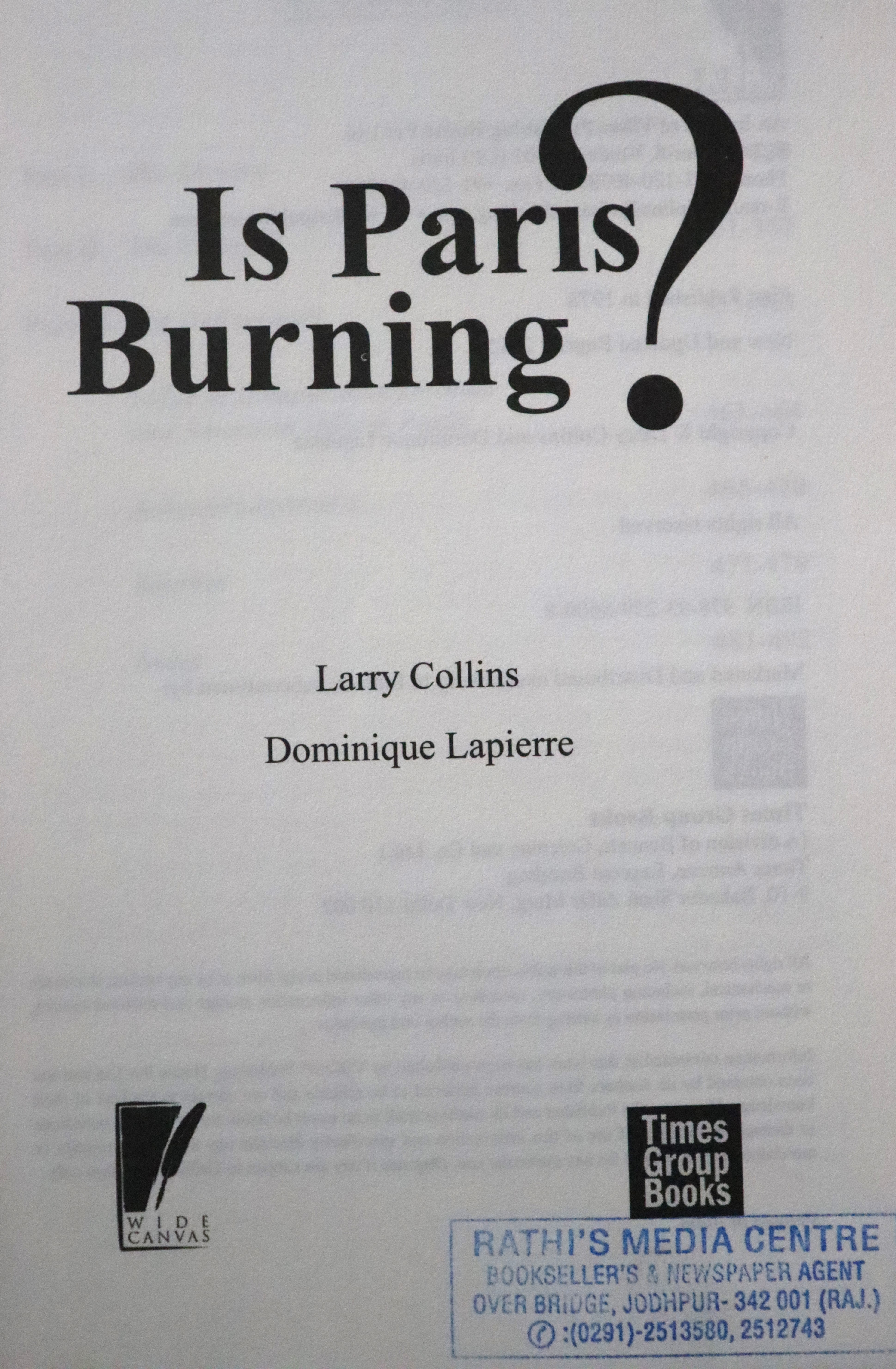
Is Paris Burning?
About
Summary
Exquisite
TOC
Details
URL
Images
Overview
Is Paris Burning? recounts the dramatic events surrounding the liberation of Paris during World War II, specifically from August 19 to August 26, 1944. The book details the military and political maneuvers that led to the city's liberation from Nazi occupation. Collins and Lapierre meticulously researched the subject, conducting extensive interviews with key figures involved in the events, including members of the French Resistance, Allied commanders, and even German officers. The narrative is structured in three parts: "The Menace," "The Struggle, and The Deliverance, each providing a detailed account of the circumstances leading up to the liberation, the actual uprising, and its aftermath.
Importance of Book
Is Paris Burning is significant not only as a historical account but also as a narrative that captures human resilience in times of crisis. It serves as an educational resource on World War II, providing insights into military strategy, resistance movements, and the complexities of liberation. The authors' journalistic approach brings authenticity to the narrative, making it accessible to both historians and general readers
Key Themes
Heroism and Resistance: The book highlights acts of bravery from members of the French Resistance who fought against Nazi oppression. Their efforts to organize uprisings and reclaim their city are central to the narrative.Political Intrigue: Collins and Lapierre explore the complex political landscape of wartime France, including General Charles de Gaulle's ambitions and his role in the liberation efforts. The internal conflicts among various factions of the Resistance are also examined.The Role of Leadership: The authors emphasize how effective leadership—both from military commanders and resistance leaders—was crucial in coordinating efforts for liberation.Cultural Heritage at Stake: A recurring theme is the preservation of Paris as a cultural symbol. The question posed by Hitler about whether Paris would be burned reflects the stakes involved—not just for its inhabitants but for its historical significance.Consequences of War: The book does not shy away from depicting the harsh realities of war, including destruction, loss of life, and the psychological toll on those involved.
Cultural Significance
The book holds cultural significance as it emphasizes Paris's status as a symbol of freedom and resistance against tyranny. By documenting this pivotal moment in history, Collins and Lapierre contribute to a collective memory that celebrates human courage in facing oppression. The narrative also fosters an appreciation for French culture and heritage, reminding readers of what was at stake during World War II.
Effects on Society
The publication of Is Paris Burning? has had a lasting impact on how people understand the events surrounding the liberation of Paris. It has sparked interest in World War II history among readers worldwide and has been used in educational settings to teach about resistance movements and wartime strategies.Moreover, by highlighting individual stories of heroism amidst chaos, the book inspires contemporary discussions about civic responsibility and activism against oppression. It encourages readers to reflect on their own roles in advocating for justice and freedom in their societies.The book's influence extends beyond literature; it has inspired adaptations into other media, including a feature film released in 1966. This adaptation helped bring awareness to younger generations who may not have been familiar with these historical events.
Conclusion
Is Paris Burning? by Larry Collins and Dominique Lapierre is a compelling account that captures one of history's most significant moments—the liberation of Paris during World War II. Through detailed research and vivid storytelling, the authors provide readers with an immersive experience that highlights themes of heroism, political intrigue, and cultural preservation.The book serves not only as a historical record but also as a reminder of the resilience of individuals in their fight against oppression. Its cultural significance lies in its ability to inspire reflection on freedom, justice, and civic duty—values that remain relevant today.In an era where discussions about democracy and human rights are increasingly important, Is Paris Burning? stands as a testament to what can be achieved when individuals unite for a common cause against tyranny. By preserving this narrative, Collins and Lapierre ensure that the lessons learned from this tumultuous period continue to resonate with future generations.
Title
Is Paris Burning?
Author
Larry Collins & Dominique Lapierre
Name of Publisher
Times Groups Books
Publish Date
1965