
Gheranda Samhita
About
Summary
Exquisite
TOC
Details
URL
Images
Overview
The Gheranda Samhita is structured as a dialogue between Sage Gheranda and his disciple Chanda Kapali. It outlines the “Saptanga Yoga” or Sevenfold Path, which encompasses physical, mental, and spiritual practices aimed at holistic self-transformation. Unlike other classical yoga texts like Patanjali’s Yoga Sutras (which focus on an eightfold path), the Gheranda Samhita uniquely emphasizes physical purification as the foundation for spiritual growth.The seven stages of yoga described in the text are:Shatkarma (Purification): Six cleansing techniques to purify the body and mind.Asana (Postures): Physical exercises to build strength, stability, and readiness for meditation.Mudra (Gestures): Techniques to control prana (life energy) and awaken latent energy.Pratyahara (Withdrawal of Senses): Detachment from sensory distractions to cultivate inner awareness.Pranayama (Breath Control): Regulation of breath to balance energy channels and calm the mind.Dhyana (Meditation): Practices to deepen focus and achieve higher states of consciousness.Samadhi (Absorption): The ultimate stage of union with universal consciousness.Swami Niranjanananda’s commentary explains each stage in detail, offering practical guidance for integrating these practices into daily life.
Importance of Book
Accessibility: By translating complex Sanskrit verses into simple language, Swami Niranjanananda makes this ancient text accessible to modern readers.Practical Application: The book provides step-by-step instructions for each practice, making it a valuable resource for both beginners and advanced practitioners.Preservation of Tradition: It preserves the teachings of one of yoga’s foundational texts while adapting them to contemporary needs.Scientific Relevance: Swami Niranjanananda integrates scientific explanations with traditional practices, highlighting their physiological and psychological benefits.
Key Themes
Holistic Approach to Yoga
The Gheranda Samhita views yoga as a comprehensive discipline that integrates physical health, mental clarity, and spiritual awakening. Swami Niranjanananda emphasizes this holistic approach, making it clear that yoga is not just about physical postures but a transformative journey.Purification as the Foundation
The text begins with Shatkarma (six purification techniques) such as Dhauti (intestinal cleansing), Neti (nasal cleansing), and Kapalabhati (skull-shining breath). These practices prepare the body for higher yogic disciplines by removing toxins and clearing energy pathways.Physical Strength and Stability
Asanas are presented as essential for building a strong foundation for meditation. The text describes 32 postures, including Padmasana (Lotus Pose) and Siddhasana (Adept’s Pose), which enhance physical health and mental focus.Control of Prana
Mudras and Pranayama are central to the text’s teachings on energy management. Techniques like Nadi Shodhana (Alternate Nostril Breathing) regulate pranic flow, while Mudras like Khechari Mudra direct energy toward spiritual awakening.Inner Awareness through Pratyahara
Pratyahara involves withdrawing attention from external stimuli to focus inwardly. This stage is considered crucial for cultivating concentration and preparing for meditation.Meditation and Enlightenment
Dhyana leads practitioners toward self-realization by deepening their awareness and stilling the mind. The ultimate goal, Samadhi, is described as a state of unity with universal consciousness.Gradual Progression
The text emphasizes systematic practice, urging practitioners to progress step-by-step without haste.
Cultural Significance
The Gheranda Samhita holds immense cultural significance as one of the core texts of Hatha Yoga, a tradition that has shaped global perceptions of yoga. Its teachings reflect India’s rich spiritual heritage while emphasizing universal principles like self-discipline, balance, and inner peace.Swami Niranjanananda’s commentary contributes to this legacy by making the text relevant for modern audiences. It bridges ancient wisdom with contemporary lifestyles, encouraging practitioners worldwide to embrace yoga as a holistic path to well-being.
Effects on Society
Revival of Classical Yoga Practices
The book has sparked renewed interest in traditional Hatha Yoga techniques like Shatkarma and Mudras, which are often overlooked in modern yoga classes focused solely on asanas.Promotion of Authenticity
By presenting yoga as a spiritual discipline rather than mere physical exercise, it has encouraged practitioners to explore its deeper dimensions.Educational Resource
The book has become an essential resource for yoga teacher training programs, contributing to the dissemination of authentic yogic knowledge.Global Influence
Its emphasis on holistic practice has resonated with international audiences seeking balance in their lives, further popularizing Indian yoga traditions worldwide.
Conclusion
Swami Niranjanananda Saraswati’s Gheranda Samhita is a masterful commentary that revitalizes one of Hatha Yoga’s most important texts for contemporary readers. By elucidating Sage Gheranda’s teachings on the Sevenfold Path, it provides a comprehensive guide to physical purification, mental clarity, and spiritual awakening.The book underscores yoga’s transformative potential beyond physical fitness, presenting it as a path to self-realization and universal harmony. Its cultural significance lies in preserving India’s yogic heritage while adapting it for modern lifestyles.In conclusion, Gheranda Samhita remains an indispensable resource for anyone seeking to deepen their understanding of traditional yoga practices. Through disciplined application of its teachings, practitioners can achieve holistic well-being and connect with their higher selves—a timeless goal that transcends cultural boundaries.
Exquisite
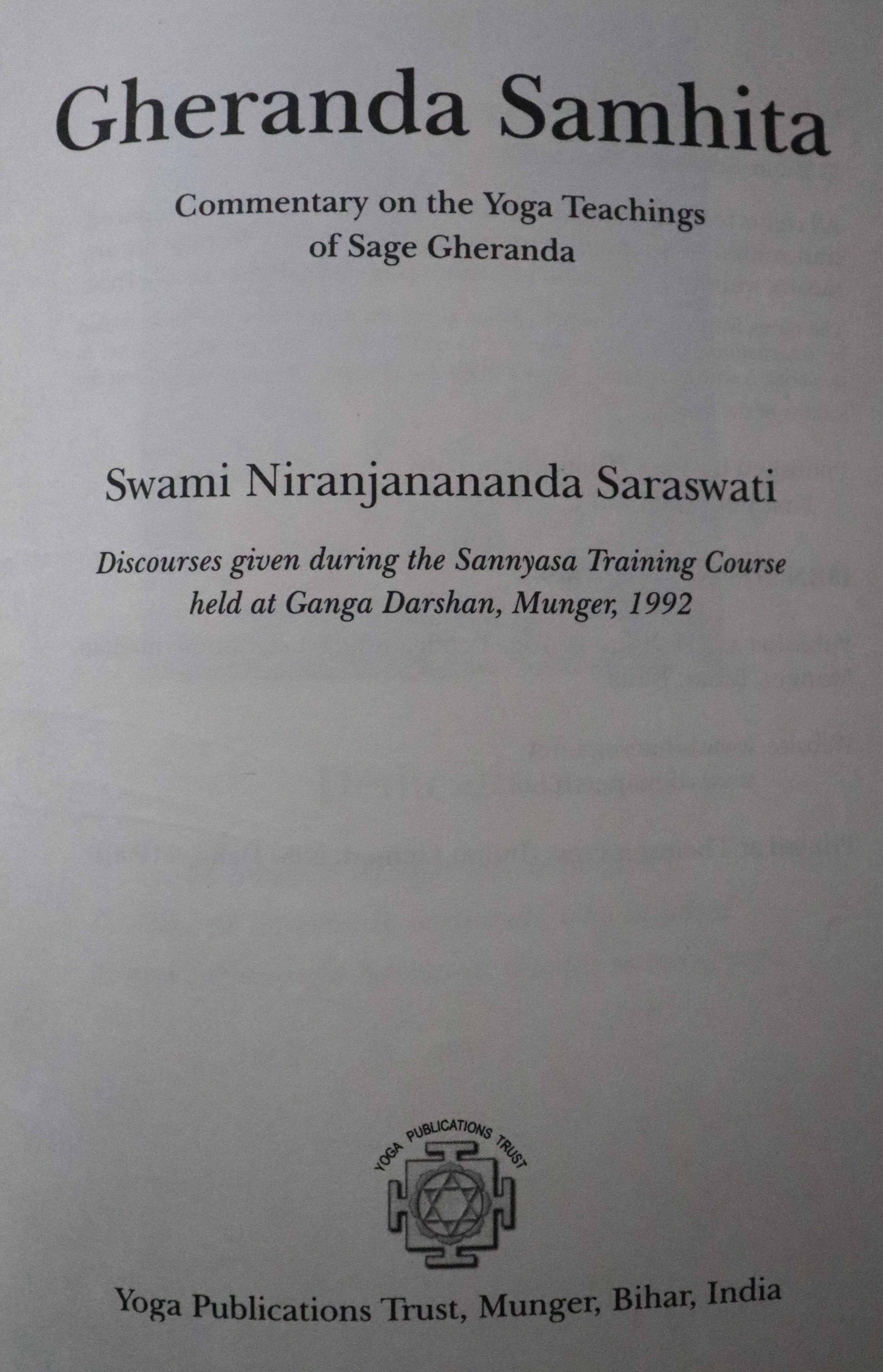
Swami Niranjanananda Saraswati’s Gheranda Samhita, published by Yoga Publication Trust in 2003, is a modern commentary on the classical 17th-century yogic text attributed to Sage Gheranda. The Gheranda Samhita is one of the foundational texts of Hatha Yoga and presents a comprehensive sevenfold path to self-purification and spiritual enlightenment. Swami Niranjanananda’s commentary makes this ancient text accessible to contemporary readers by blending traditional wisdom with modern insights, emphasizing its practical relevance for today’s practitioners.
Title
Gheranda Samhita
Author
Swami Niranjanananda Saraswati
Name of Publisher
Yoga Publication Trust, Bihar
Publish Date
2003