
The Eight Spiritual Breaths
About
Summary
Exquisite
TOC
Details
URL
Images
Overview
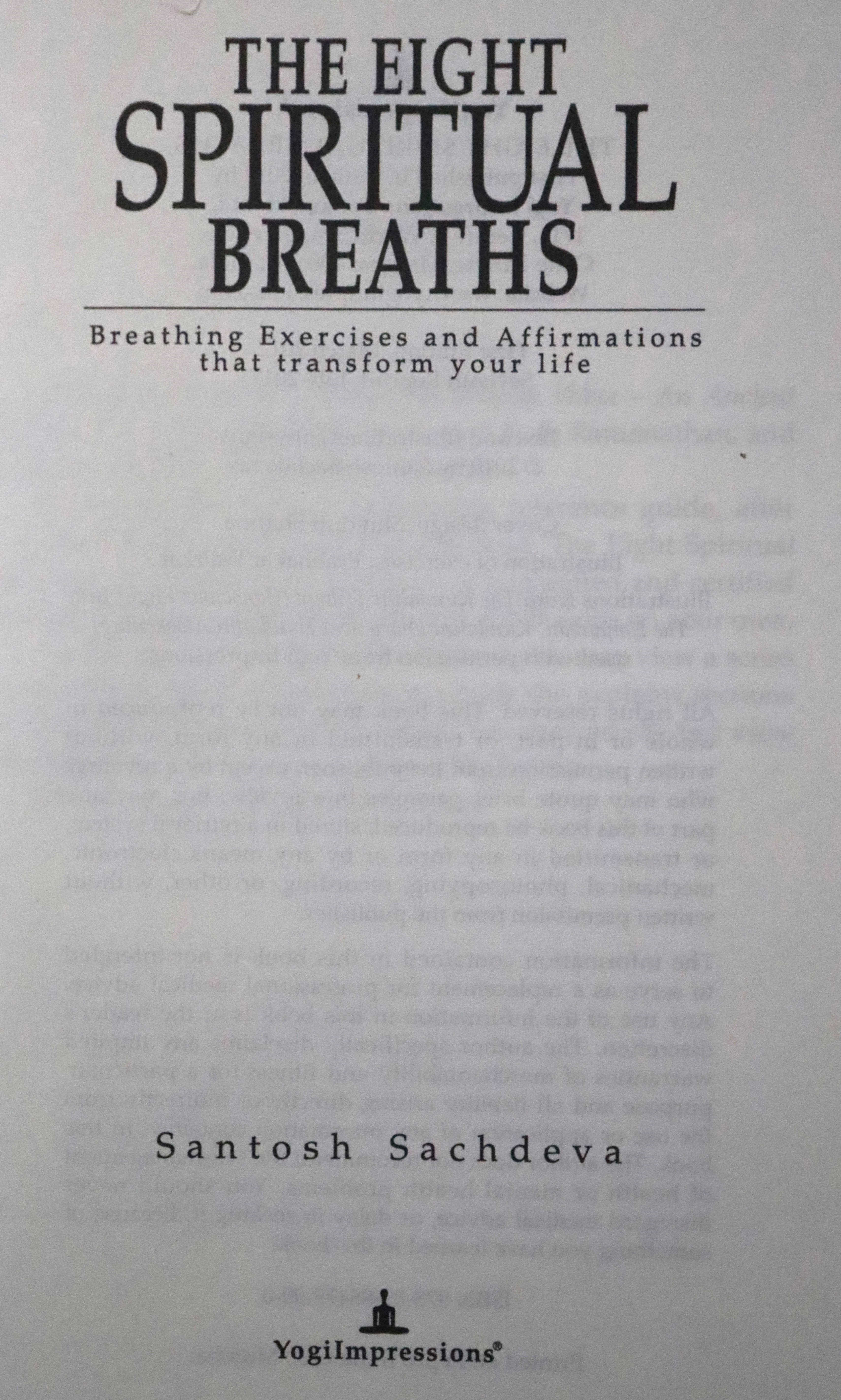
The Eight Spiritual Breaths by Santosh Sachdeva, published by Yogi Impressions in 2016, presents a transformative system of Kundalini Yoga rooted in ancient Tibetan wisdom and further refined through the Brahma Vidya tradition in India. The book is both a practical manual and a spiritual guide, offering a structured course of eight breathing exercises, each paired with affirmations and meditation, designed to activate energy centers (chakras), harmonize body and mind, and facilitate conscious evolution.The system is intended for aspirants seeking self-mastery, spiritual growth, and a deeper understanding of their true nature. The Eight Spiritual Breaths (TESB) are taught over 12 weeks, with each breath focusing on a different aspect of the practitioner’s being—physical, mental, emotional, and spiritual. Through daily practice, readers are promised improved health, mental clarity, emotional stability, and a blossoming of their highest potential
Importance of Book
The Eight Spiritual Breaths stands out as a comprehensive, accessible guide for those seeking a structured approach to spiritual growth. Its importance lies in:Practical Spirituality: It demystifies advanced yogic techniques, making them accessible to modern seekers regardless of background.Empowerment: By teaching mastery over breath and thought, it empowers individuals to take charge of their well-being and destiny.Bridging Traditions: The book connects ancient Tibetan and Indian spiritual practices with contemporary needs, ensuring relevance in today’s fast-paced world.Scientific Approach: By addressing both the physiological and psychological effects of the practices, it appeals to readers seeking evidence-based spirituality.
Key Themes
1. Self-Transformation Through BreathThe core of the book is the detailed teaching of eight specific breathing exercises, each designed to work on different energy centers and glands, thereby bringing about transformation at a cellular and energetic level.The exercises are paired with affirmations that reprogram the subconscious mind, fostering positive thinking and self-awareness.2. Integration of Ancient Wisdom and Modern ScienceThe system’s origins are traced to Padmasambhava and Tibetan lamas, later brought to India and further developed by Swami K. S. Ramanathan and Justice M. L. Dudhat.The book explains physiological changes (like hormonal regulation, improved electrical conductivity of cells) alongside spiritual benefits, bridging yogic science and modern understanding of health.3. Holistic Well-beingTESB is presented as a means to achieve harmony in relationships, increased joy, reduced anxiety, better focus, and enhanced immunity.The practices are said to infuse practitioners with prana (life force), leading to greater compassion, patience, and sensitivity to higher energies.4. Personal Testimonies and Experiential WisdomThe book includes numerous testimonials from practitioners who report profound changes: increased energy, peace, clarity, emotional healing, and a deeper connection to self and the universe
Cultural Significance
TESB represents a synthesis of Eastern spiritual traditions—Tibetan, Indian, and yogic—adapted for a global audience. Its cultural significance includes:Preservation and Evolution of Tradition: By tracing its lineage from Padmasambhava through Indian masters to a modern, structured course, the book preserves and evolves ancient knowledge for the 21st century.Accessibility: The system has been disseminated through courses, workshops, and online platforms, making advanced yogic practices available to a wider demographic beyond traditional ashrams or monastic settings.Intercultural Dialogue: The book’s spread to the West (notably through Edwin John Dingle’s work in the early 1900s) exemplifies the cross-cultural transmission of spiritual wisdom.
Effects on Society
While TESB is a personal spiritual practice, its societal impact is visible in several ways:Promoting Mental Health and Well-being: Practitioners report reduced stress, anxiety, and improved emotional health, contributing to a healthier society.Community Building: Courses and group practices foster a sense of community, mutual support, and shared growth among participants.Shift in Spiritual Paradigms: The book encourages a move from ritualistic or dogmatic spirituality to experiential, self-empowering practices, reflecting broader trends in Indian and global spiritual landscapes.Inspiring Service and Compassion: Enhanced self-awareness and inner peace often translate into more compassionate, socially responsible individuals, subtly influencing the collective consciousness.
Conclusion
The Eight Spiritual Breaths by Santosh Sachdeva is more than a book—it is a living system of transformation, rooted in ancient wisdom and tailored for contemporary seekers. By offering a step-by-step approach to breathwork, affirmation, and meditation, it empowers individuals to unlock their creative potential, achieve holistic well-being, and realize their highest self.Its cultural and societal significance lies in its accessibility, its bridging of traditions, and its role in fostering a new paradigm of practical, experiential spirituality. As testimonials and the growing community of practitioners attest, the system has touched countless lives, offering a path to peace, clarity, and conscious evolution. In a world marked by stress and fragmentation, The Eight Spiritual Breaths offers a return to wholeness—one breath at a time.
Title
The Eight Spiritual Breaths
Author
Santosh Sachdeva
Name of Publisher
Yogi Impressions
Publish Date
2016