
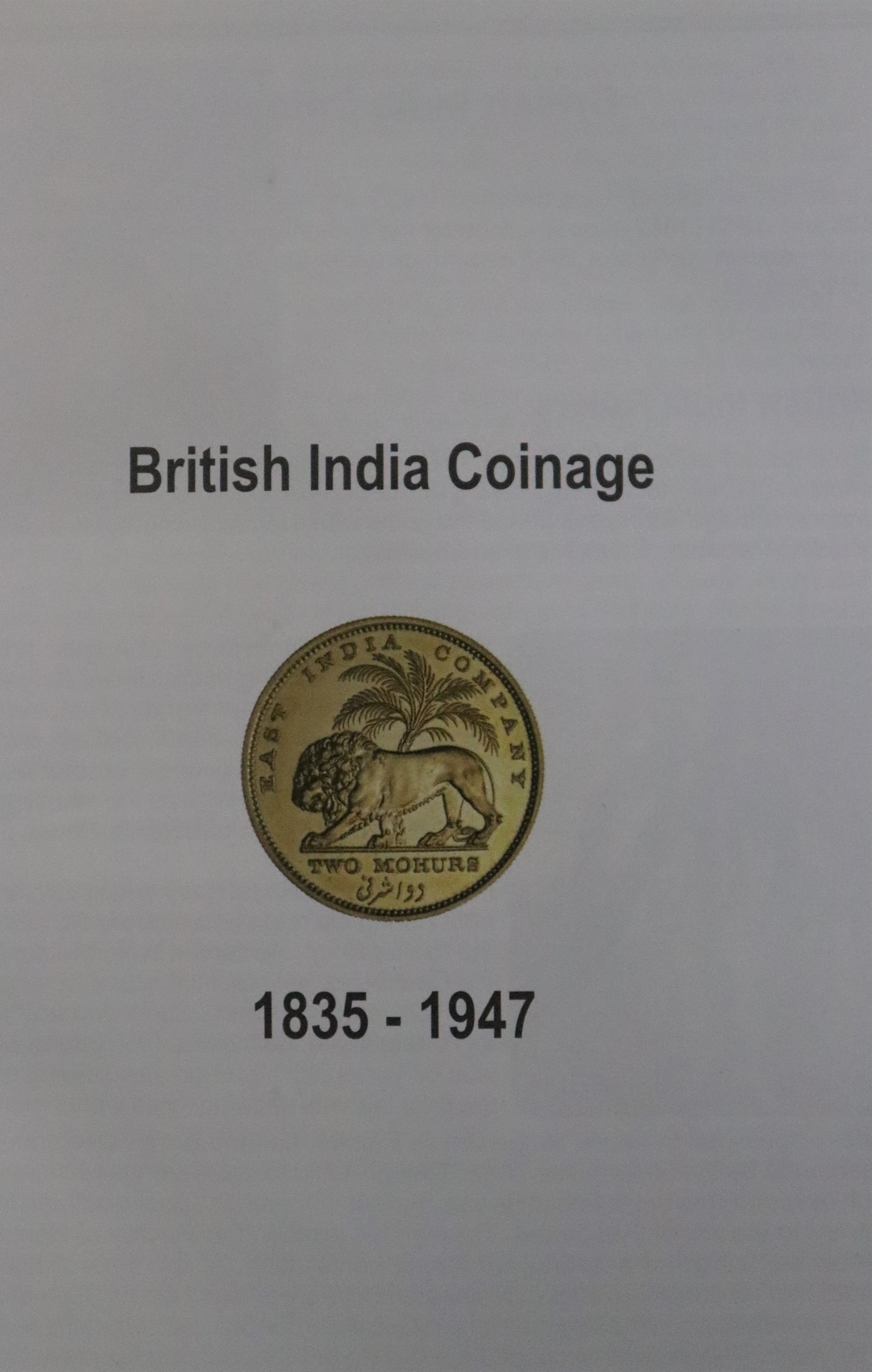
British India Coinage 1835-1947
About
Summary
Exquisite
TOC
Details
URL
Images
Overview
British India Coinage 1835-1947, attributed in your query to Dr. George F. Kunz and Sir George H. Macmillan and published by Spink & Son Ltd. in 2012, appears to be a comprehensive reference work on the coins issued in India during the British colonial period. However, the available search results suggest that the most authoritative and widely cited reference for this subject and publisher in 2012 is The Uniform Coinage of India 1835–1947: A Catalogue and Price List by Paul Stevens and Randy Weir, also published by Spink & Son Ltd. There is no direct evidence in the search results for a 2012 Spink & Son publication by Dr. Kunz and Sir Macmillan, but the structure and content of the Stevens & Weir book align closely with your description.This summary, therefore, synthesizes the available information on the definitive Spink & Son 2012 catalogue, which serves as the standard reference for British Indian coinage from 1835 to 1947.
Importance of Book
Definitive Reference: This catalogue is regarded as the new standard for British Indian coins, superseding earlier works such as Major F. Pridmore’s 1980 volume. It consolidates decades of numismatic scholarship and market experience.Essential for Collectors and Scholars: The book is described as a must-have for anyone seriously interested in British Indian coins, whether as a collector, researcher, or dealer.Bridging Past and Present: By including current values and detailed provenance, it connects historical coinage with the modern numismatic market, serving as both a scholarly resource and a practical tool.
Key Themes
Comprehensive Cataloguing: The book meticulously documents all major coinages issued under British rule in India, covering the reigns of William IV, Victoria, Edward VII, George V, and George VI.Detailed Descriptions: Each coin is described with exhaustive detail, including metal composition, weight, diameter, edge, axis, mint, mint marks, obverse and reverse types, and year of issue.Illustrations and Visuals: The catalogue is richly illustrated with high-quality color photographs, often at 1.5 times actual size, to aid identification and appreciation of design details. It includes images of regular issues, proof restrikes, original proofs, and rare patterns.Varieties and Rarities: The book highlights varieties, errors, and rare patterns, providing close-up images and line-drawings to clarify subtle distinctions that may not be visible in photographs.Market and Mintage Data: It provides up-to-date market values in multiple grades and mintage figures, making it a practical guide for collectors and dealers.Historical Context: The authors draw upon archival research, especially from the British Library and East India Company records, to provide historical background on the evolution of coinage policy, minting technology, and the economic context of each period.
Cultural Significance
Symbol of Colonial Power and Identity: The coinage of British India is a tangible legacy of colonial rule, reflecting shifts in political authority, economic policy, and cultural symbolism. The designs often featured British monarchs, imperial insignia, and inscriptions in English and regional languages, making them artifacts of both imposition and adaptation.Economic Unification: The introduction of uniform coinage in 1835 replaced the diverse and often incompatible regional currencies, facilitating trade, taxation, and the integration of the Indian economy into the global British imperial system.Cultural Memory and Heritage: Today, these coins are valued not just as collectibles, but as historical documents that evoke the complexities of India’s colonial past. They are studied for their artistry, metallurgy, and the stories they tell about everyday life, power, and resistance.
Effects on Society
Economic Modernization: The British Indian coinage system standardized currency across the subcontinent, which helped modernize commerce and administration but also reinforced colonial control over economic life.Social Impact: Coinage was a daily reminder of imperial authority, but it also became a medium for subtle expressions of Indian identity, especially as nationalist movements gained strength in the 20th century and began to challenge colonial symbols.Legacy in Independent India: The transition from British to Indian coinage after 1947 was both a practical and symbolic act of sovereignty, but the British-era coins remain a vital part of India’s numismatic and cultural heritage.
Conclusion
British India Coinage 1835-1947 (as represented by the Stevens & Weir catalogue) stands as an authoritative and richly detailed guide to one of the most significant periods in Indian numismatic history. It is invaluable for its comprehensive documentation, scholarly rigor, and practical utility. The book not only catalogues coins but also illuminates the broader historical, economic, and cultural forces that shaped India during the colonial era.Its significance extends beyond the numismatic community, offering insights into the ways material culture reflects and shapes social realities. By preserving and interpreting the coinage of British India, the book helps ensure that this complex legacy remains accessible to future generations—both as a subject of study and as a source of reflection on the intertwined histories of India and Britain.
Title
British India Coinage 1835-1947
Author
Dr. George F. Kunz and Sir George H. Macmillan
Name of Publisher
Spink & Son Ltd. in London
Publish Date
2012