
The Story of the Integration of the Indian States
About
Summary
Exquisite
TOC
Details
URL
Images
Overview
The Story of the Integration of the Indian States by V.P. Menon, published in 1956 by Orient Longmans Ltd, is a seminal account of one of the most complex and consequential episodes in Indian history: the political integration of over 550 princely states into the newly independent Indian Union between 1947 and 1951. Menon, who served as Secretary to the Ministry of States under Sardar Vallabhbhai Patel, offers a first-hand, detailed narrative of the negotiations, strategies, and challenges involved in uniting a fragmented subcontinent into a cohesive nation-state.The book is structured chronologically and thematically, beginning with the historical context of princely India under British paramountcy, the political vacuum created by the lapse of British rule, and the subsequent efforts to persuade, cajole, or compel the rulers of these states to accede to India. Menon’s narrative is both a memoir and a political history, providing insider perspectives on the personalities, policies, and pivotal moments that shaped the integration process.
Importance of Book
The Story of the Integration of the Indian States is a primary source for understanding the making of modern India. Its importance lies in:Documenting a Critical Transitional Phase: The book provides a comprehensive, inside account of a period that determined the territorial and political contours of the Indian Republic.Revealing Statecraft and Strategy: Menon’s detailed recounting of negotiations, policy decisions, and crisis management offers invaluable lessons in political strategy, diplomacy, and conflict resolution.Highlighting Unsung Contributions: The book acknowledges the collective effort of the States Ministry staff and regional administrators, whose dedication made the integration possible.
Key Themes
The Story of the Integration of the Indian States by V.P. Menon, published in 1956 by Orient Longmans Ltd, is a seminal account of one of the most complex and consequential episodes in Indian history: the political integration of over 550 princely states into the newly independent Indian Union between 1947 and 1951. Menon, who served as Secretary to the Ministry of States under Sardar Vallabhbhai Patel, offers a first-hand, detailed narrative of the negotiations, strategies, and challenges involved in uniting a fragmented subcontinent into a cohesive nation-state.The book is structured chronologically and thematically, beginning with the historical context of princely India under British paramountcy, the political vacuum created by the lapse of British rule, and the subsequent efforts to persuade, cajole, or compel the rulers of these states to accede to India. Menon’s narrative is both a memoir and a political history, providing insider perspectives on the personalities, policies, and pivotal moments that shaped the integration process.
Cultural Significance
The integration of the princely states was not just a political achievement but a cultural one. It:Unified Diverse Cultures: By bringing together hundreds of states with distinct languages, traditions, and histories, the integration fostered a sense of national identity and unity amid immense diversity.Preserved Heritage with Modernization: The process respected the cultural and ceremonial roles of the princes while integrating their territories into a modern, democratic framework, balancing tradition with progress.Narrative of Nationhood: Menon’s account has become an essential part of India’s postcolonial narrative, shaping how generations understand the birth of the Republic and the challenges of forging unity from diversity.
Effects on Society
1. Political Stability and UnityThe successful integration prevented the fragmentation of India into numerous independent or semi-independent entities, which could have led to chronic instability and conflict, akin to the fate of other post-colonial regions.2. Foundation for DemocracyBy consolidating the states, India could implement a uniform administrative and legal system, paving the way for democratic governance, economic planning, and social reform across the country.3. Enduring ChallengesThe process was not without its difficulties. The accession of Jammu and Kashmir, for instance, sowed the seeds of an enduring territorial dispute. The legacy of integration continues to influence Indian politics, federal relations, and regional identities.4. Social IntegrationThe merger of diverse regions facilitated the movement of people, ideas, and resources, contributing to the emergence of a pan-Indian consciousness while also respecting regional identities.
Conclusion
The Story of the Integration of the Indian States by V.P. Menon remains a foundational work for understanding the making of modern India. It is both a tribute to the vision and pragmatism of India’s early leaders and a testament to the power of negotiation, compromise, and decisive action in nation-building. The book’s detailed narrative, analytical depth, and personal insights make it indispensable for students, scholars, and anyone interested in India’s history.Menon’s account demonstrates that the integration of the princely states was not an inevitable outcome but the result of extraordinary leadership, strategic acumen, and the collective effort of countless individuals. The process not only secured India’s territorial integrity but also laid the groundwork for its emergence as a stable, diverse, and democratic nation. The cultural and political legacy of this integration continues to shape India’s identity and trajectory in the 21st century.
Title
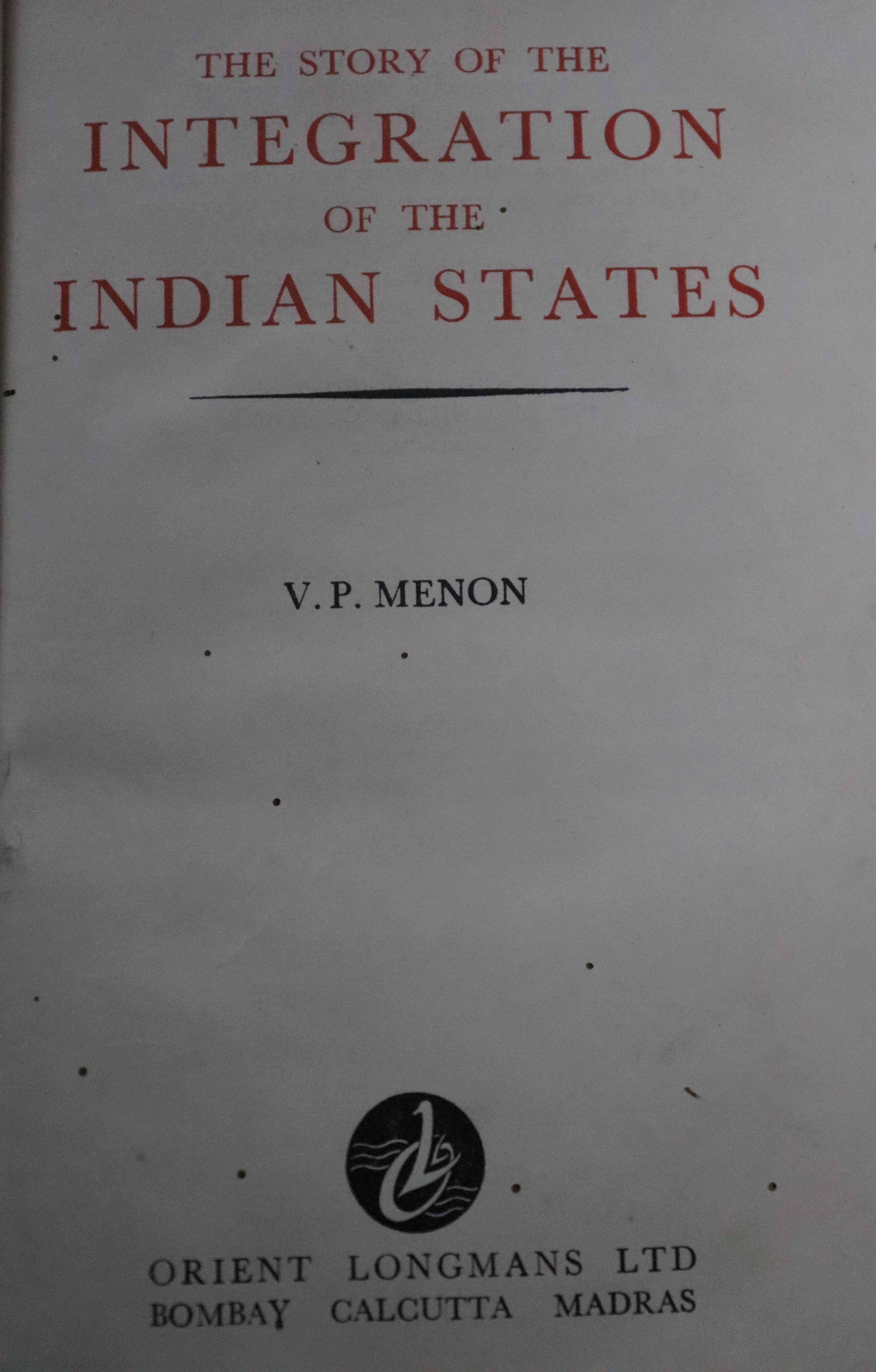
The Story of the Integration of the Indian States
Author
VP Menon
Name of Publisher
Orient Longmans ltd
Publish Date
1956