
The Silent Coup : A History of Indias Deep State
About
Summary
Exquisite
TOC
Details
URL
Images
Overview
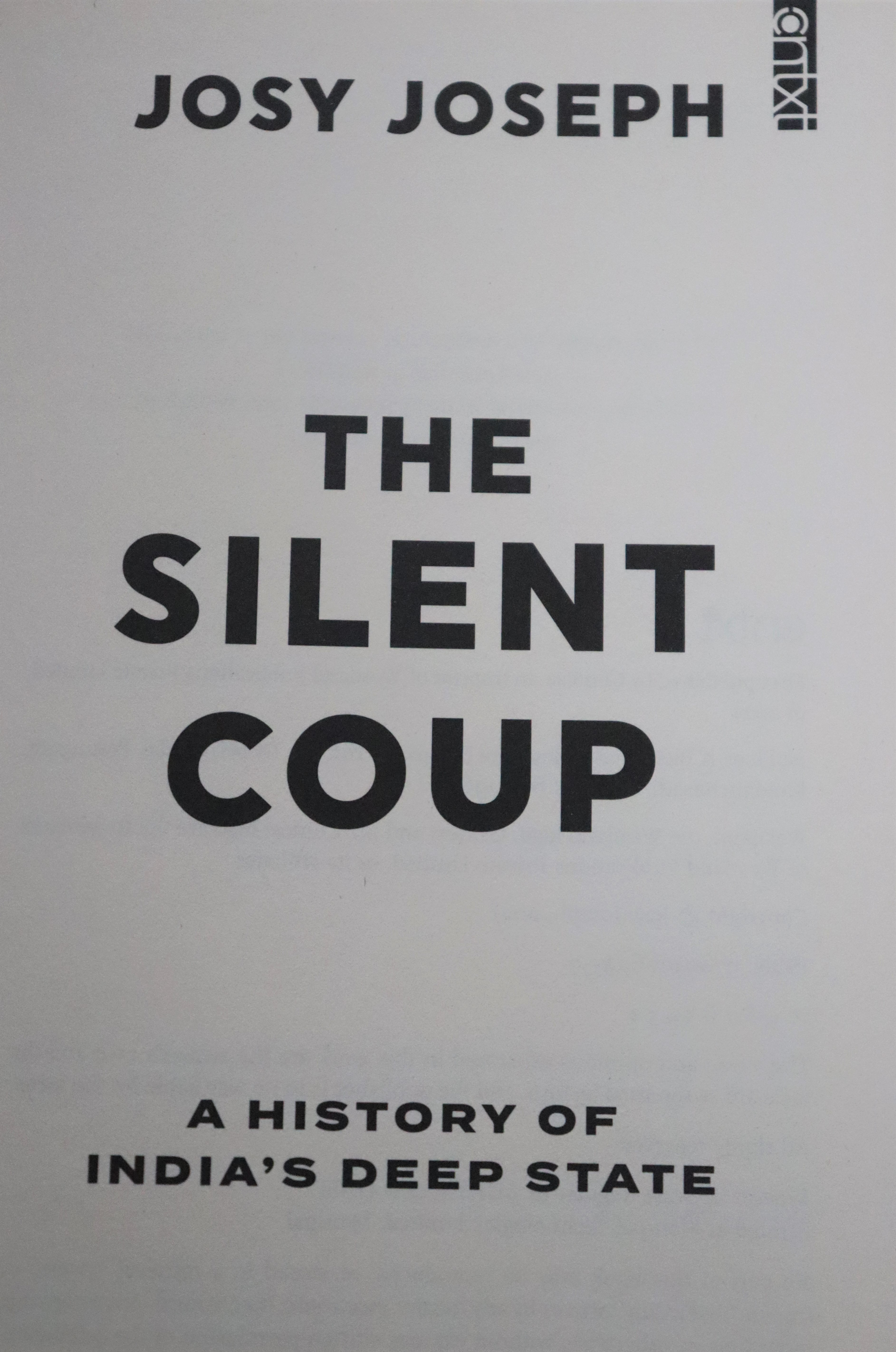
The Silent Coup: A History of India's Deep State by Josy Joseph, published in 2021 by Context, is an investigative exposé on how India's democratic ethos has been steadily undermined not by military coups but through the covert manipulation of non-military security agencies by political powers. Joseph, a seasoned investigative journalist, argues that agencies such as the police, Intelligence Bureau (IB), Central Bureau of Investigation (CBI), National Investigation Agency (NIA), Anti-Terrorism Squad (ATS), Enforcement Directorate (ED), and Income Tax Department have been weaponized to serve political interests, suppress dissent, and intimidate critics, effectively creating a "deep state" within India.The book is divided into two parts: the first narrates the decade-long ordeal of Wahid, a slum dweller falsely accused by Mumbai police in the post-9/11 security environment, illustrating how ordinary citizens become victims of this system. The second part broadens the scope to detail how India's security and intelligence apparatuses have contributed to the erosion of democracy from independence to the present day, implicating multiple governments across the political spectrum.
Importance of Book
The Silent Coup serves as a critical wake-up call about the fragility of Indian democracy. It challenges the conventional notion that military coups are the primary threat to democratic stability by revealing how democratic erosion can occur through the covert manipulation of security institutions. The book is grounded in over two decades of investigative reporting, offering meticulously researched evidence and firsthand accounts that expose the systemic rot within India's security apparatus.By documenting the transformation of agencies meant to protect democracy into instruments of political repression, Joseph underscores the urgent need for reform and accountability. The book also serves as a cautionary tale about the dangers of unchecked power within the state's security machinery and the consequences of political interference.
Key Themes
Deep State and Democratic Erosion: Joseph defines the "deep state" as the non-military security establishment that operates with considerable autonomy and is often co-opted by political elites to subvert democratic processes.Politicization and Abuse of Security Agencies: The book documents numerous cases where agencies have been used to manufacture false narratives, conduct fake encounters, and persecute political opponents or marginalized communities, undermining the rule of law.Media Complicity and Narrative Control: Joseph critiques the media for amplifying unverifiable information fed by security agencies, which helps maintain deniability and control over public discourse.Historical and Contemporary Case Studies: The author examines incidents including the Kashmir insurgency, northeast unrest, Gujarat riots, the Samjhauta Express blasts, and the Emergency period under Indira Gandhi, linking them to systemic corruption and misuse of power within security agencies.Comparative Regional Context: Joseph contrasts India's situation with neighboring countries like Pakistan and Bangladesh, where military coups have directly subverted democracy, highlighting that India's threat is more insidious, coming from within the civilian security establishment.
Cultural Significance
The book has significant cultural resonance as it challenges the dominant narratives about India's democratic resilience and the integrity of its institutions. It invites readers to critically reassess the role of security agencies and their impact on civil liberties, minority rights, and political dissent. The stories of individuals like Wahid humanize the abstract concept of "deep state," making the book a poignant reflection on the lived realities of many Indians caught in the crossfire of state power.Moreover, by exposing the complicity of media and the normalization of misinformation, the book encourages a more discerning public discourse and greater skepticism towards official narratives. It contributes to ongoing debates about democracy, governance, and human rights in contemporary India.
Effects on Society
While the book is a relatively recent publication, it has already sparked conversations about the accountability of India's security agencies and the health of its democracy. It provides a framework for understanding incidents of political repression, misuse of investigative agencies, and the suppression of dissent in recent years, including controversies like the Pegasus spyware case.By revealing how democratic institutions have been hollowed out from within, The Silent Coup has galvanized activists, scholars, and concerned citizens to demand structural reforms and greater transparency. It also serves as a historical record of the gradual erosion of democratic norms, potentially influencing future policy debates and legal reforms aimed at safeguarding democratic values.
Conclusion
Josy Joseph's The Silent Coup: A History of India's Deep State is a compelling and meticulously researched account that exposes the covert mechanisms through which India's democracy has been undermined by its own security establishment. By shifting the focus from overt military coups to the subtler, yet equally dangerous, manipulation of non-military agencies, Joseph provides a nuanced understanding of the threats facing the world's largest democracy.The book's detailed case studies, critical analysis of institutional failures, and emphasis on the human cost of these abuses make it an essential read for anyone interested in Indian politics, democracy, and governance. It calls for urgent reforms to restore accountability and protect democratic values against the encroachment of a silent but powerful deep state.
Title
The Silent Coup : A History of Indias Deep State
Author
Josy Joseph
Name of Publisher
Context
Publish Date
2021