
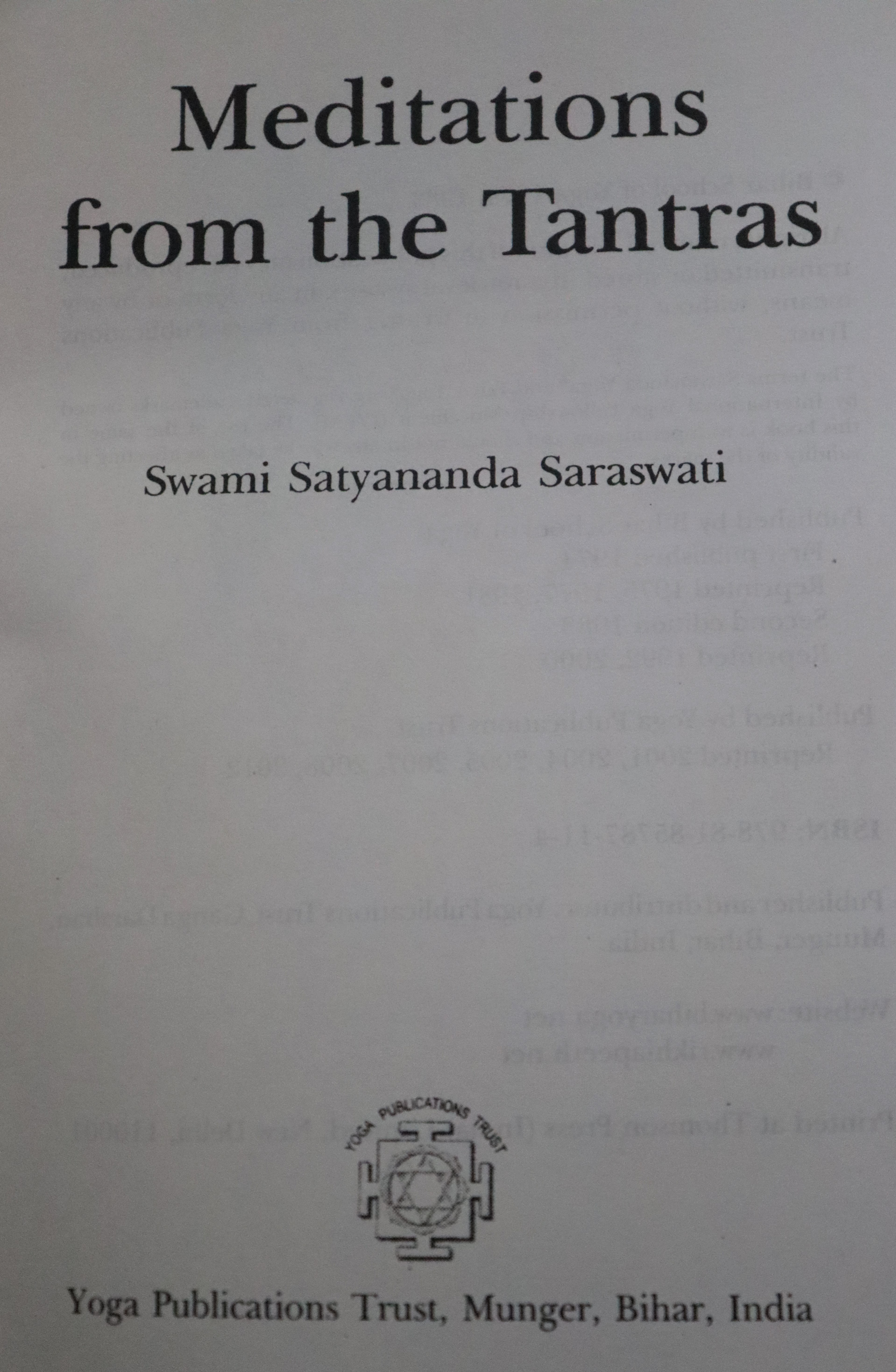
Meditation From the Tantras
About
Summary
Exquisite
TOC
Details
URL
Images
Overview
The book is meticulously organized into sections, each focusing on different meditative techniques and their philosophical underpinnings. Swami Satyananda introduces readers to the essence of tantra—not as a set of esoteric rituals, but as a holistic spiritual path that employs the body, mind, and senses as vehicles for higher consciousness. The text covers:The philosophical background and aims of tantra and meditation.Preparatory practices necessary for successful meditation.Step-by-step instructions for a wide range of meditation techniques, including pratyahara (sensory withdrawal), Antar Mouna (inner silence), Yoga Nidra, ajapa japa (breath-aware mantra meditation), trataka (concentration on a point), kriyas, and various forms of mantra practice.Class transcripts and practical guidance as originally taught by Swami Satyananda, making the teachings accessible and authentic.
Importance of Book
Meditation from the Tantras is significant for several reasons:Comprehensive Resource: It is one of the few texts that systematically presents both the theory and practice of tantric meditation in a clear, accessible manner for modern readers.Foundation for Advanced Practice: The techniques described form the groundwork for all advanced meditation, making it an essential reference for serious practitioners and yoga teachers.Authenticity: The inclusion of class transcripts preserves the oral tradition and ensures the teachings remain faithful to their original form.
Key Themes
1. The Purpose of Meditation
Swami Satyananda asserts that the ultimate goal of meditation is to raise awareness and access the deeper layers of the mind, leading to lasting happiness and contentment. He emphasizes that true peace and fulfillment are found not in external achievements or possessions, but by turning inward and understanding the workings of one's own mind.2. The Process of Transformation
The book details a progressive journey:Initial Stages: Begin with sensory withdrawal and basic concentration techniques to calm the mind.Exploring the Unconscious: As the mind settles, practitioners confront hidden complexes, phobias, and conflicts, which can be resolved through autosuggestion and psychic desensitization.Accessing Superconscious Realms: With continued practice, the meditator taps into the superconscious, experiencing spontaneous knowledge, energy, and ultimately, oneness with supreme consciousness.3. Integration with Daily Life
Swami Satyananda highlights that meditation is not a withdrawal from the world, but a means to enrich and harmonize one’s engagement with life. The deeper one dives into meditation, the more powerful and effective their actions in the world become.4. Non-Sectarian Approach
The teachings are presented as universal, not conflicting with any religious or philosophical beliefs. Instead, meditation enhances understanding and harmony across different traditions.
Cultural Significance
The book plays a vital role in demystifying tantra, often misunderstood in both Eastern and Western contexts. By presenting tantra as a path of self-realization and inner harmony, it has contributed to a broader acceptance and understanding of yogic and tantric practices in contemporary society.Swami Satyananda’s work, including this book, has been instrumental in the global spread of yoga and meditation. His founding of the Bihar School of Yoga and the International Yoga Fellowship brought these practices to an international audience, fostering cross-cultural exchange and appreciation for Indian spiritual traditions.
Effects on Society
In India:The book reinforced the revival and modernization of ancient yogic and tantric practices, making them accessible to a new generation of practitioners.It contributed to the integration of meditation into mainstream wellness, education, and healthcare settings.Globally:The teachings have inspired countless meditation practitioners, teachers, and therapists worldwide.The spread of meditation, as championed by Swami Satyananda, has led to measurable societal benefits, including improved well-being, emotional regulation, and prosocial behavior.The ripple effect of meditation practice extends beyond individuals, fostering greater compassion, resilience, and collective well-being in communities.
Conclusion
Meditation from the Tantras remains a timeless guide for anyone seeking to understand and experience the transformative power of meditation. Swami Satyananda Saraswati’s clear exposition bridges ancient wisdom and modern needs, offering practical tools for personal and spiritual growth.The book’s impact lies not only in its detailed instructions but in its holistic vision: meditation is presented as a universal legacy, accessible to all, capable of transforming individuals and, by extension, society. By harmonizing inner and outer life, the practices outlined in this book help practitioners realize their fullest potential—living with greater awareness, peace, and compassion.In a world often marked by stress, fragmentation, and superficial pursuits, Meditation from the Tantras offers a path to deeper fulfillment and unity, reaffirming the enduring relevance of the tantric approach to meditation in the 21st century.
Title
Meditation From the Tantras
Author
Swami Satyananda Saraswati
Name of Publisher
Yoga Publication Trust
Publish Date
2001