
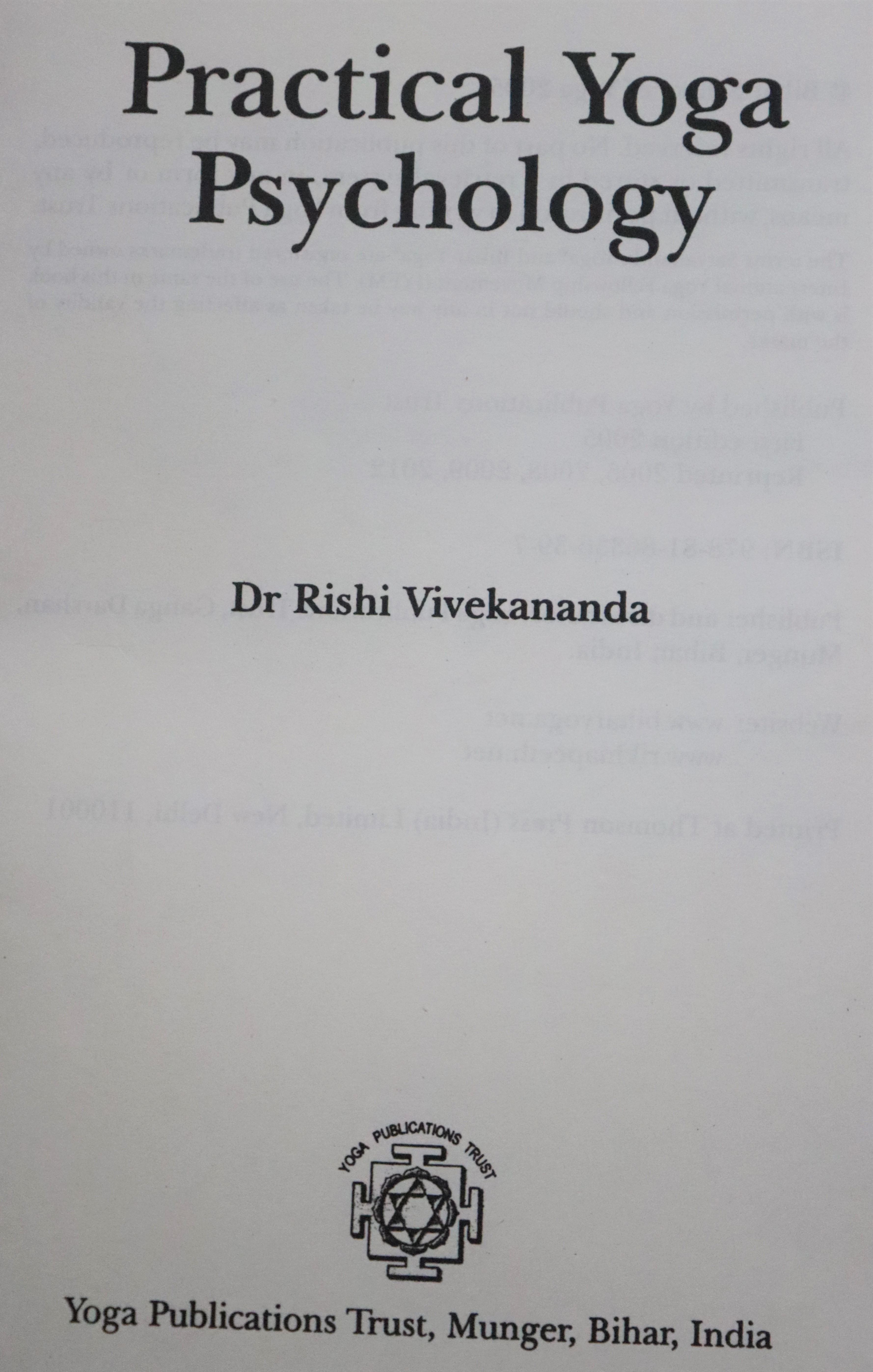
Practical Yoga Psychology
About
Summary
Exquisite
TOC
Details
URL
Images
Overview
Practical Yoga Psychology by Dr. Rishi Vivekananda, published by Yoga Publication Trust in 2006, is a comprehensive guide that bridges the ancient wisdom of yoga with the modern science of psychology. The book offers a detailed exploration of how yogic principles can be applied to understand and transform the human mind, personality, and behavior. It is structured to help readers gain insight into their own psychological makeup and provides practical tools for self-improvement and holistic well-being.Dr. Vivekananda draws from classical yogic texts, Samkhya philosophy, and Tantra, while also integrating concepts from Western psychology and psychiatry. The text is both theoretical and practical, aiming to make the profound teachings of yoga accessible and relevant to contemporary readers. The book is considered dense and requires thoughtful engagement, but it is praised for its clarity and depth, making it a valuable resource for serious students and practitioners of yoga.
Importance of Book
Practical Yoga Psychology is significant for several reasons:It demystifies yoga, moving beyond the common perception of yoga as merely physical postures, and highlights its profound psychological and spiritual dimensions.The book serves as a bridge between Eastern and Western approaches to mental health, offering a comprehensive framework for self-understanding and transformation.It provides practical tools and guidelines for personal development, making it valuable for both yoga practitioners and mental health professionals.
Key Themes
1. Personality Formation and the MindThe book delves into how our unique personalities are shaped by perceptions, memory, thoughts, emotions, and behaviors. Dr. Vivekananda explains that understanding these processes is crucial for personal growth and harmonious relationships.He introduces the concept of the antahkarana (inner instrument of mind) and explores how the interplay of thoughts and emotions forms the basis of our actions.2. The Gunas and Personality TypesCentral to the book is the yogic classification of personality based on the three gunas: tamas (inertia), rajas (activity), and sattva (purity). These qualities influence our behavior, motivations, and overall psychological state.Dr. Vivekananda discusses how recognizing and balancing these gunas can lead to greater self-mastery and well-being.3. Chakras and Energy CentersThe chakras, or energy centers, are presented as key determinants of psychological and physical health. Each chakra is associated with specific personality traits and developmental stages.The book provides insights into how imbalances in these centers can manifest as psychological issues, and how yogic practices can restore harmony.4. Koshas (Sheaths of Existence)The concept of the five koshas (sheaths) is explored, illustrating the multi-layered nature of human existence—from the physical body to the innermost spiritual core.Understanding the koshas helps readers appreciate the holistic approach of yoga, which addresses body, mind, and spirit.5. Streams of Yoga and Lifestyle PracticesDr. Vivekananda explains the different paths of yoga—Raja Yoga (discipline of mind), Karma Yoga (selfless action), Bhakti Yoga (devotion), and Jnana Yoga (knowledge)—and their practical implications for daily living.The ethical guidelines of yamas and niyamas are discussed as foundational practices for psychological health and spiritual progress.6. Integration of Western PsychologyThe book stands out for its integration of Western psychological theories with yogic philosophy, providing a holistic model for understanding and addressing mental health.Dr. Vivekananda uses clear, non-mystical language to explain complex yogic concepts, making them accessible to a modern audience.
Cultural Significance
The book is an important contribution to the ongoing dialogue between traditional Indian wisdom and modern science. By presenting yoga as a complete system for understanding and evolving the human personality, Dr. Vivekananda reinforces the relevance of ancient Indian philosophies in the contemporary world.The text draws on the rich heritage of the Bihar School of Yoga and the Yoga Publications Trust, institutions known for their commitment to preserving and disseminating authentic yogic teachings. This cultural grounding lends the book both authority and depth, making it a respected resource in the field of yoga studies.
Effects on Society
Practical Yoga Psychology has had a notable impact in India and internationally:It has contributed to a broader understanding of yoga beyond physical exercise, emphasizing its role in psychological healing and self-realization.The book has influenced yoga education and therapy, encouraging practitioners and therapists to adopt a more holistic, integrative approach to health and well-being.By making complex yogic concepts accessible, it has helped demystify yoga for a global audience, fostering cross-cultural appreciation and dialogue.In India, the book supports the revival and modernization of traditional practices, aligning them with contemporary needs and scientific understanding. Internationally, it has inspired the integration of yogic principles into psychotherapy and wellness programs, contributing to the global movement towards holistic health.
Conclusion
Practical Yoga Psychology by Dr. Rishi Vivekananda is a landmark text that synthesizes ancient yogic wisdom with modern psychological insights. It offers a detailed roadmap for understanding the human mind, transforming personality, and achieving holistic well-being. The book’s clarity, depth, and practical orientation make it an essential resource for anyone interested in the deeper dimensions of yoga and mental health.By bridging Eastern and Western paradigms, Dr. Vivekananda has made a lasting contribution to both yoga studies and psychology. The book not only enriches individual lives but also advances the collective understanding of human potential, making it a culturally and socially significant work in the ongoing evolution of holistic health and self-awareness.
Title
Practical Yoga Psychology
Author
Dr. Rishi Vivekananda
Name of Publisher
Yoga Publication Trust
Publish Date
2006