
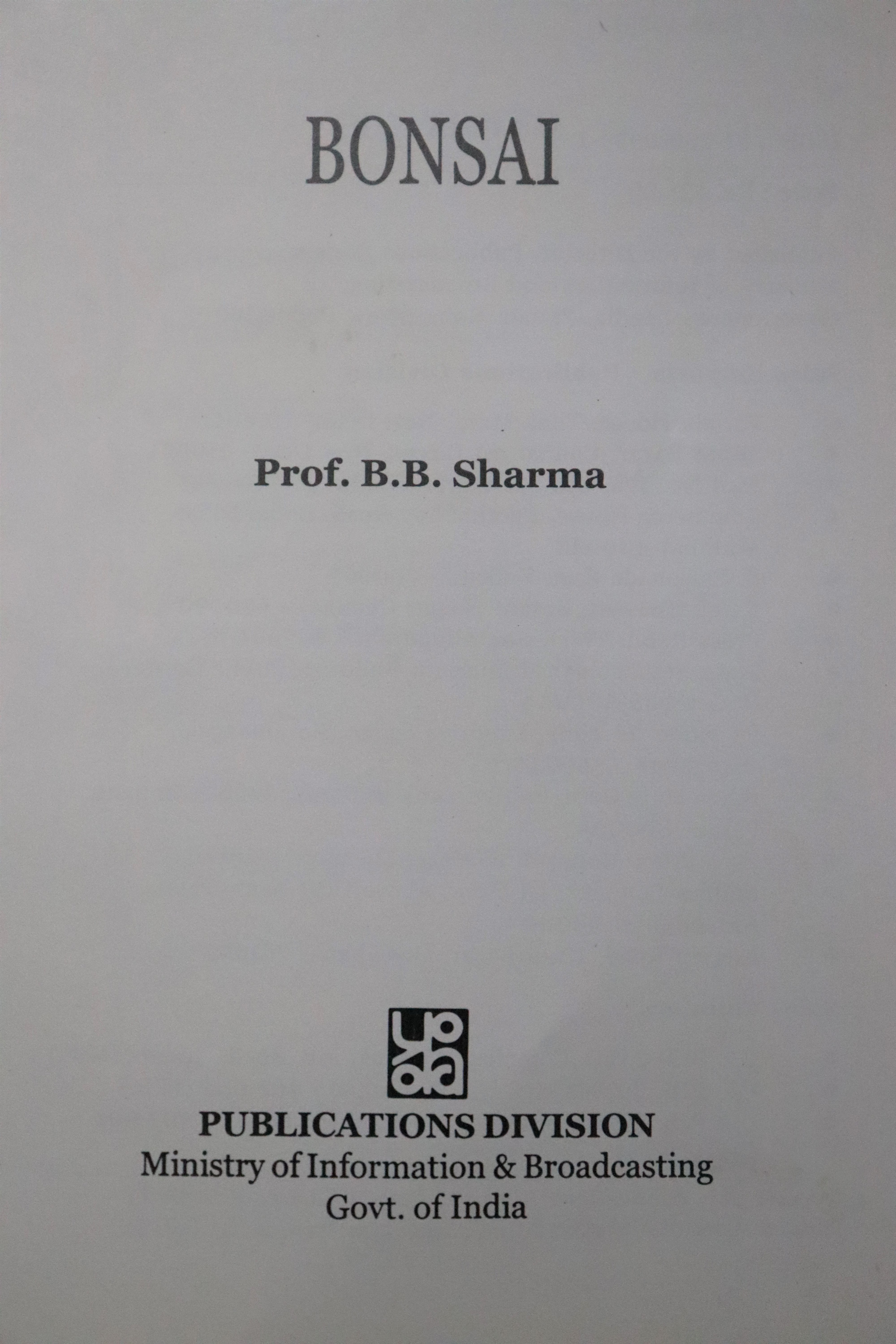
Bonsai
About
Summary
Exquisite
TOC
Details
URL
Images
Overview
Prof. B.B. Sharma’s Bonsai serves as an insightful guide into the miniature art of bonsai, focusing on its history, techniques, and aesthetic principles. It likely covers the botanical aspects of bonsai, including species selection, pruning, shaping, and care, while also delving into the symbolic and philosophical meanings of bonsai as an art form. The book probably connects bonsai cultivation to broader cultural values and traditions, emphasizing harmony between nature and human creativity.
Importance of Book
Prof. Sharma’s Bonsai is important as it bridges scientific horticulture with artistic and cultural appreciation, making the ancient practice accessible and relevant to contemporary audiences. It serves as a valuable resource for gardeners, artists, and cultural historians interested in bonsai. By publishing through the Publication Division, the book also gains credibility and wider dissemination in India, promoting bonsai as a cultural and artistic practice within the country.
Key Themes
Artistic and Horticultural Techniques: The book presumably details the practical methods of bonsai care, including soil management, watering, trimming, wiring, and repotting, essential for maintaining the miniature trees.Philosophy and Symbolism: Bonsai is more than horticulture; it is an artistic expression symbolizing patience, balance, and the harmony of nature and human intervention.Cultural Heritage: The text likely explores bonsai’s roots in Asian culture, especially Japanese and Chinese traditions, and its spread and adaptation worldwide.Nature and Human Connection: The cultivation of bonsai reflects a meditative relationship with nature, emphasizing mindfulness and respect for natural forms.
Cultural Significance
Bonsai, as portrayed in Sharma’s work, embodies a cultural dialogue between nature and art, symbolizing ideals of patience, discipline, and aesthetic beauty. In India, where traditional horticulture and spiritual symbolism in plants are deeply embedded, the book likely contributes to a renewed appreciation of bonsai as a living art form. It may inspire Indian gardeners and artists to adopt and adapt bonsai techniques, enriching the cultural tapestry with this miniature arboreal art.
Effects on Society
While specific societal impacts of Sharma’s Bonsai are not detailed in the search results, the book’s publication by a government division suggests an intent to promote cultural education and horticultural knowledge. It likely helped popularize bonsai cultivation in India, encouraging environmentally mindful gardening and artistic expression. This can foster greater environmental awareness and cultural pride, as bonsai cultivation requires patience, care, and an understanding of nature’s rhythms, values resonant with Indian traditions.
Conclusion
Prof. B.B. Sharma’s Bonsai is a significant contribution to the literature on bonsai, combining horticultural expertise with cultural insight. It offers readers a thorough understanding of bonsai as both an art and a science, emphasizing its philosophical and aesthetic dimensions. The book’s cultural relevance and educational value help preserve and propagate the bonsai tradition in India, enriching the country’s artistic and environmental heritage.Note: The above summary is based primarily on bibliographic information and general knowledge about bonsai, as detailed content from Sharma’s book was not available in the search results. The other search results pertain to a different book titled Bonsai by Alejandro Zambra, which is a literary novella unrelated to Prof. Sharma’s horticultural work.
Title
Bonsai
Author
Prof B.B Sharma
Name of Publisher
Publication Division
Publish Date
2001