
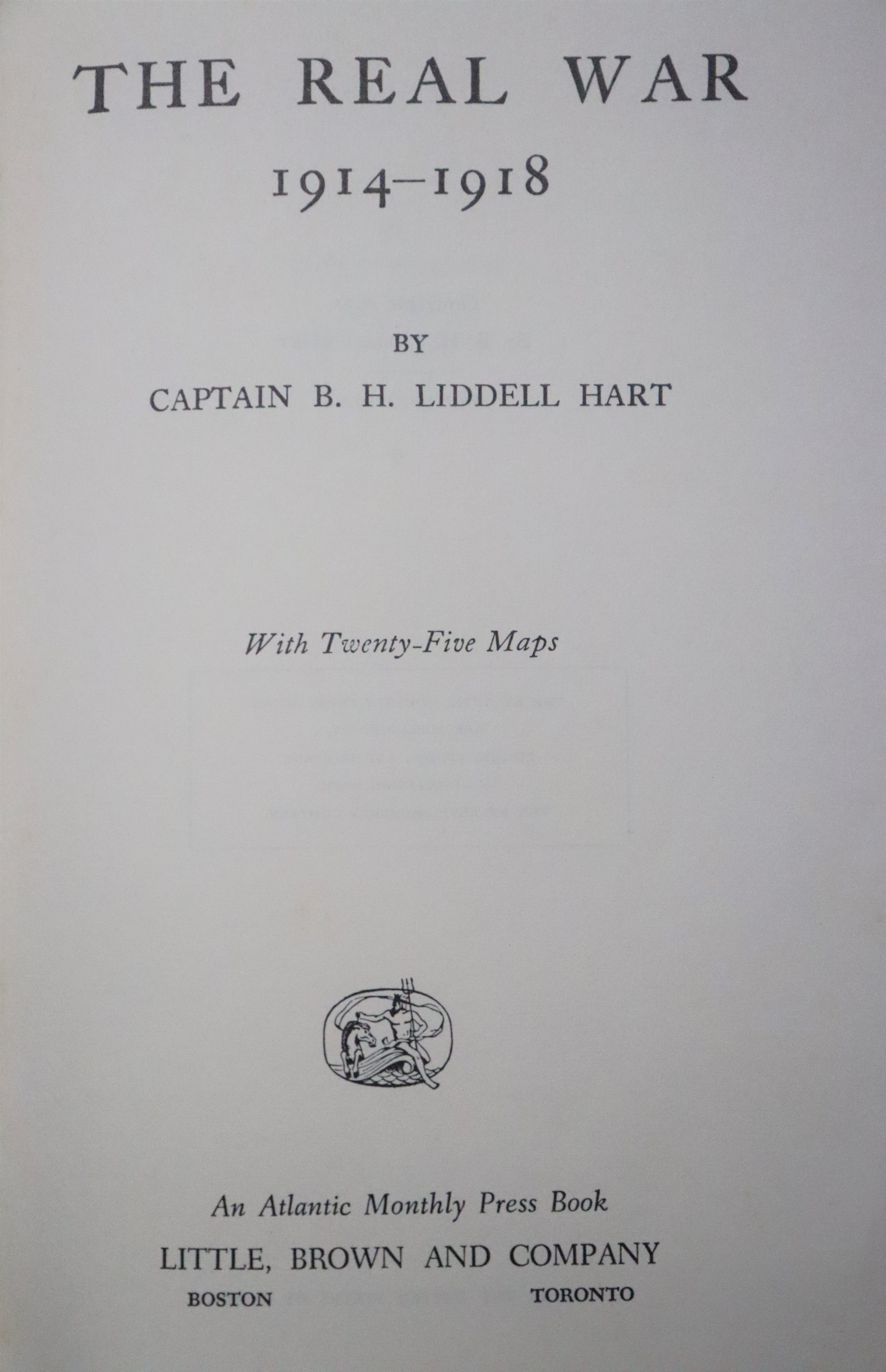
The Real War 1914-1918
About
Summary
Exquisite
TOC
Details
URL
Images
Overview
The Real War 1914-1918 by B.H. Liddell Hart, first published in 1930 and later revised, stands as a seminal work in the field of military history, offering a comprehensive and critical analysis of World War I. Drawing on his experience as a British officer and his later career as a military historian, Liddell Hart presents the conflict not merely as a succession of battles but as a complex interplay of strategy, technology, leadership, and national will. The book is renowned for its clarity, brevity, and insightful synthesis, transforming the chaos of war into a coherent narrative that is both accessible and profound.Liddell Hart’s account focuses primarily on the Western Front but also addresses other theaters such as the Eastern Front, the Italian campaigns, and the Dardanelles expedition. The narrative traces the war from the German invasion of Belgium to the final collapse of German morale in 1918, highlighting the pivotal moments, the evolution of tactics, and the shifting balance of power as new technologies and fresh forces—most notably the entry of the United States—altered the course of the conflict.
Importance of Book
The Real War 1914-1918 is widely regarded as a masterwork of military history. Liddell Hart’s analytical approach, combining tactical detail with strategic insight, set a new standard for the genre. His willingness to challenge prevailing narratives and critique both Allied and German leadership contributed to a more nuanced understanding of the war’s dynamics.The book’s influence extends beyond academia. Its clear prose and vivid descriptions made the complexities of World War I accessible to a broad audience, shaping public perceptions of the conflict for generations. Liddell Hart’s arguments about the importance of flexibility, innovation, and strategic vision have informed military thinking and doctrine ever since.
Key Themes
1. Strategy vs. Tactics
Liddell Hart repeatedly emphasizes that winning battles is not synonymous with winning wars. He illustrates how Germany, despite tactical brilliance and initial successes, ultimately lost due to strategic miscalculations—most notably, the decision to pursue unrestricted submarine warfare, which brought the United States into the war.2. The Role of Innovation
A central theme is the reluctance of military leaders, especially on the German side, to embrace technological innovation. While the Allies eventually made effective use of tanks and new forms of warfare, German command remained wedded to older tactics, focusing on short-term tactical gains rather than long-term strategic advantage. This failure to adapt proved decisive when the Allies broke through with massed tanks in 1918.3. Leadership and Human Fallibility
The book scrutinizes the personalities and decisions of military leaders, exposing their limitations and the consequences of their choices. Liddell Hart’s portrayal is unsentimental, stripping away the mythic aura to reveal generals as fallible mortals whose errors and stubbornness contributed to the war’s prolonged agony.4. The Decisive Impact of the United States
Liddell Hart underscores the transformative effect of American intervention. Germany’s gamble on total warfare was a race against time, hoping to starve Britain before American resources and troops could tip the balance. The arrival of U.S. forces in large numbers in 1918 marked the turning point, reversing the tide when Allied prospects seemed bleak.5. The Cost of Stagnation
The narrative is suffused with the misery of trench warfare—stalemate, attrition, and the grinding down of armies. Liddell Hart does not dwell on the personal suffering of soldiers but instead analyzes how strategic inertia prolonged the conflict and magnified its destructiveness.
Cultural Significance
Liddell Hart’s work helped demystify World War I, moving it from the realm of heroic myth to that of critical analysis. By focusing on the mistakes and missed opportunities of commanders, he challenged the glorification of war and contributed to a more skeptical, questioning attitude toward military authority. His emphasis on the tragic waste of human potential resonated with a postwar generation disillusioned by the conflict’s senseless carnage.The book’s Anglo-centric perspective reflects its origins, but Liddell Hart’s respect for the German military and his balanced treatment of both sides lent it credibility and appeal beyond Britain. His analysis of the interplay between technology, leadership, and national resources anticipated later developments in military theory and remains relevant in discussions of modern warfare.
Effects on Society
In Britain and beyond, The Real War 1914-1918 influenced both public understanding and official doctrine. It reinforced skepticism about the wisdom of military and political elites, contributing to the broader interwar movement toward pacifism and war-weariness. At the same time, Liddell Hart’s advocacy for innovation and adaptability in military affairs helped shape the thinking of a new generation of officers, some of whom would go on to lead in World War II.The book also played a role in the cultural processing of World War I. By providing a clear-eyed account of the war’s failures and lessons, it helped societies come to terms with the conflict’s legacy and avoid repeating its mistakes. Its impact can be seen in the way World War I is remembered—not just as a series of battles, but as a cautionary tale about the dangers of rigidity and hubris.
Conclusion
The Real War 1914-1918 by B.H. Liddell Hart remains a foundational text in the study of World War I. Its strengths lie in its analytical rigor, narrative clarity, and willingness to confront uncomfortable truths about leadership, innovation, and the nature of modern warfare. By exposing the strategic failures and human costs of the conflict, Liddell Hart’s work continues to inform both historical scholarship and military practice.The book’s enduring relevance is a testament to its author’s insight and the importance of understanding war not just as a series of events, but as a complex human endeavor shaped by choices, mistakes, and the relentless march of innovation. For anyone seeking to grasp the realities of World War I and its impact on the twentieth century, The Real War 1914-1918 remains essential reading.
Title
The Real War 1914-1918
Author
B.H Liddell
Name of Publisher
Little Brown
Publish Date
1895