
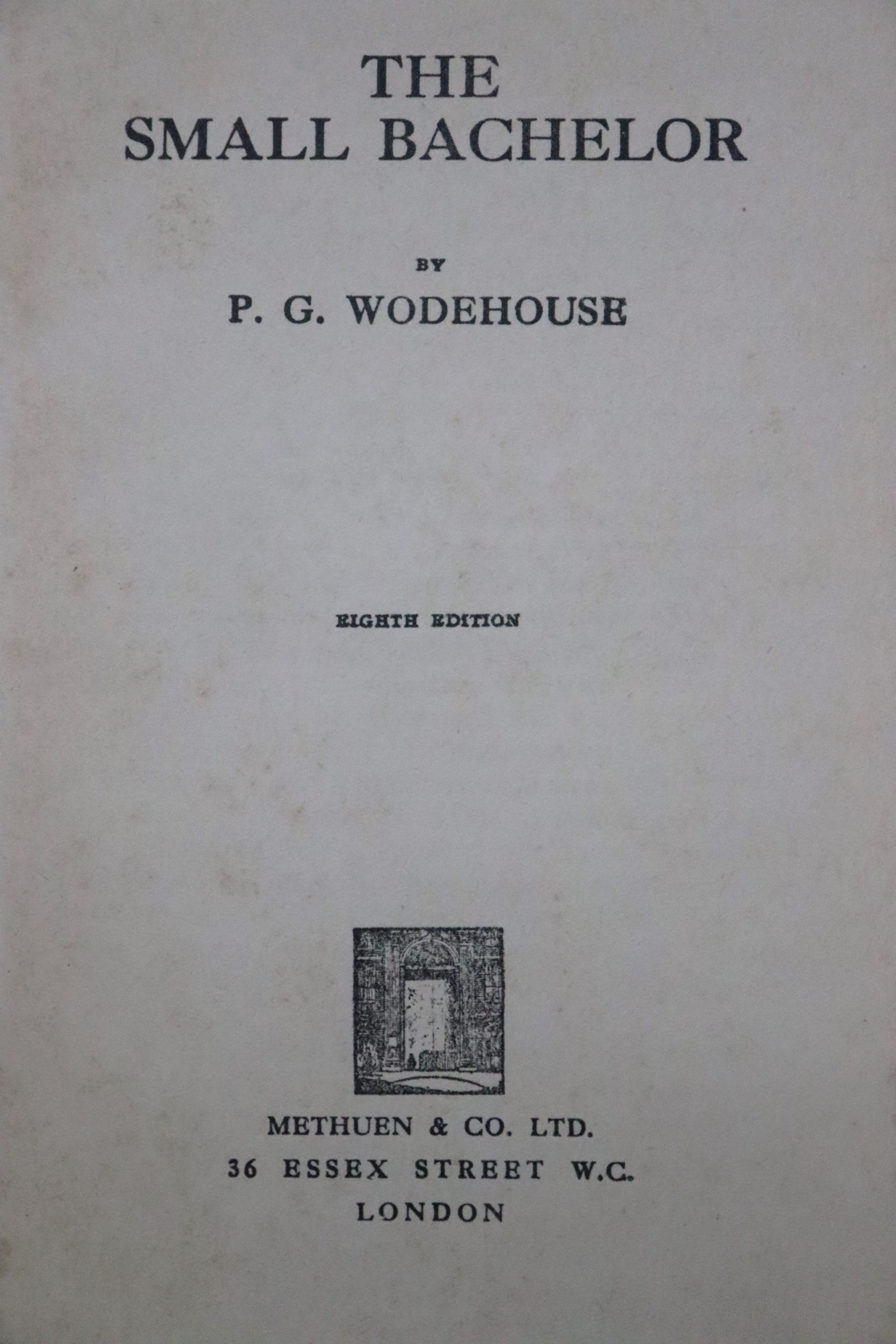
The Small Bachelor
About
Summary
Exquisite
TOC
Details
URL
Images
Overview
The Small Bachelor by P.G. Wodehouse, first published by Methuen in 1927 (not 1933), is a sparkling comic novel set in Prohibition-era New York. The story centers on George Finch, a timid, short-statured, and not particularly talented would-be artist from Idaho, who lives in a small penthouse apartment in Greenwich Village. George falls instantly in love with Molly Waddington, the stepdaughter of a socially ambitious matron, Mrs. Waddington, who has her own plans for Molly’s marital future. The narrative unfolds as a classic Wodehouse farce, brimming with romantic entanglements, mistaken identities, and social satire.
Importance of Book
The Small Bachelor is a quintessential example of Wodehouse’s mastery of comic fiction. It showcases his ability to blend intricate plotting, witty dialogue, and memorable characters into a seamless farce. The novel is notable for its American setting, reflecting Wodehouse’s transatlantic appeal and his keen observation of both British and American manners.Wodehouse’s style—marked by lightness, irony, and linguistic playfulness—has influenced generations of writers, from Evelyn Waugh to Douglas Adams. The book stands out for its energetic pacing and the way it distills the anxieties and aspirations of the 1920s into comedic gold.
Key Themes
Romantic Farce and Social Satire
Wodehouse uses the romantic misadventures of George Finch to lampoon social pretensions, class aspirations, and the peculiarities of both British and American society. The novel is a playful critique of social climbing, the pursuit of love, and the absurdities of Prohibition-era New York.Individuality vs. Social Expectations
George’s battle to win Molly’s heart is constantly thwarted by Mrs. Waddington’s rigid social ambitions. The story highlights the tension between personal happiness and societal expectations, with characters repeatedly forced to choose between love and social advancement.Transformation and Redemption
Several characters, including the reformed ex-convict valet Frederick Mullett and the former pickpocket Fanny Welch, embody themes of self-improvement and redemption. J. Hamilton Beamish, George’s friend and self-help author, also symbolizes the era’s fascination with self-transformation.Absurdity of Prohibition
Set against the backdrop of Prohibition, the novel pokes fun at the era’s legal restrictions and the resulting underground culture. Scenes involving police raids and hidden champagne add to the farcical tone and underscore the disconnect between law and everyday life.
Cultural Significance
The Small Bachelor is significant for its depiction of 1920s New York, a city in the throes of Prohibition, jazz, and social change. Wodehouse’s affectionate satire captures the era’s contradictions: the clash between old money and new ambition, the tension between tradition and modernity, and the absurdities of the law. The novel’s Broadway origins (it was based on the musical Oh, Lady! Lady!!) are evident in its theatrical structure and rapid-fire dialogue.The book also reflects the cultural exchange between Britain and America during the interwar years. Wodehouse, an Englishman living in the U.S., brings an outsider’s wit to American society, poking fun at both British snobbery and American hustle.
Effects on Society
While The Small Bachelor did not spark major social change, it contributed to the popular image of New York as a city of eccentricity, romance, and opportunity. Wodehouse’s gentle mockery of Prohibition, social climbing, and transatlantic misunderstandings resonated with readers on both sides of the Atlantic, offering comic relief during a period of rapid social transformation.The novel’s enduring popularity helped cement Wodehouse’s reputation as one of the great comic writers in English. Its lighthearted treatment of serious themes—love, class, and ambition—made it accessible to a broad audience, reinforcing the value of humor as a means of social commentary.
Conclusion
The Small Bachelor is a masterful comic novel that exemplifies P.G. Wodehouse’s unique blend of wit, farce, and social observation. Through the misadventures of George Finch and his circle, Wodehouse skewers the pretensions of both British and American society, celebrates the triumph of love over convention, and lampoons the absurdities of Prohibition-era New York. The novel’s enduring charm lies in its linguistic inventiveness, intricate plotting, and the universal appeal of its characters’ struggles and follies.Culturally, the book stands as a testament to the power of comedy to bridge social divides and provide insight into the human condition. Its influence can be seen in the works of later humorists and in the continued affection of readers worldwide. The Small Bachelor remains a delightful, insightful, and important work in the Wodehouse canon and in 20th-century comic literature.
Title
The Small Bachelor
Author
P.G Wodehouse
Name of Publisher
Methuen
Publish Date
1933
Edition
8th Edition