
The Miracle at Speedy Motor
About
Summary
Exquisite
TOC
Details
URL
Images
Overview
The Miracle at Speedy Motors (2008) is the ninth novel in Alexander McCall Smith’s No. 1 Ladies’ Detective Agency series, set in Gaborone, Botswana. The story centers on Precious Ramotswe, Botswana’s first female private detective, and her close-knit circle at the detective agency and at home. This installment weaves together several storylines: the arrival of threatening anonymous letters at the agency, a poignant case of a woman seeking her biological family, and a deeply personal challenge as Mr. J.L.B. Matekoni, Mma Ramotswe’s husband, pursues a costly and uncertain medical miracle for their foster daughter, Motholeli, who is paralyzed from the waist down.As these threads unravel, the novel explores the bonds of family—both biological and chosen—the meaning of miracles, and the subtle, everyday acts of kindness and resilience that define life in Botswana. The book’s gentle humor, philosophical undertones, and evocative descriptions of Botswana’s landscape and culture are characteristic of the series and have contributed to its international popularity.
Importance of Book
The Miracle at Speedy Motors stands out for its gentle yet profound exploration of ordinary life in Botswana. It offers readers a window into a society often overlooked in global literature, emphasizing universal values through local stories. The book’s importance lies in its ability to blend the detective genre with philosophical reflection, humor, and social commentary, making it accessible and meaningful to a wide audience.
Key Themes
Family and Identity
The search for identity is a central theme, embodied by Mma Sebina, who approaches the agency to help her find her family, not knowing her real name or whether she has any relatives. Her yearning for a sense of belonging echoes throughout the book, paralleling the experiences of Mma Ramotswe’s own foster family and reflecting broader questions of kinship and community in Botswana.Hope, Miracles, and Acceptance
Mr. J.L.B. Matekoni’s desperate hope that a South African doctor can cure Motholeli’s paralysis represents the universal longing for miracles. Mma Ramotswe’s skepticism and her struggle to balance hope with realism highlight the tension between faith and acceptance. Ultimately, the novel suggests that the true miracles in life are often small, everyday moments of love, forgiveness, and connection.Kindness, Compassion, and Forgiveness
Mma Ramotswe’s approach to detective work is rooted in empathy and understanding rather than confrontation. Her response to the anonymous threats—choosing to answer hatred with love—underscores the power of compassion. The resolution of the various storylines reinforces the importance of generosity, forgiveness, and the belief that people are fundamentally good.Community and Belonging
The phrase “in care of,” used to describe the agency’s address, becomes a motif for the interconnectedness of people in Botswana. The novel celebrates the invisible ties that bind individuals together and the collective responsibility people feel for one another in their community.Resilience and Everyday Wisdom
Characters face setbacks—financial difficulties, broken furniture, disappointments in love and health—but respond with humor, resourcefulness, and philosophical acceptance. The book’s tone is optimistic, suggesting that life’s challenges can be endured and even transformed by the right attitude.
Cultural Significance
The series, and this novel in particular, have played a significant role in shaping international perceptions of Botswana. Rather than focusing on the country’s challenges, McCall Smith highlights its beauty, traditions, and the warmth of its people. The stories celebrate Botswana’s landscape—the “dry people” who “dream of rain and water”—and its customs, such as the paying of bogadi (bride price), the importance of cattle, and respect for elders.Through Mma Ramotswe’s eyes, readers experience a Botswana that is both specific in its cultural details and universal in its emotional truths. The books have fostered a sense of pride among Batswana and introduced global audiences to the richness of Southern African life.
Effects on Society
While the series is written by a Scottish author, it has had a notable effect on how Botswana is viewed both within and outside its borders. The novels have contributed to a positive national image, boosting tourism and international interest in Botswana’s culture and landscape. Locally, the books have sparked discussions about gender roles, family structures, and the value of traditional wisdom in a rapidly changing society.The character of Mma Ramotswe, as a strong, independent, and compassionate woman, has become an icon, inspiring readers—especially women—to value their own insights and contributions to their communities. The books’ emphasis on kindness and ethical living resonates in a world often marked by cynicism and conflict.
Conclusion
The Miracle at Speedy Motors is a quietly powerful novel that continues the legacy of the No. 1 Ladies’ Detective Agency series. Through its interwoven stories of mystery, hope, and healing, it affirms the significance of family, the possibility of everyday miracles, and the enduring strength of community. Alexander McCall Smith’s portrayal of Botswana is affectionate and respectful, offering a nuanced depiction of a country where tradition and modernity coexist.Ultimately, the book’s greatest achievement is its celebration of the ordinary: the small acts of love, the quiet moments of understanding, and the resilience required to face life’s uncertainties. In doing so, it provides comfort and inspiration, reminding readers that miracles—though seldom grand—are always possible when people care for one another.
Title
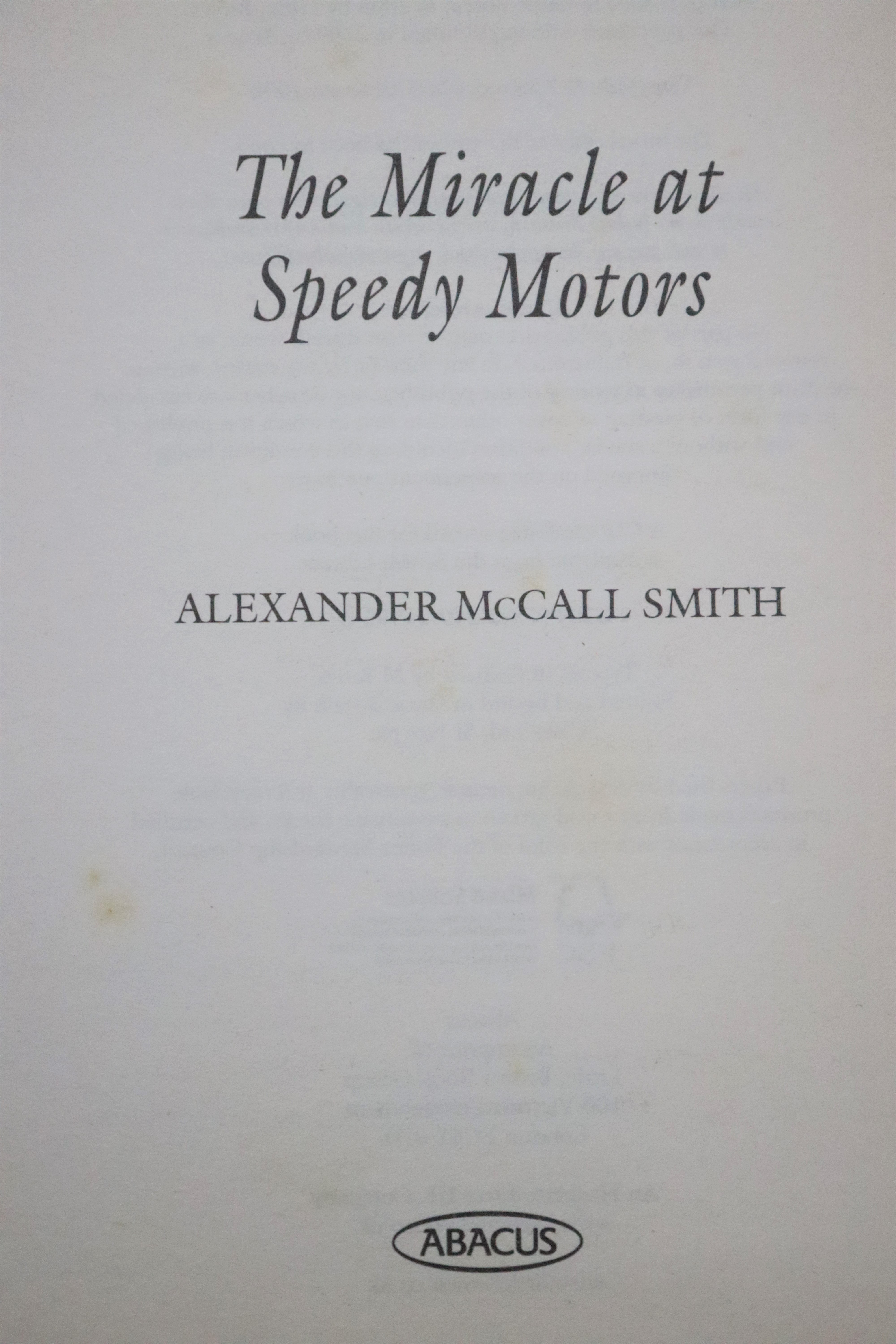
The Miracle at Speedy Motor
Author
Alexander Mccall Smith
Name of Publisher
Abacus
Publish Date
2009