
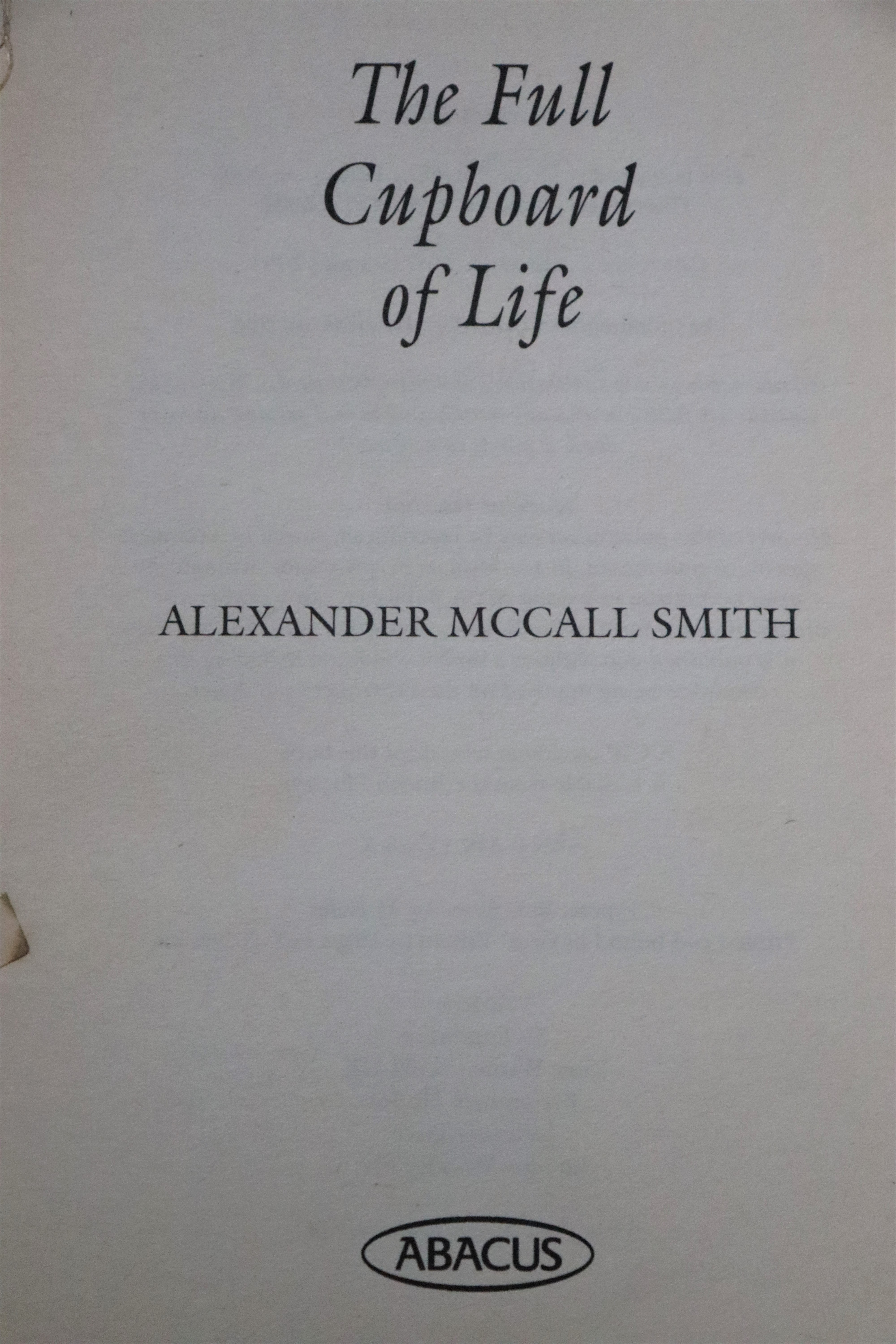
The Full Cupbord of life
About
Summary
Exquisite
TOC
Details
URL
Images
Overview
The Full Cupboard of Life is the fifth book in Alexander McCall Smith’s acclaimed No. 1 Ladies’ Detective Agency series, published by Abacus in 2004. Set in Botswana, the novel follows the wise and compassionate detective Mma Precious Ramotswe as she balances her professional cases with personal dilemmas, particularly her long-standing engagement to the gentle mechanic Mr. J.L.B. Matekoni. Unlike conventional detective fiction, this installment focuses less on crime and more on the gentle unraveling of everyday mysteries, relationships, and the rhythms of Botswanan life.
Importance of Book
The Full Cupboard of Life is significant for its unique approach to detective fiction. Rather than focusing on crime or suspense, the novel celebrates the ordinary moments and moral dilemmas that define human experience. It offers a counter-narrative to the violence and turmoil often depicted in African settings, instead presenting Botswana as a place of beauty, resilience, and hope. The book’s gentle tone and focus on character development have broadened the appeal of the detective genre, attracting readers who value emotional intelligence and cultural insight over traditional mystery plots.
Key Themes
Tradition vs. Modernity
Mma Ramotswe embodies “the old Botswana morality”—a deep respect for tradition, honesty, and community values—while also demonstrating modern sensibilities, such as running her own business and making independent choices about her life and relationships. The novel explores what it means to be “the right sort of woman” in contemporary Botswana, as Mma Ramotswe navigates both traditional expectations and her own progressive path.Community and Compassion
A central motif is the importance of community. The orphan farm, supported by Mr. J.L.B. Matekoni, stands as a symbol of collective responsibility and kindness. The novel highlights how small acts of generosity and solidarity can profoundly impact the lives of the vulnerable, especially orphans.Love, Loyalty, and Forgiveness
Mma Ramotswe’s reflections on love and marriage are threaded throughout the book. She believes that love is tied to forgiveness, understanding, and timing. Her relationship with Mr. J.L.B. Matekoni is marked by mutual respect and patience, even as their engagement faces delays and outside pressures. The narrative gently probes the challenges and rewards of romantic and familial bonds.Gentle Humor and Everyday Wisdom
The book is suffused with humor and warmth, often found in the characters’ interactions and the simple pleasures of daily life—especially the ritual of drinking tea, which serves as both a cultural touchstone and a moment for reflection and connection. Mma Ramotswe’s approach to detective work relies more on empathy, common sense, and psychological insight than on forensic evidence or confrontation.
Cultural Significance
Alexander McCall Smith’s depiction of Botswana is both affectionate and respectful. The landscape, customs, and speech of the country are rendered with poetic detail, immersing readers in a world where tradition and modernity coexist. The recurring motif of tea-drinking, for instance, is not just a narrative device but a reflection of Botswanan hospitality and the importance of community gathering.The series, and this book in particular, has contributed to a more nuanced global understanding of Botswana, countering stereotypes and highlighting the country’s stability, moral values, and everyday joys. The characters’ dilemmas and triumphs resonate universally, but are deeply rooted in the specific context of Botswanan society.
Effects on Society
While the book does not directly address major political or social crises, its portrayal of Botswana has had a notable impact on how the country is perceived internationally. By focusing on the positive aspects of Botswanan life—community, kindness, and quiet perseverance—McCall Smith has helped foster a sense of pride among Botswanan readers and curiosity among international audiences.The gentle, optimistic tone of the series has also provided comfort and inspiration to readers worldwide, offering a model of how to navigate life’s challenges with grace and humor. The emphasis on community support, as exemplified by the orphan farm, encourages readers to value collective responsibility and the transformative power of small acts of kindness.
Conclusion
The Full Cupboard of Life stands out as a novel that finds profundity in simplicity. Through the eyes of Mma Ramotswe and her circle, Alexander McCall Smith explores universal themes of love, morality, and community, set against the richly drawn backdrop of Botswana. The book’s charm lies in its gentle humor, its celebration of everyday wisdom, and its unwavering belief in the goodness of people.Rather than presenting a Botswana beset by crisis, McCall Smith offers a vision of a society where tradition and modernity coexist, where compassion and decency are the foundation of daily life, and where even the smallest acts can have lasting significance. For readers, The Full Cupboard of Life is more than a detective story—it is an invitation to appreciate the beauty of ordinary moments and the enduring strength of community.
Title
The Full Cupbord of life
Author
Alexander Mccall Smith
Name of Publisher
Abacus
Publish Date
2004