
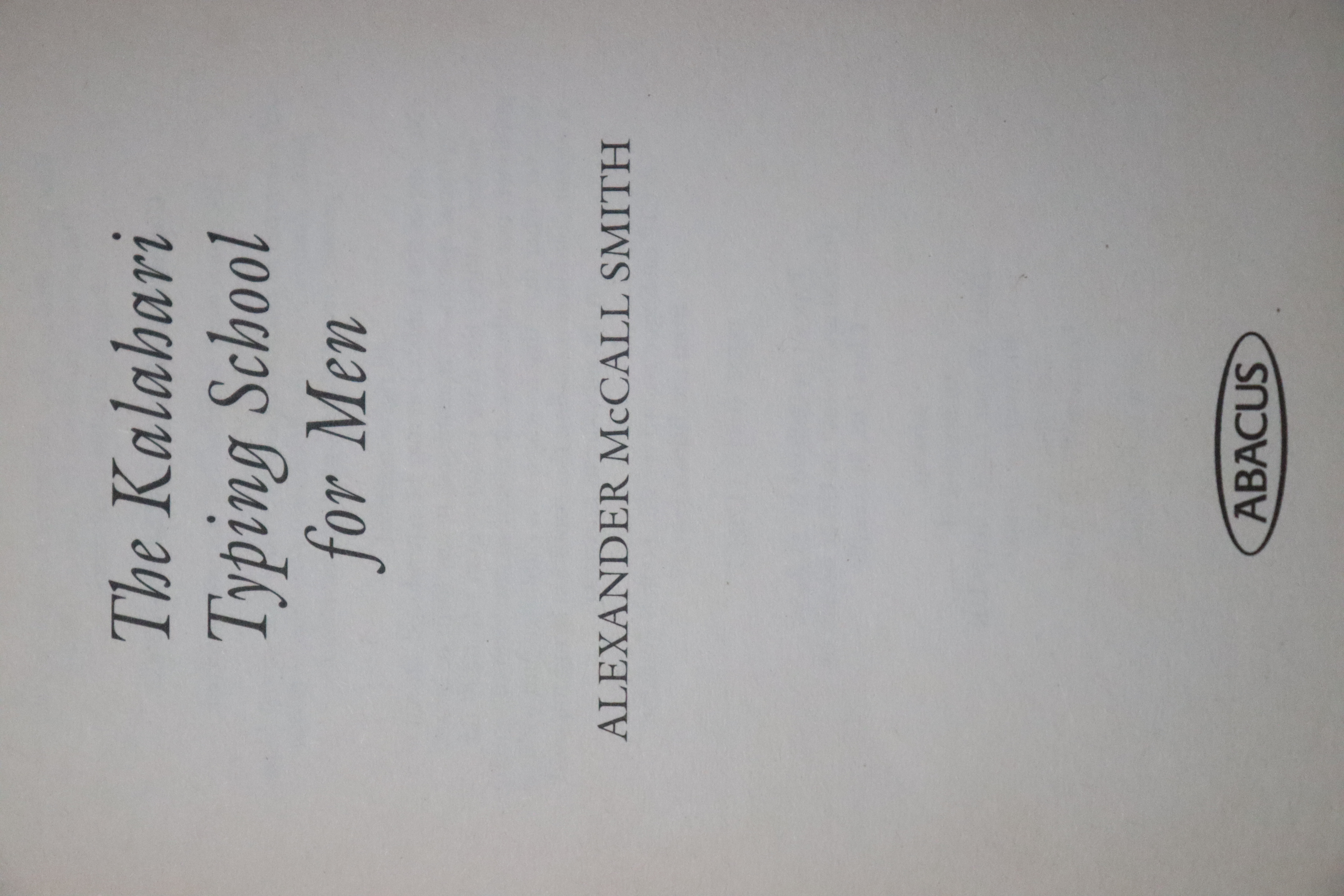
The Kalahari Typing school for Men
About
Summary
Exquisite
TOC
Details
URL
Images
Overview
The Kalahari Typing School for Men by Alexander McCall Smith, published by Abacus in 2005, is the fourth novel in the beloved No. 1 Ladies’ Detective Agency series. Set in Gaborone, Botswana, the story continues to follow the life and cases of Mma Precious Ramotswe, Botswana’s first and only female private detective. In this installment, the agency faces new challenges: the arrival of a rival detective agency run by a boastful ex-policeman, Mr. Cephas Buthelezi, and the personal and professional growth of Mma Ramotswe’s assistant, Mma Grace Makutsi, who launches a unique business venture—a typing school for men.The narrative weaves together multiple storylines: Mma Ramotswe’s detective cases, Mma Makutsi’s entrepreneurial journey, and the everyday lives of their friends and family. The book is both a gentle mystery and a nuanced exploration of contemporary Botswanan society, highlighting the intersections of tradition, gender, and modernity.
Importance of Book
The Kalahari Typing School for Men stands out for its deft blend of mystery, social commentary, and character-driven storytelling. It offers readers a window into everyday life in Botswana, presenting a society in transition but anchored in strong values. The novel’s importance lies in its ability to humanize its characters, presenting them with dignity and complexity, while also addressing universal themes of love, ambition, and morality.The book is also significant for its portrayal of African women as capable, intelligent, and resourceful. Mma Ramotswe and Mma Makutsi are positive role models who navigate personal and professional challenges with integrity and ingenuity.
Key Themes
1. Gender Roles and Empowerment
The novel directly addresses the traditional gender expectations in Botswana. Mma Makutsi’s decision to open a typing school exclusively for men is both a commentary on and a challenge to the prevailing notion that typing is a woman’s skill. Her venture empowers men to break free from pride and embrace practical skills, while also highlighting the subtle ways in which women like Mma Makutsi and Mma Ramotswe assert independence and agency in a patriarchal society.2. Change, Adaptation, and Personal Growth
Characters in the novel are constantly adapting to new circumstances. Mma Ramotswe must adjust to competition and changing family dynamics, while Mma Makutsi seeks financial independence and personal fulfillment. The story emphasizes the importance of embracing change and learning from life’s challenges.3. Community and Social Responsibility
Botswana’s strong sense of community is a recurring motif. Mma Ramotswe’s cases often highlight the interconnectedness of people’s lives and the importance of compassion, honesty, and social responsibility. The foster children, Motholeli and Puso, and their experiences with bullying and adjustment, further illustrate the value of support networks.4. Tradition vs. Modernity
The book explores the tension between traditional values and the pressures of modernization. The arrival of a flashy, male-dominated detective agency and the introduction of a typing school for men serve as metaphors for broader societal changes. The characters’ navigation of these changes reflects Botswana’s evolving identity.5. Humor and Resilience
McCall Smith infuses the narrative with warmth and humor, using it as a coping mechanism for the characters. The gentle wit and philosophical observations provide comfort and resilience in the face of adversity.
Cultural Significance
McCall Smith’s series, and this novel in particular, have contributed to a broader understanding and appreciation of Botswanan culture. The stories are rich with local color—descriptions of the Kalahari landscape, traditional foods, social customs, and the Setswana language. Through the eyes of Mma Ramotswe, readers learn about the importance of respect, hospitality, and community in Botswanan society.The book also highlights the gradual shift in gender roles, with women taking on more prominent roles in business and society. By focusing on the everyday lives of ordinary people, the novel challenges stereotypes about Africa, offering instead a narrative of hope, humor, and resilience.
Effects on Society
While the direct social impact of a novel can be difficult to measure, The Kalahari Typing School for Men and the wider No. 1 Ladies’ Detective Agency series have had a notable effect on Botswana’s international image. The books have introduced global audiences to the country’s unique culture, landscapes, and values, often countering negative stereotypes about Africa. The series has even inspired tourism to Botswana, with fans eager to experience the settings described in the novels.Within Botswana, the books are a source of pride, showcasing the country’s traditions and the strength of its women. The positive, nuanced portrayal of Botswanan life has resonated with readers both locally and abroad, fostering greater cultural understanding and appreciation.
Conclusion
The Kalahari Typing School for Men is a charming, insightful, and gently humorous novel that continues the adventures of Mma Precious Ramotswe and her circle. Through its engaging narrative and memorable characters, the book explores important themes such as gender, community, and the tension between tradition and change. Its cultural significance lies in its authentic depiction of Botswana and its people, offering a refreshing perspective that celebrates resilience, kindness, and the quiet heroism of everyday life.The novel’s enduring appeal comes from its warmth, wisdom, and the sense of optimism it imparts. As part of the No. 1 Ladies’ Detective Agency series, it has played a vital role in shaping perceptions of Botswana and African women, both within the continent and around the world.
Title
The Kalahari Typing school for Men
Author
Alexander Mccall Smith
Name of Publisher
Abacus
Publish Date
2005