
Once there Was a War
About
Summary
Exquisite
TOC
Details
URL
Images
Overview
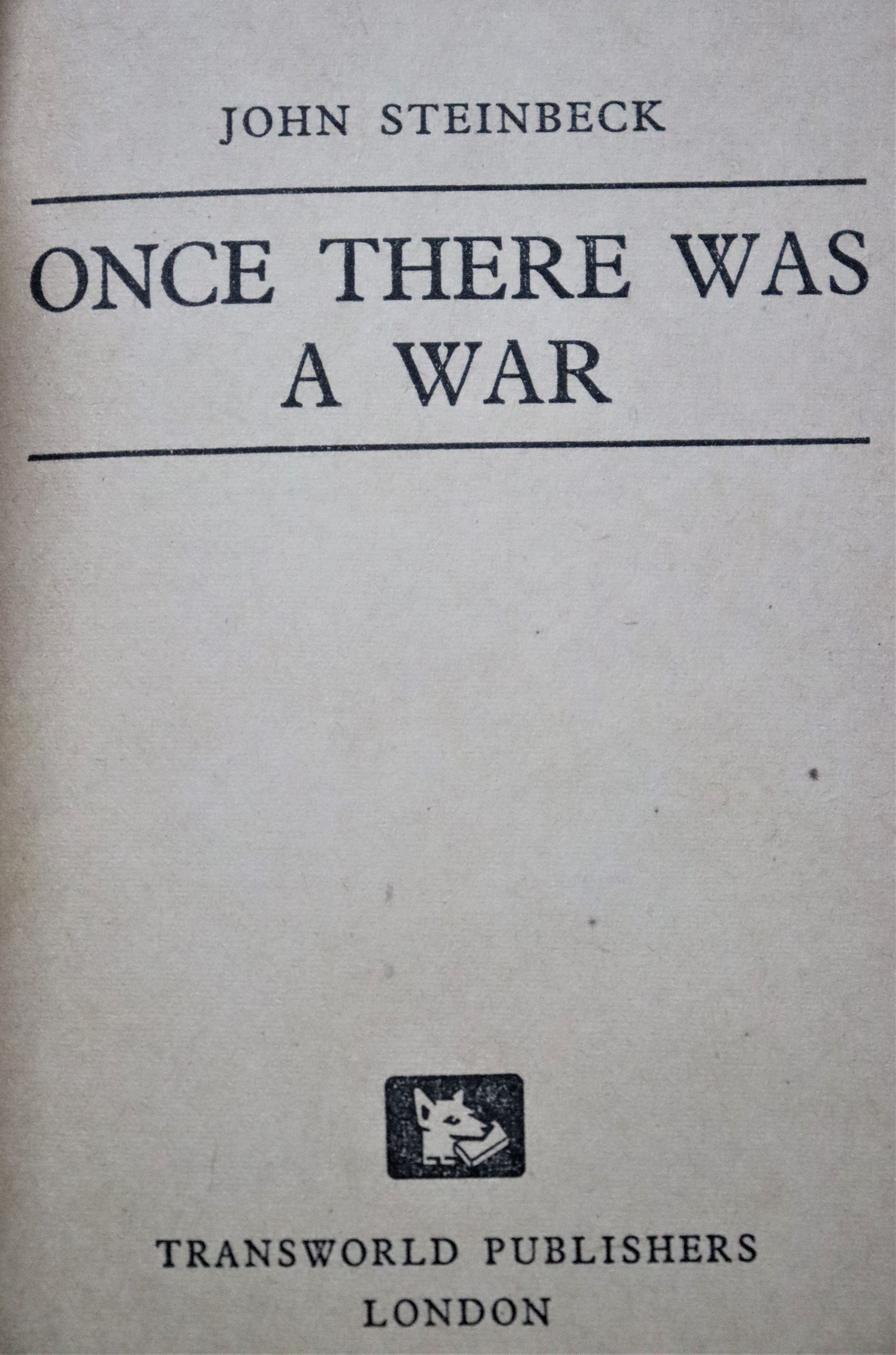
Once There Was a War by John Steinbeck, published in 1958, is a collection of wartime dispatches written while Steinbeck served as a special correspondent for the New York Herald Tribune during World War II. The book compiles his firsthand observations and reports from various fronts, including England during the London Blitz, North Africa, and Italy, between June and December 1943. Rather than focusing on grand strategies or military leaders, Steinbeck centers his narrative on the everyday experiences, emotions, and resilience of ordinary soldiers and civilians caught in the turmoil of war.
Importance of Book
Once There Was a War stands out in the canon of war literature for several reasons:Shift in Perspective: Unlike many war correspondents of his time, Steinbeck prioritized the voices and experiences of ordinary people over political or military analysis. This approach broadened the scope of war reporting and brought attention to the psychological and emotional dimensions of conflict.Empathy and Nuance: Steinbeck’s empathetic writing style and nuanced observations offer a more complete and humanized understanding of war, challenging readers to see beyond headlines and statistics.Literary Merit: Written by a Nobel laureate at the height of his powers, the book is lauded for its sensitive prose, vivid imagery, and the intimacy Steinbeck creates with his subjects.
Key Themes
1. The Human Side of War
Steinbeck’s dispatches are notable for their focus on the personal and emotional realities of war. He eschews traditional reporting on tactics and politics, instead offering intimate portraits of soldiers and civilians—their fears, hopes, humor, and acts of kindness. Through anecdotes and vignettes, Steinbeck humanizes those involved, transforming faceless statistics into individuals with unique stories.2. Camaraderie and Everyday Heroism
A central theme is the deep sense of camaraderie among soldiers. Steinbeck highlights small acts of bravery and mutual support, such as medics tending the wounded under fire or soldiers sharing a joke in a foxhole. These moments of solidarity and humor are not just coping mechanisms but essential elements that enable survival and resilience in the face of relentless hardship.3. The Brutality and Absurdity of War
While Steinbeck’s prose is often gentle and empathetic, he does not shy away from the horrors of war. His descriptions of bombed villages, wounded civilians, and the psychological toll on soldiers convey the profound brutality and absurdity of conflict. He often juxtaposes moments of levity with scenes of devastation, underscoring the surreal and contradictory nature of wartime existence.4. The Aftermath and Legacy of Conflict
In the book’s later sections, Steinbeck reflects on the end of the war and its lingering effects. He explores the bittersweet reality of victory—relief tempered by exhaustion and loss—and the challenges faced by returning soldiers and war-torn communities as they attempt to rebuild their lives. Steinbeck’s cautionary tone warns against forgetting the lessons of war and emphasizes the need for justice and mutual respect as the foundation for lasting peace.
Cultural Significance
Steinbeck’s work resonated deeply with American readers and beyond, shaping perceptions of World War II and the role of journalism in society:Humanizing the Soldier: By focusing on the day-to-day realities and emotional struggles of soldiers, Steinbeck helped cultivate a more nuanced and compassionate view of those who served. His stories countered the often dehumanizing rhetoric of wartime propaganda.Influence on War Reporting: Steinbeck’s style influenced subsequent generations of journalists and writers, encouraging a more personal and immersive approach to war correspondence.Reflection of National Mood: Published in the late 1950s, the book arrived at a time when America was grappling with the legacy of World War II and the onset of the Cold War. Steinbeck’s reflections offered both a tribute to the resilience of the “Greatest Generation” and a cautionary meditation on the costs of conflict.
Effects on Society
Once There Was a War had several notable effects on American society and the broader cultural landscape:Public Awareness: The book contributed to a greater public awareness of the psychological and social impacts of war, both on those who fought and on civilian populations. Steinbeck’s vivid accounts gave readers a sense of the lived experience of conflict, fostering empathy and understanding.Dialogue on War’s Consequences: By highlighting the long-term effects of war on individuals and communities, Steinbeck encouraged a national conversation about the responsibilities owed to veterans and the importance of supporting postwar recovery.Enduring Legacy: The book remains a touchstone for discussions about the ethics of war, the role of the journalist, and the importance of remembering the human costs of conflict. Its influence can be seen in later works of war reporting and literature that seek to capture the complexity of wartime experience.
Conclusion
Once There Was a War is a powerful and enduring work that transcends its immediate historical context. Through his compassionate and insightful reporting, John Steinbeck offers readers a window into the everyday heroism, suffering, and resilience of those who lived through World War II. His focus on the personal and emotional dimensions of war challenges us to remember that behind every headline and statistic lies a human story. The book’s cultural significance and influence on journalism and literature are profound, ensuring its place as a classic of war reportage and a testament to the indomitable spirit of humanity in the face of unimaginable adversity.
Title
Once there Was a War
Author
John Steinbeck
Name of Publisher
Transwords Publishers
Publish Date
1958