
Dragon Fire
About
Summary
Exquisite
TOC
Details
URL
Images
Overview
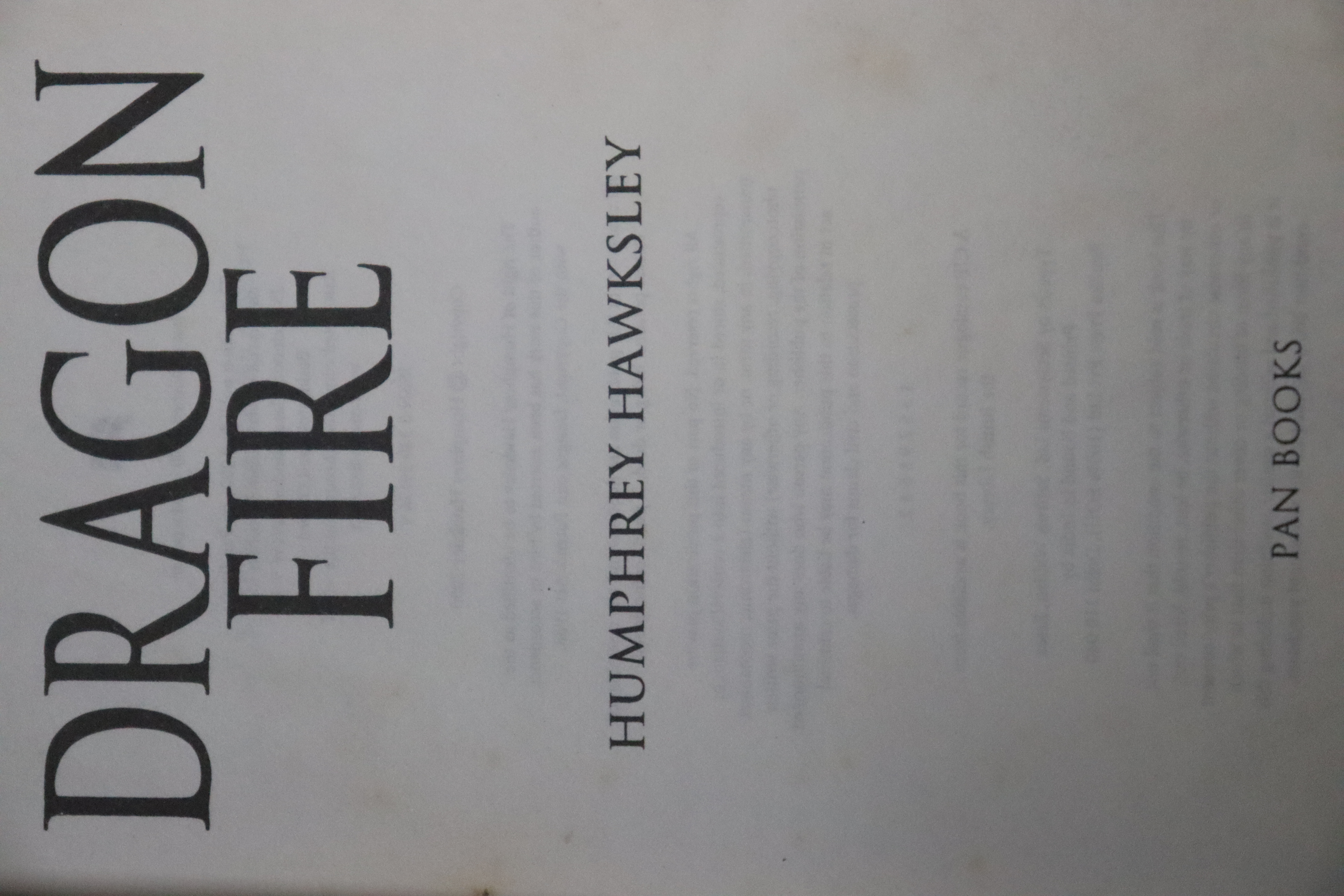
Dragon Fire by Humphrey Hawksley, published by Pan Books in 2000, is a political thriller that imagines a catastrophic future war in Asia, involving India, China, and Pakistan. The novel opens with a dramatic rescue attempt in Tibet and quickly escalates into a full-scale, three-sided conflict that ultimately leads to a nuclear holocaust. Hawksley, a seasoned BBC journalist, uses his deep knowledge of Asian geopolitics to craft a scenario that is both gripping and disturbingly plausible, blurring the lines between fiction and potential reality.The story begins with a covert mission: a group of Tibetan operatives, aided by Indian intelligence, attempts to free a revered Buddhist monk from a notorious Chinese prison in Lhasa. This sparks a chain reaction—Pakistan, emboldened by Chinese support, launches a military offensive across the Line of Control in Kashmir, while China readies its nuclear arsenal. As the conflict spirals, the United States and Japan are sidelined, and the world watches helplessly as Asia descends into chaos. The narrative is episodic, moving rapidly from one crisis to another, with the fate of nations hanging in the balance.
Importance of Book
Dragon Fire stands out for its chillingly realistic portrayal of a nuclear conflict in South Asia. It is not merely a work of fiction but a cautionary tale that highlights the urgent need for diplomatic engagement and conflict resolution in one of the world’s most volatile regions. The novel’s scenario—once considered far-fetched—gained credibility in the context of the Kargil conflict and subsequent tensions between India and Pakistan, making it essential reading for policymakers, military strategists, and anyone interested in international relations.India’s former Defense Minister, George Fernandes, commended the book for its realistic depiction of the political and historical landscape, urging every Indian to read it as a wake-up call to the dangers of complacency in matters of national security.
Key Themes
1. Escalation of Conflict:
The novel meticulously traces how isolated incidents—such as a rescue mission or a border skirmish—can escalate into full-scale war, especially in regions with deep-seated historical animosities and nuclear capabilities.2. Nuclear Deterrence and Catastrophe:
Hawksley explores the terrifying consequences of nuclear brinkmanship. The devastation of Indian cities like Mumbai and Delhi underscores the fragility of peace in the nuclear age and the catastrophic human cost of war.3. Realpolitik and Power Shifts:
The book examines the shifting balance of power in Asia, particularly the rise of China as a superpower following the collapse of the unipolar world order. It questions the effectiveness of Western influence and the role of multinational corporations, which are notably absent from Hawksley’s narrative.4. Bureaucracy and Military Logistics:
Hawksley’s journalistic background shines in his detailed depiction of military planning, bureaucratic maneuvering, and the often impersonal nature of high-level decision-making during crises.5. The Human Cost of War:
While the novel’s characters are sometimes criticized as being more archetypal than fully realized, the sheer scale of destruction and suffering depicted serves as a stark warning about the real-world implications of geopolitical miscalculations.
Cultural Significance
Upon its release, Dragon Fire sparked considerable debate in South Asia and beyond. The book’s depiction of a nuclear holocaust resonated deeply in India, where memories of the Kargil War and ongoing tensions with Pakistan were still fresh. Hawksley’s decision to base fictional leaders on real-life counterparts—such as India’s prime minister resembling N. Chandrababu Naidu and Pakistan’s general echoing Pervez Musharraf—blurred the boundaries between fiction and reality, making the narrative more immediate and unsettling for readers.The novel contributed to a broader cultural conversation about the risks of nuclear proliferation and the complexities of regional politics. It challenged readers to confront uncomfortable questions about national identity, the ethics of warfare, and the responsibilities of global powers in preventing catastrophe.
Effects on Society
Dragon Fire had a significant impact on public discourse in India and the wider region. By dramatizing the potential consequences of unresolved disputes and unchecked militarization, the novel encouraged greater scrutiny of government policies and military strategies. It was recommended as compulsory reading for politicians, military officials, and strategic analysts, highlighting its perceived value as a tool for education and reflection.The book also influenced popular perceptions of China and Pakistan, reinforcing anxieties about external threats and the possibility of betrayal or collusion against Indian interests. While some critics argued that the novel’s episodic structure and lack of nuanced characters limited its literary merit, its vivid depiction of bureaucratic and military processes was widely praised.
Conclusion
Dragon Fire by Humphrey Hawksley is a sobering exploration of the dangers posed by unresolved geopolitical tensions in Asia. Through its fast-paced, episodic narrative, the novel illustrates how quickly local conflicts can escalate into global disasters, especially in a nuclearized world. While its characters may lack depth, the book’s real strength lies in its detailed depiction of military strategy, political maneuvering, and the devastating consequences of war.The novel’s lasting significance lies in its ability to provoke debate and reflection on issues of national security, diplomacy, and the human cost of conflict. By imagining the unthinkable, Hawksley compels readers—and policymakers—to consider the urgent need for dialogue, restraint, and cooperation in a region where the stakes could not be higher.As a work of speculative fiction grounded in real-world concerns, Dragon Fire remains a powerful warning against complacency and a call to action for a safer, more stable future in South Asia.
Title
Dragon Fire
Author
Humphrey Hawksley
Name of Publisher
Pan Books
Publish Date
2000