
Christmas Stories : Household Worlds and All the year Round
About
Summary
Exquisite
TOC
Details
URL
Images
Overview
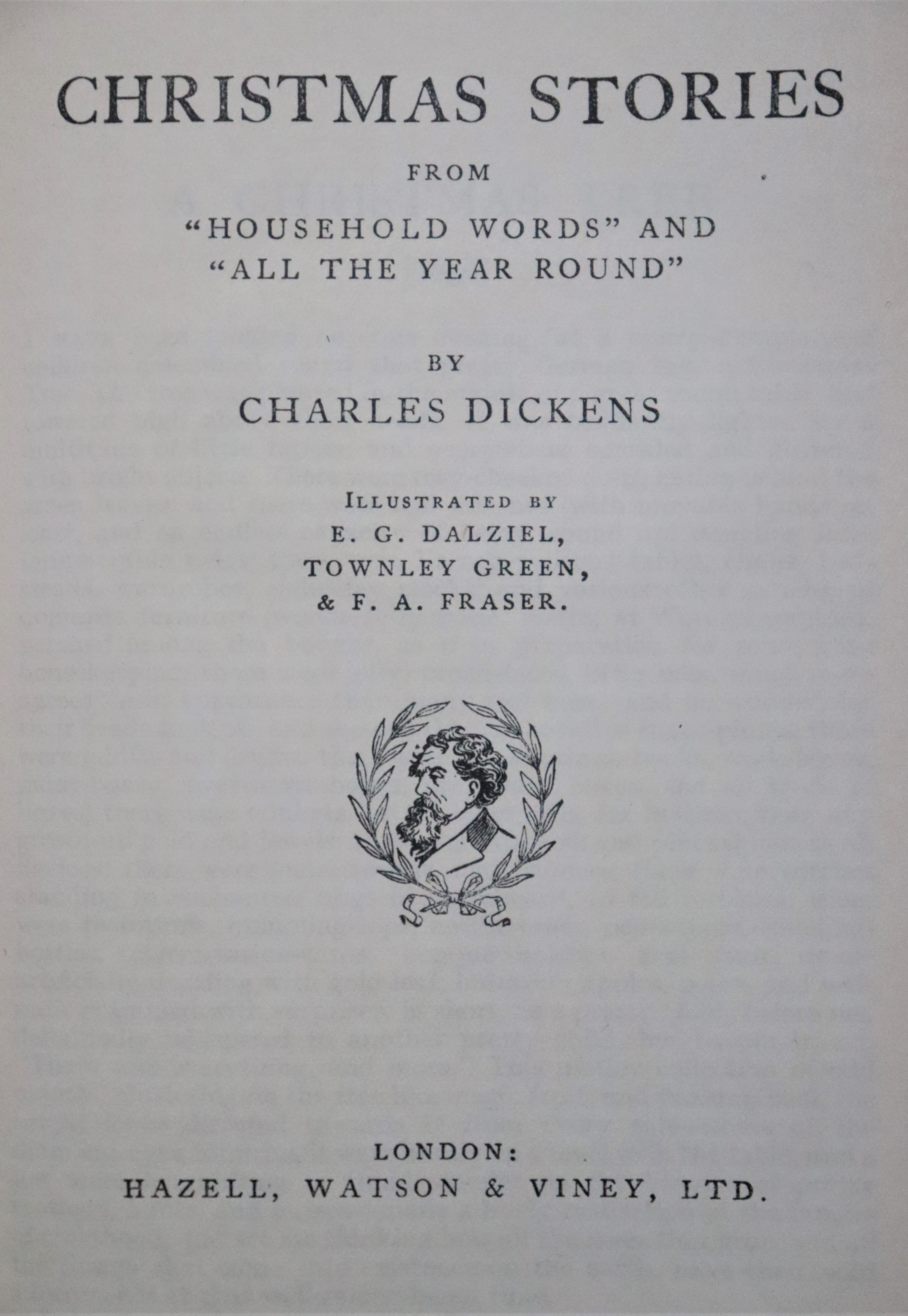
Christmas Stories: Household Words and All the Year Round is a collection that brings together the festive tales Charles Dickens wrote and edited for his two influential periodicals, Household Words and All the Year Round. Published in 1929 by Hazell, Watson, this volume compiles stories originally released as annual Christmas Numbers from the mid-19th century. These stories were often collaborative efforts, with Dickens providing the framework and key sections, while his staff and literary friends contributed additional tales. The stories explore themes of family, memory, redemption, and social conscience, all set against the backdrop of Victorian Christmas traditions.Dickens’s Christmas stories from these periodicals are less well-known than his standalone novella A Christmas Carol, but they are considered by scholars to be some of the most experimental and socially engaged works of his career. They showcase his ongoing concern with the marginalized, the power of memory, and the redemptive possibilities of the holiday season.
Importance of Book
Christmas Stories: Household Words and All the Year Round is significant for several reasons:Literary Innovation: The collaborative, framed-tale structure allowed Dickens to experiment with narrative voice and perspective, including rare uses of child and female narrators.Social Commentary: The stories serve as a vehicle for Dickens’s critique of Victorian society, especially its treatment of the poor and marginalized. They reflect his belief in literature’s power to inspire empathy and social change.Cultural Influence: The collection helped to shape the modern celebration of Christmas in Britain and beyond, popularizing customs such as family gatherings, festive meals, and charitable giving.
Key Themes
Redemption and Transformation
Central to Dickens’s Christmas stories is the theme of personal and social redemption. Characters often undergo profound transformations, moving from selfishness to generosity, from isolation to community, and from despair to hope. This mirrors the journey of Ebenezer Scrooge in A Christmas Carol, but the Christmas Numbers expand the theme to a broader cast of characters and situations.Generosity and Compassion
The stories emphasize the importance of generosity—not just financial, but emotional and spiritual. Dickens contrasts characters who embody the Christmas spirit of giving, such as Bob Cratchit and Fred, with those who are miserly or indifferent, like Scrooge. The tales argue that true joy comes from human connection and selfless acts, rather than material wealth.Social Responsibility
A recurring motif in these stories is the moral obligation to care for others, particularly the poor and vulnerable. Dickens uses the Christmas setting to highlight issues of poverty, ignorance, and social injustice, urging readers to extend charity and compassion beyond their immediate circles.Memory and Family
The importance of memory and the enduring bonds of family are woven throughout the stories. Dickens often uses family gatherings and reminiscences to evoke nostalgia and underscore the value of home and belonging, especially during the holiday season.The Christmas Spirit
Dickens characterizes Christmas as a time of goodwill, cheer, and communal celebration. The stories suggest that the Christmas spirit has the power to soften even the hardest hearts and to inspire acts of kindness and forgiveness.
Cultural Significance
Dickens’s Christmas stories, both in standalone works like A Christmas Carol and in the Christmas Numbers, played a pivotal role in the Victorian revival of Christmas traditions. At a time when the holiday was being reimagined, Dickens’s tales emphasized values of generosity, family, and social conscience, helping to define the holiday’s modern ethos.The stories also contributed to the popularization of Christmas as a time for storytelling, reflection, and communal celebration. Dickens’s depiction of Christmas festivities, with their warmth and inclusivity, influenced everything from holiday cards to the importance of seasonal charity.
Effects on Society
The impact of Dickens’s Christmas stories on British society was profound:Social Awareness: By dramatizing the plight of the poor and the moral failings of the wealthy, Dickens raised public awareness of social issues and encouraged charitable action, especially during the holiday season.Shaping Christmas Traditions: Dickens’s vision of Christmas as a time for generosity, family, and festivity helped to revive and reshape the holiday in Victorian England. His stories inspired new customs and reinforced the importance of kindness and community.Enduring Popularity: The tales have remained in print and continue to be adapted for stage and screen, attesting to their lasting appeal and influence on Western culture.
Conclusion
Christmas Stories: Household Words and All the Year Round stands as a testament to Charles Dickens’s enduring legacy as both a storyteller and a social reformer. Through these tales, Dickens blended entertainment with moral instruction, using the festive season as a lens to explore themes of redemption, compassion, and social responsibility. The collection not only enriched Victorian literature but also helped to shape the way Christmas is celebrated and understood today.By championing the values of generosity, empathy, and communal joy, Dickens’s Christmas stories continue to inspire readers and remind society of the transformative power of kindness—at Christmas and throughout the year.
Title
Christmas Stories : Household Worlds and All the year Round
Author
Charles Dickens
Name of Publisher
Hazell , Waston
Publish Date
1929