
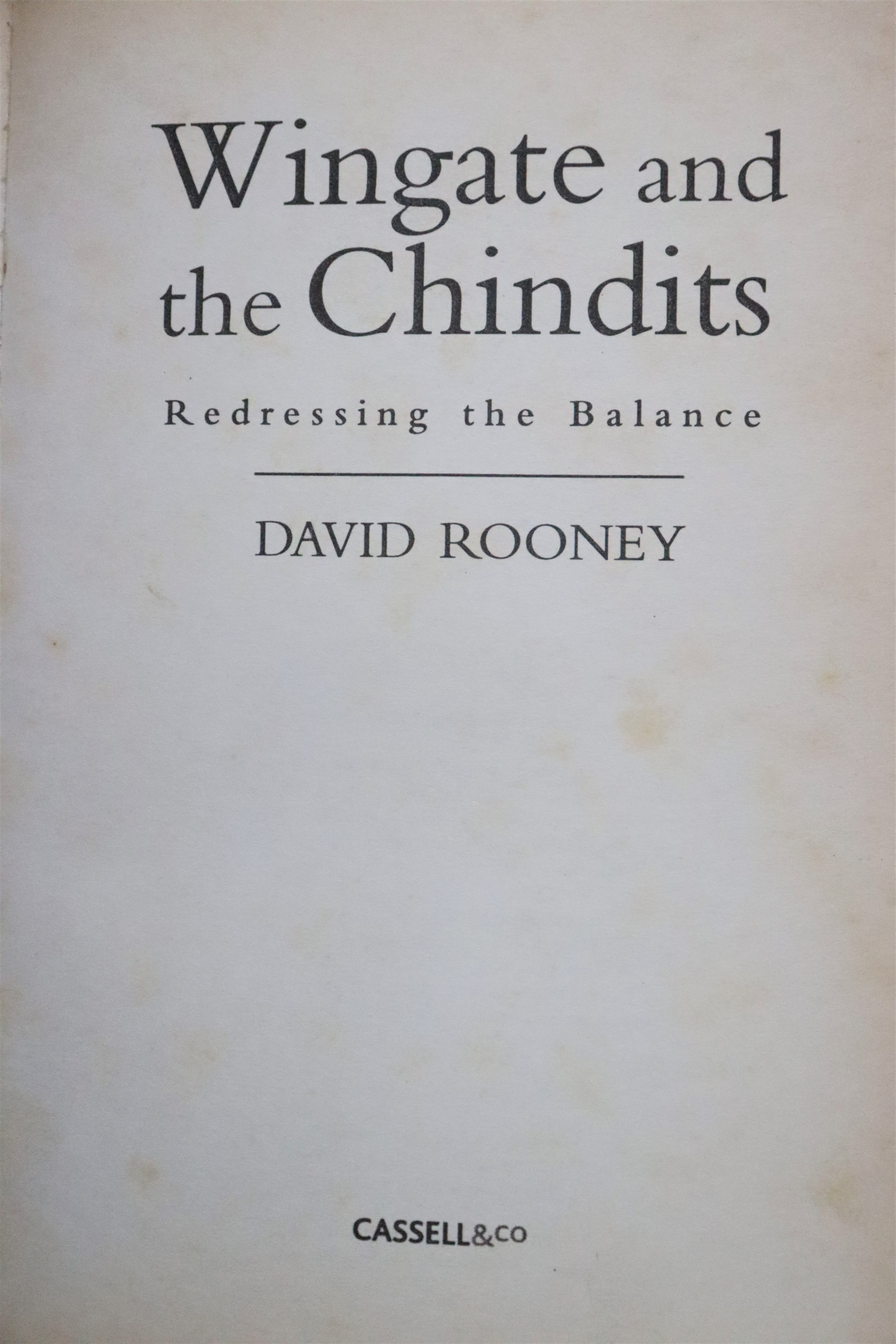
Wingate and the Chindits : Redressing the Balance
About
Summary
Exquisite
TOC
Details
URL
Images
Overview
Wingate and the Chindits: Redressing the Balance by David Rooney, published by Cassell in 2000, is a critical reassessment of Major General Orde Wingate’s military career and legacy, particularly his leadership of the Chindits during the Burma Campaign of World War II. Rooney’s central aim is to challenge the negative portrayal of Wingate that emerged in official histories and subsequent military literature, arguing that much of the criticism was rooted in personal vendettas and institutional jealousy rather than objective appraisal. The book combines a detailed biography of Wingate with an analysis of how his reputation was systematically undermined after his death.
Importance of Book
Rooney’s work is significant for several reasons:Correcting the Historical Record: The book challenges the prevailing negative narrative about Wingate, providing a more nuanced and balanced assessment of his contributions and character.Insight into Special Forces Development: By analyzing the Chindits, Rooney offers valuable insights into the evolution of special operations forces, guerrilla tactics, and their place in modern warfare.Case Study in Historical Revisionism: The book serves as a case study in how official histories can be shaped by bias, personal animosity, and institutional self-interest, highlighting the need for critical engagement with historical sources.
Key Themes
1. Maverick Leadership and Innovation
Wingate is depicted as an unconventional commander whose strategies and tactics were ahead of his time. Rooney highlights Wingate’s emphasis on surprise, economy of force, and security—principles he applied in Palestine, Ethiopia, and most famously, Burma. Wingate’s personal involvement in operations, his willingness to share hardships with his men, and his insistence on moral character set him apart from his contemporaries.2. The Chindits and Special Forces Warfare
The Chindits, a long-range penetration group formed and led by Wingate, were a unique force in the British Army, operating deep behind Japanese lines in Burma. Rooney details the formation, operations, and strategic significance of the Chindits, arguing that their achievements have been undervalued due to later criticism and the complexities of jungle warfare.3. The Smear Campaign and Historical Bias
A major theme is Rooney’s investigation into how Wingate’s reputation was intentionally damaged after his death. He identifies Major-General Stanley Woodburn Kirby and elements within the Indian Army as key figures in this campaign, which influenced official histories, biographies, and the memoirs of senior commanders like General Slim. Rooney presents evidence that these attacks were motivated by jealousy and a resistance to Wingate’s rapid rise and unorthodox methods.4. The Nature of Military Reputation
Rooney explores how military reputations are constructed and deconstructed, often based on personal relationships, institutional politics, and the selective use of evidence. He argues that Wingate’s posthumous reputation suffered from distortions that have persisted in historical accounts.
Cultural Significance
Wingate’s story, as recounted by Rooney, resonates beyond military history. His leadership style, religious convictions, and willingness to challenge convention have made him a figure of fascination and debate. The Chindits themselves became a symbol of British resilience and innovation in the face of adversity. Rooney’s rehabilitation of Wingate’s reputation contributes to a broader cultural recognition of the complexities of leadership and the dangers of simplistic historical judgments.
Effects on Society
Britain and the Commonwealth:
The book’s reassessment of Wingate has implications for British military history and national memory. By restoring credit to a controversial but innovative commander, Rooney encourages a more critical and inclusive understanding of Britain’s wartime experience. The story of the Chindits, many of whom came from across the Commonwealth, also highlights the multinational nature of the British war effort in Asia.Military Institutions:
Rooney’s analysis challenges military institutions to reflect on how they treat maverick leaders and innovators. The fate of Wingate’s reputation serves as a cautionary tale about the risks of groupthink and the suppression of dissent within hierarchical organizations.Society at Large:
For the general public, the book offers a reminder of the importance of questioning official narratives and recognizing the human factors that shape history. Wingate’s life, with its blend of brilliance, eccentricity, and tragedy, continues to inspire debate about the nature of leadership, courage, and legacy.
Conclusion
Wingate and the Chindits: Redressing the Balance is both a biography of a remarkable soldier and a meditation on the construction of historical memory. Rooney’s diligent research and persuasive argumentation make a compelling case for revisiting the legacy of Orde Wingate. By exposing the biases and vendettas that shaped the official record, Rooney not only restores balance to Wingate’s reputation but also enriches our understanding of the complexities of war, leadership, and history itself.While Rooney acknowledges that Wingate’s innovations did not guarantee victory in Burma or provide a blueprint for future conflicts, he insists that Wingate’s courage, originality, and moral seriousness deserve recognition. The book stands as an essential contribution to the historiography of World War II and a valuable resource for anyone interested in the interplay of personality, politics, and military strategy. In the end, Rooney’s work is a testament to the enduring importance of critical scholarship and the ongoing quest to do justice to the past.
Title
Wingate and the Chindits : Redressing the Balance
Author
David Rooney
Name of Publisher
Cassell
Publish Date
2000