
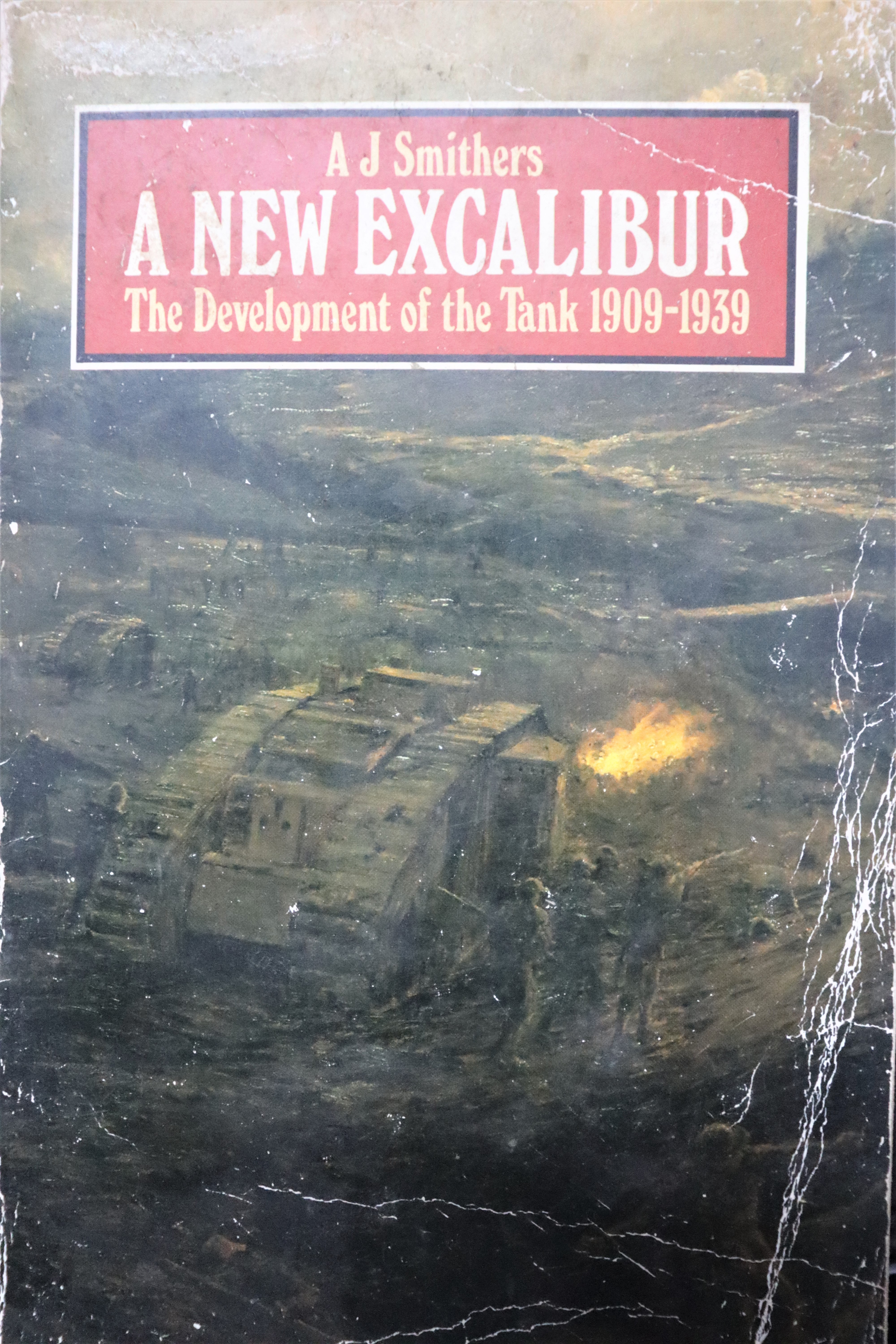
A New Excalibur : The Devlopment of the Tank 1909-1939
About
Summary
Exquisite
TOC
Details
URL
Images
Overview
A New Excalibur: The Development of the Tank 1909–1939 by A.J. Smithers is a comprehensive historical account of the birth and evolution of the tank, focusing on the period from its conceptual origins before World War I through its maturation by the eve of World War II. The book investigates not just the technical challenges of early tank development, but also the complex web of personalities, rivalries, and political maneuvering that shaped the creation of the armored fighting vehicle. Smithers meticulously documents the contributions of inventors, engineers, military officers, and politicians, highlighting the interplay between innovation and institutional resistance during a transformative era in military history.
Importance of Book
A New Excalibur stands out as the first exhaustive study focused on the personalities and power struggles behind the earliest tanks, rather than just their technical specifications or battlefield performance. Smithers’ work fills a significant gap in military historiography by humanizing the development process and revealing the social and political dynamics that influenced technological progress. The book is essential reading for those interested in military innovation, the history of technology, and the complex relationship between invention and institutional change.
Key Themes
1. Technical Innovation and ChallengeThe book details the formidable engineering obstacles faced in designing a new type of weapon capable of overcoming the deadlock of trench warfare. Early tanks were plagued by mechanical unreliability, poor mobility, and limited firepower, requiring constant refinement and ingenuity from their creators.2. Human Drama and ConflictSmithers emphasizes that the technical issues were often overshadowed by the intense personal and professional conflicts among those involved. The narrative is rich with stories of “furious quarrels” between inventors, military officers, and politicians, each with differing visions and priorities for the tank’s role and future.3. The Role of Key IndividualsCentral figures such as Winston Churchill (then First Lord of the Admiralty), Sir Eustace Tennyson-d’Eyncourt, Sir Ernest Swinton, Bertie Stern, Sir William Tritton, and Walter Gordon Wilson are profiled in depth. Churchill’s involvement is particularly notable, as he championed the tank’s development despite his official position being outside land warfare.4. Institutional Resistance and BureaucracyThe book explores the skepticism and inertia within the British military establishment, which often hindered the tank’s acceptance and effective deployment. Smithers illustrates how innovation was frequently stifled by conservative attitudes and interdepartmental rivalries.5. The Evolution of DoctrineBeyond the machines themselves, Smithers discusses how the concept of armored warfare evolved, with early tanks initially seen as infantry support rather than independent weapons. The gradual shift toward recognizing the tank’s potential for mobile, decisive operations is traced through the interwar years.
Cultural Significance
The tank, as chronicled in A New Excalibur, became more than just a weapon; it was a symbol of modernity, industrial might, and the potential for technology to break the deadlock of industrialized warfare. The book’s title alludes to the legendary sword Excalibur, suggesting the tank’s almost mythic status as a tool of national salvation during World War I. Smithers captures how the tank entered the public imagination, representing both the horrors and hopes of mechanized war.The cultural significance extends to the way the tank’s development reflected broader societal trends: the rise of engineering expertise, the importance of teamwork (and the dangers of its absence), and the growing influence of media and public opinion on military policy. The book also offers a cautionary tale about the costs of bureaucratic infighting and the need for visionary leadership in times of crisis.
Effects on Society
The development of the tank had a profound impact on Britain and, by extension, the world. During World War I, the tank was a British invention that gave the Allies a psychological and tactical edge, breaking the stalemate of trench warfare and contributing to eventual victory. The tank’s success bolstered national pride and reinforced Britain’s reputation as a leader in military innovation.On a societal level, the tank’s emergence accelerated the mechanization of warfare, influencing industry, labor, and technology far beyond the battlefield. The interwar years saw continued debate over the tank’s role, with its advocates pushing for greater mechanization and modernization of the armed forces—a debate that would shape military doctrine leading into World War II.The story told in A New Excalibur also highlights the challenges of change in established institutions, a theme with resonance beyond the military. The resistance to the tank’s adoption mirrored broader struggles in British society between tradition and innovation, hierarchy and meritocracy.
Conclusion
A New Excalibur: The Development of the Tank 1909–1939 by A.J. Smithers is a compelling narrative that goes far beyond a technical chronicle of armored vehicles. By focusing on the inventors, engineers, soldiers, and politicians who brought the tank from concept to reality, Smithers reveals the human drama at the heart of technological innovation. The book demonstrates that the history of the tank is as much about personalities and politics as it is about gears and armor plate.Smithers’ work remains significant for its nuanced portrayal of the birth of armored warfare, its exploration of the cultural and societal impact of the tank, and its lessons about the interplay between technology, leadership, and organizational change. For students of military history, technology, or the dynamics of innovation, A New Excalibur offers both a detailed case study and a broader meditation on the forces that shape history.
Title
A New Excalibur : The Devlopment of the Tank 1909-1939
Author
A J Smithers
Name of Publisher
Pen Books
Publish Date
1986