
Manasollasa and Ayurveda
About
Summary
Exquisite
TOC
Details
URL
Images
Overview
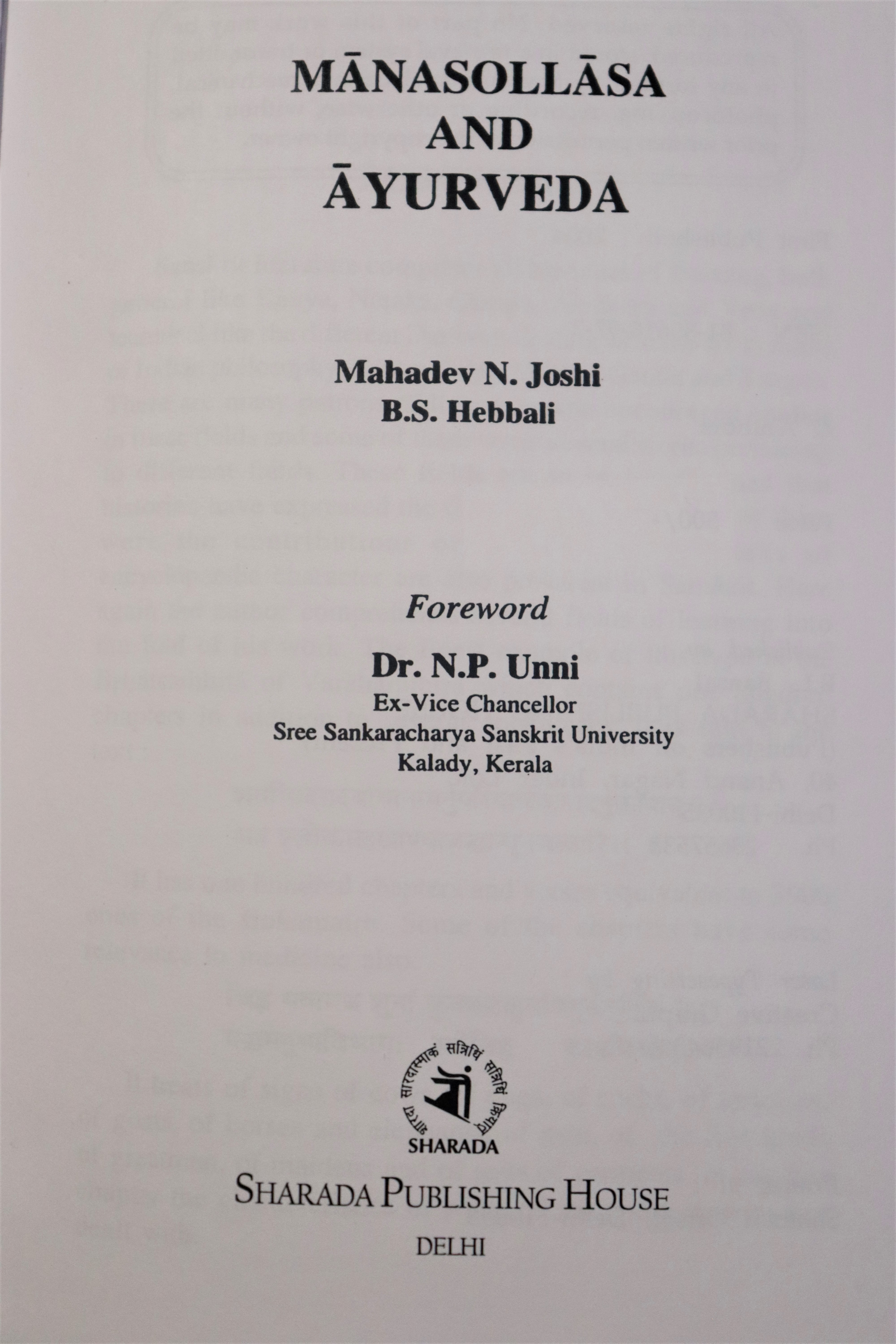
Manasollasa and Ayurveda (2014) examines the 12th-century Sanskrit encyclopedic text Manasollasa (composed by King Somesvara III of the Kalyani Chalukya dynasty) through the lens of Ayurvedic principles. Authored by Dr. M.N. Joshi, a Sanskrit scholar and Ayurveda researcher, and Dr. B.S. Hebbali, the book bridges ancient medical knowledge with contemporary relevance. Structured into five chapters, it deciphers the Manasollasa’s holistic approach to health, governance, and environmental harmony, emphasizing its contributions to Ayurvedic science.
Importance of Book
Academic Contribution: Dr. Joshi’s analysis makes Manasollasa’s medical content accessible to modern scholars, bridging gaps between Sanskrit literature and Ayurvedic practice.Practical Relevance: By detailing herbal formulations and preventive measures, the book serves as a resource for practitioners of integrative medicine.Historical Preservation: It highlights India’s medieval scientific advancements, countering colonial-era narratives that undervalued indigenous knowledge systems.
Key Themes
Historical Context of Manasollasa:
The text, written during 1127–1139 CE, spans five sub-books (Vinshatis) covering governance, economics, arts, cuisine, and medicine. Its Ayurvedic sections detail treatments for humans and animals, herbal formulations, and preventive healthcare. For instance, it prescribes remedies like Guduchi, Ashvagandha, and Shatavari for ailments caused by Vata and Pitta imbalances.Ayurvedic Foundations:
The authors explain core Ayurvedic concepts such as Tridosha (Vata, Pitta, Kapha), Panchamahabhuta (five elements), and Rasayana (rejuvenation therapies). They highlight Manasollasa’s alignment with classical texts like Charaka Samhita, emphasizing its focus on diet, mental health, and seasonal regimens.Environmental Harmony:
Chapter 4 underscores Ayurveda’s ecological consciousness, linking human health to natural balance. The text advocates sustainable practices, warning that environmental degradation disrupts dosha equilibrium and societal well-being.Preventive Healthcare:
Manasollasa prioritizes disease prevention through lifestyle alignment with ritucharya (seasonal routines) and dinacharya (daily practices). It prescribes detoxification, yoga, and ethical living (Sadvritta) for longevity.Cultural Practices:
The book explores Manasollasa’s insights into music, dance, and cuisine as therapeutic tools. For example, it describes ragas for mental tranquility and dietary guidelines for digestive health.
Cultural Significance
Sanskrit Heritage: The book reaffirms Sanskrit’s role as a repository of scientific knowledge, from pharmacology to ecology.Holistic Worldview: Manasollasa’s integration of arts, governance, and medicine reflects India’s tradition of viewing life as an interconnected whole.Ethical Governance: Somesvara III’s emphasis on Raja Dharma (king’s duties) includes ensuring public health, illustrating the ruler’s role as a custodian of societal well-being.
Effects on Society
Ayurvedic Revival: The book has spurred interest in Manasollasa’s lesser-known medical chapters, encouraging research into traditional formulations.Environmental Advocacy: Its emphasis on ecological balance resonates with modern sustainability movements, offering ancient precedents for eco-conscious living.Educational Influence: Used in Ayurvedic curricula, the text bridges historical theory and clinical practice, fostering interdisciplinary scholarship.
Conclusion
Manasollasa and Ayurveda revitalizes a medieval masterpiece, showcasing its timeless relevance in healthcare, ecology, and governance. By decoding Somesvara III’s encyclopedic vision, Joshi and Hebbali underscore India’s legacy of holistic knowledge systems. The book not only preserves Sanskrit scholarship but also provides actionable insights for addressing contemporary health and environmental challenges, making it a critical resource for scholars, practitioners, and policymakers alike.
Title
Manasollasa and Ayurveda
Author
Mahadeva N. Joshi B.S Hebbali
Name of Publisher
Sharda Publication House
Publish Date
2014