
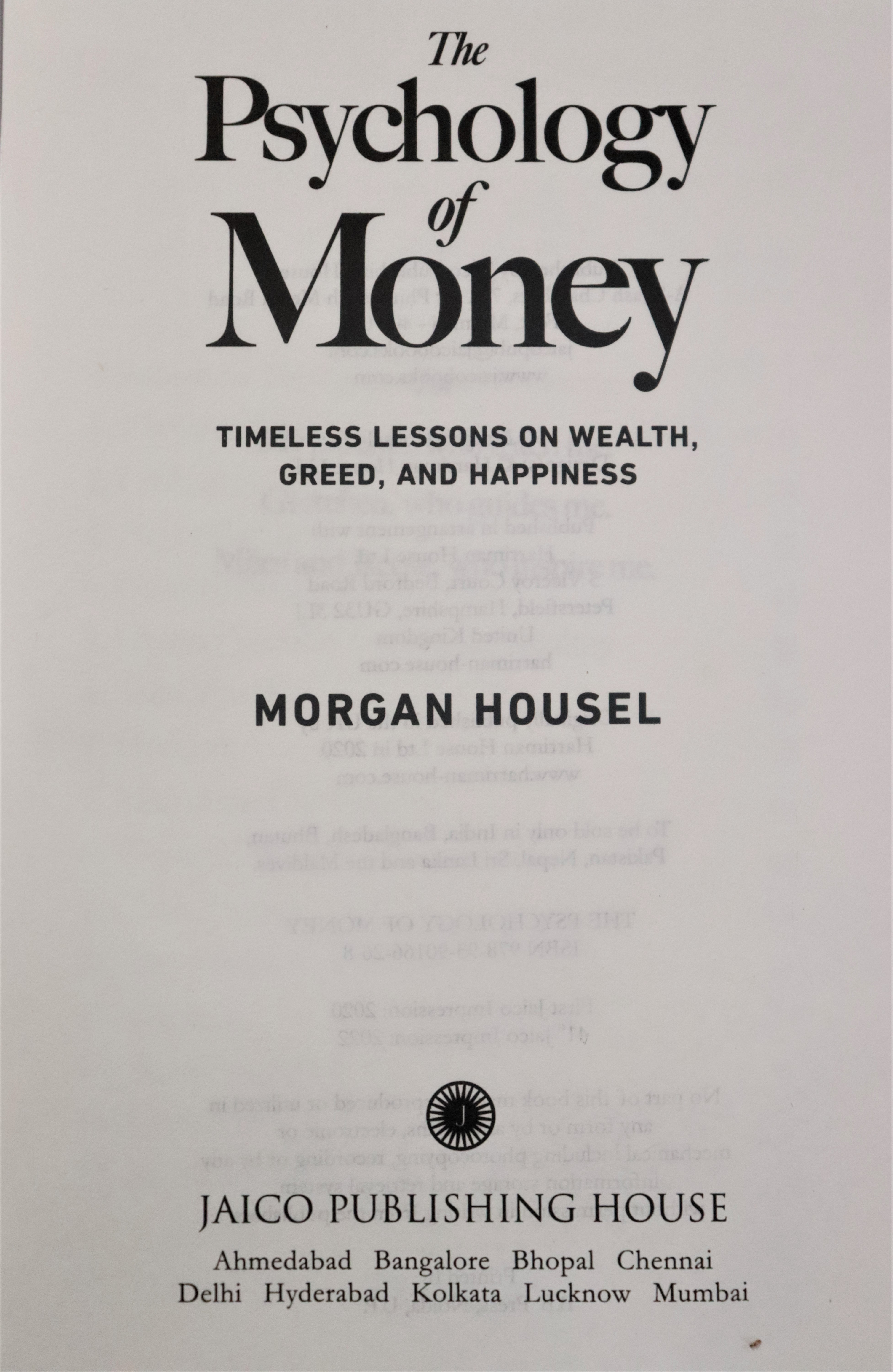
The Phychology of Money : timeless Lessons on Welth, Greed and happiness
About
Summary
Exquisite
TOC
Details
URL
Images
Overview
The Psychology of Money: Timeless Lessons on Wealth, Greed, and Happiness, published in 2020 by Jaico Publication House, is a profound exploration of the complex relationship between human behavior and money. Unlike traditional finance books that focus on technical investment strategies, Housel’s work delves into the emotional and psychological aspects that govern financial decision-making. The book is structured around 20 concise chapters, each illustrating a unique behavioral trait or attitude toward money, emphasizing that financial success depends more on how one behaves than on how much one knows.Housel uses compelling real-life stories to demonstrate how different approaches to money management lead to vastly different outcomes. For instance, he contrasts Ronald James Read, a frugal gas station attendant who amassed $8 million through patience and saving, with Richard Fuscone, a highly educated executive who went bankrupt due to greed and excessive borrowing. This contrast exemplifies the book’s central thesis: behavior and mindset often outweigh intelligence and knowledge in financial success.
Importance of Book
The Psychology of Money fills a crucial gap in personal finance literature by focusing on the psychological and behavioral aspects of money management rather than just technical investment advice. It provides readers with timeless lessons that are applicable regardless of economic conditions or geographic location, making it a universally relevant guide to financial well-being.The book’s accessible style, combining storytelling with practical wisdom, helps readers understand why they make certain financial choices and how to improve their relationship with money. It encourages self-awareness and emotional intelligence, which are often overlooked in traditional finance education.
Key Themes
Behavior Over Knowledge: The book stresses that financial success is less about intelligence or technical expertise and more about managing emotions, patience, and consistent behavior. Emotional control and avoiding impulsive decisions are critical to wealth accumulation.The Role of Luck and Risk: Housel acknowledges that luck and randomness play significant roles in financial outcomes, but understanding and managing risk through behavior is what ultimately matters.Individual Experiences Shape Financial Decisions: People’s money habits are deeply influenced by their unique backgrounds, upbringing, and personal experiences, which explains why financial decisions that seem irrational to some may be perfectly rational to others.Compounding and Patience: The power of compounding wealth over time is a recurring theme. Housel emphasizes that consistent, long-term investment behavior outperforms attempts to time or beat the market.Knowing When Enough is Enough: The book highlights the importance of defining personal financial goals and avoiding the trap of endless consumption or trying to impress others. True wealth is gaining control over one’s time and life, not just accumulating luxury goods.Frugality and Humility: Housel advocates for modest living and financial independence, showing that contentment and peace of mind often come from simplicity rather than extravagance.
Cultural Significance
The book’s cultural significance lies in its challenge to conventional financial wisdom that prioritizes knowledge and technical skills over behavior. It democratizes financial success by showing that ordinary people, regardless of education or income, can achieve wealth through disciplined behaviors like saving, patience, and humility.In societies increasingly driven by consumerism and instant gratification, Housel’s emphasis on long-term thinking, frugality, and emotional control offers a counter-narrative that resonates widely. The book encourages a mindset shift from materialism to valuing financial independence and personal freedom.
Effects on Society
While the book is global in its appeal, its impact is noticeable in countries where personal finance literacy is growing but still limited. By highlighting behavioral finance, it has contributed to a broader understanding of money management beyond mere technicalities, influencing financial education programs and individual attitudes toward saving and investing.In India and other developing economies, where financial markets are expanding and more people are entering the investment space, the book’s lessons on patience, risk management, and avoiding herd mentality are particularly valuable. It helps individuals navigate volatile markets with a calmer, more informed approach.Moreover, the book’s advocacy for financial independence and modest living aligns with growing societal trends toward minimalism and mindful spending, potentially fostering healthier economic behaviors at the grassroots level.
Conclusion
The Psychology of Money by Morgan Housel is a seminal work that transcends traditional financial advice by focusing on the human side of money. It teaches that financial success is less about intellect and more about behavior, patience, and emotional control. Through engaging stories and timeless lessons, Housel provides readers with a framework to understand their unique relationship with money and make smarter, more fulfilling financial decisions.The book’s cultural and societal impact lies in its universal applicability and its challenge to materialistic norms, promoting a healthier, more sustainable approach to wealth and happiness. Ultimately, it empowers readers to design their own financial game based on personal goals and values, emphasizing that the greatest financial asset is control over one’s time and life.
Title
The Phychology of Money : timeless Lessons on Welth, Greed and happiness
Author
Morgan Housel
Name of Publisher
Jaico Publication House
Publish Date
2020