
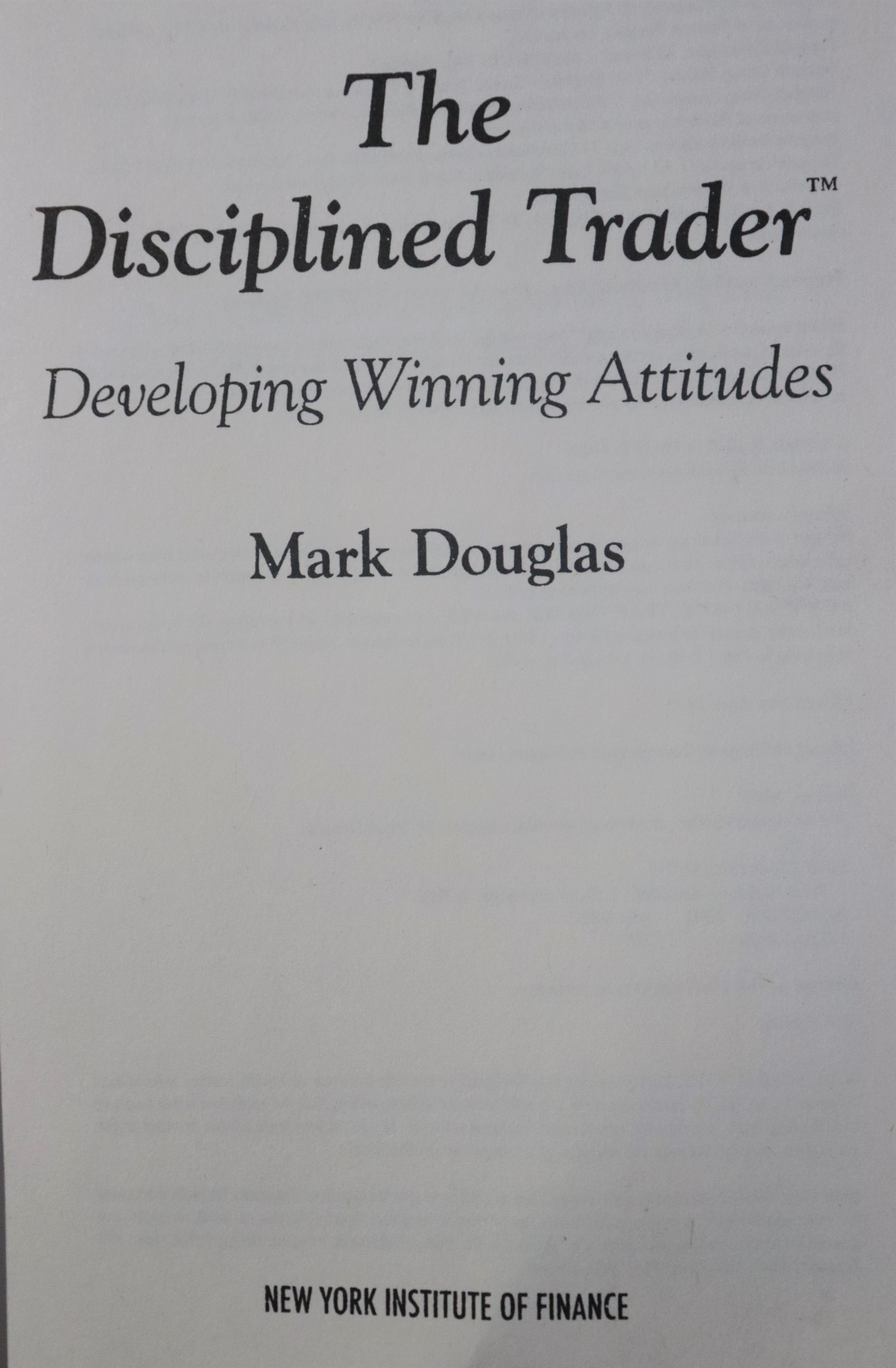
The Diciplined trader : Devloping Winning Attitudes
About
Summary
Exquisite
TOC
Details
URL
Images
Overview
Mark Douglas’s The Disciplined Trader is a seminal work that shifts the focus of trading success from purely technical skills and market analysis to the critical psychological and emotional aspects of trading. Published in 1990, the book explores how a trader’s mindset, beliefs, and emotional control profoundly influence their ability to succeed consistently in the unpredictable and volatile financial markets. Douglas argues that while knowledge of markets and strategies is necessary, it is insufficient without the discipline to manage fear, greed, and the mental barriers that often sabotage traders.The book guides readers through a deep introspective journey, helping them identify and overcome limiting beliefs and psychological obstacles such as fear, anxiety, and the need for certainty. It emphasizes that the market is inherently random and that traders must learn to accept probabilities rather than seek guarantees. Developing a winning attitude involves cultivating mental flexibility, emotional resilience, and an objective perspective toward market movements.
Importance of Book
The Disciplined Trader was pioneering in its emphasis on trading psychology at a time when most trading literature focused on technical analysis and market strategies. It introduced the concept that psychological mastery is essential for consistent profitability in trading. The book remains a foundational text for traders worldwide, influencing how trading education addresses emotional and cognitive factors.Its practical insights into fear management, belief systems, and emotional discipline have helped countless traders improve their performance and reduce costly mistakes. By framing trading as not just a financial activity but a mental discipline and path to personal growth, Douglas expanded the understanding of what it takes to succeed in markets.
Key Themes
1. Psychology Over Methodology
Douglas highlights that the mental and emotional components of trading are more decisive than technical expertise. The beliefs and thought patterns that serve well in everyday life can become detrimental in trading, causing fear, hesitation, and irrational decisions.2. Emotional Discipline and Self-Control
A central theme is the necessity of developing self-discipline to control emotional reactions. Fear and greed distort perception, leading traders to either avoid taking opportunities or hold onto losing positions too long. Emotional control enables objective decision-making and consistent risk management.3. Acceptance of Market Uncertainty and Probabilities
Douglas teaches that markets are unpredictable and operate as a "closed-loop system" influenced by collective beliefs and actions. Successful traders accept losses as natural and focus on probabilities rather than certainties, adapting their mindset to constant market changes.4. Beliefs Shape Reality
The book stresses how a trader’s beliefs create their perceived reality of the market. These beliefs can limit or expand the trader’s ability to see opportunities. Mental "housecleaning"—examining and restructuring these beliefs—is necessary to break free from self-sabotaging habits.5. Developing a Winning Attitude
Douglas advocates for cultivating traits such as objectivity, confidence, and mental flexibility. Traders must learn to trust their instincts, detach from outcomes, and maintain focus on their trading plans rather than emotional impulses.
Cultural Significance
The book’s cultural significance lies in its challenge to the traditional view of trading as a purely analytical or skill-based endeavor. It brought psychological awareness into the mainstream of trading culture, encouraging traders to consider their mindset as a critical asset. This shift helped foster a more holistic approach to trading education and practice, blending emotional intelligence with technical skills.Douglas’s work contributed to the rise of trading psychology as a respected discipline within finance, influencing coaching, mentoring, and the development of mental training programs for traders. It helped demystify the emotional struggles many traders face, reducing stigma and promoting self-awareness and discipline as keys to success.
Effects on Society
While the book’s direct impact is primarily within the trading and financial communities, its broader societal influence is reflected in the increased emphasis on psychological well-being and self-discipline in professional environments. By highlighting the importance of mindset in high-stakes decision-making, The Disciplined Trader contributed to a growing recognition of mental health and emotional regulation in business and finance sectors.In countries with active financial markets, the book has helped shape trader education programs and professional standards, promoting more responsible and psychologically informed trading practices. This has implications for market stability and individual financial health, as emotionally disciplined traders are less likely to engage in reckless behavior that can exacerbate market volatility.
Conclusion
The Disciplined Trader: Developing Winning Attitudes by Mark Douglas is a groundbreaking work that redefined the path to success in trading by focusing on the psychological and emotional dimensions of the profession. It teaches that mastering one’s mindset, beliefs, and emotional responses is as crucial as technical knowledge for consistent profitability.The book’s key lessons—accepting market uncertainty, controlling fear and greed, and cultivating mental discipline—remain highly relevant for traders today. Its cultural and professional impact has been profound, fostering the growth of trading psychology as a vital field and encouraging a more integrated approach to trading education.Ultimately, Douglas’s message is that trading is not just about markets but about personal mastery, requiring traders to develop winning attitudes that enable them to navigate complexity, uncertainty, and risk with confidence and resilience.
Title
The Diciplined trader : Devloping Winning Attitudes
Author
Mark Douglas
Name of Publisher
New York
Publish Date
1990