
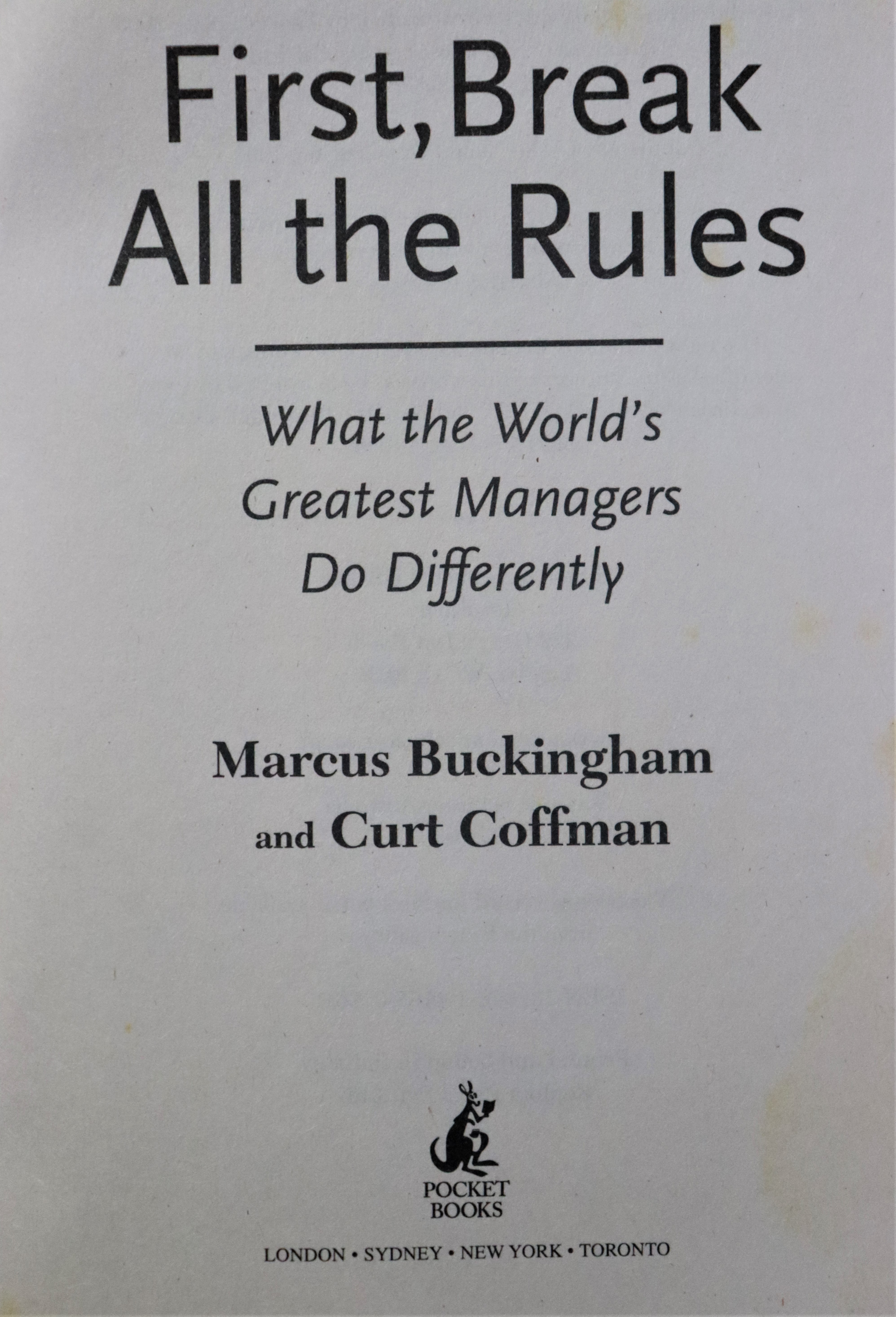
First Break All the Rules : What the Worlds Greatest Managers Do Differently
About
Summary
Exquisite
TOC
Details
URL
Images
Overview
The book challenges traditional management wisdom, such as the belief that treating everyone the same or focusing on fixing weaknesses leads to success. Instead, great managers:Select employees based on innate talent rather than just experience or intelligence.Define clear, outcome-focused expectations rather than prescribing exact steps.Focus on employees' strengths rather than trying to improve weaknesses.Help employees find the right role fit rather than pushing them up a standard career ladder.These managers disregard many "sacred" rules, including the golden rule of treating others as you want to be treated, and even "play favorites" by investing more in high-potential employees.
Importance of Book
"First, Break All the Rules" revolutionizes management thinking by providing evidence-based practices that contradict traditional dogma. It equips managers with practical tools to unlock employee potential, improve engagement, and boost organizational performance. The book is a must-read for leaders at all levels seeking to build high-performing teams in today’s complex work environments.
Key Themes
Talent over Experience or Intelligence: The authors emphasize that natural talent is the most critical factor in employee performance. Managers who identify and hire for talent create stronger teams.Strengths-Based Management: Instead of trying to fix weaknesses, managers should focus on developing employees' existing strengths to maximize productivity and engagement.Individualized Management: Each employee is unique and requires tailored management approaches. Great managers understand and adapt to these differences.Clear Expectations and Outcomes: Defining the right results rather than micromanaging the process empowers employees and clarifies success criteria.Employee Engagement Measurement (Q12): The book introduces Gallup's "Q12"—a set of 12 questions designed to measure employee engagement and satisfaction, which correlates strongly with performance.The Manager’s Role: Contrary to beliefs that managers are becoming less important, the book argues that front-line managers are crucial in attracting, retaining, and developing talent, especially in competitive labor markets.
Cultural Significance
The book has had a profound influence on management culture worldwide, especially in the United States and other corporate environments. It shifted the focus from standardized, one-size-fits-all management to personalized leadership that values individual differences and strengths. This has influenced HR practices, talent management, and leadership development programs across industries.
Effects on Society
By promoting a strengths-based, employee-centric approach, the book has contributed to evolving workplace cultures that prioritize engagement and well-being. Organizations adopting its principles often see higher employee satisfaction and retention, which positively impacts productivity and economic competitiveness. Its influence extends beyond corporations to educational institutions and nonprofit organizations seeking effective leadership models.
Conclusion
First, Break All the Rules" by Marcus Buckingham and Curt Coffman is a seminal work that challenges and reshapes conventional management wisdom. Drawing on decades of Gallup research, it reveals that the world’s greatest managers break traditional rules by focusing on talent, strengths, and individualized management. Its insights have transformed leadership practices globally, emphasizing the critical role of managers in unlocking employee potential and driving organizational success. The book remains a vital resource for anyone aiming to lead effectively in the modern workplace.
Title
First Break All the Rules : What the Worlds Greatest Managers Do Differently
Author
Marcus Buckingham and Curt Coffman
Name of Publisher
Pocket Books
Publish Date
2016