
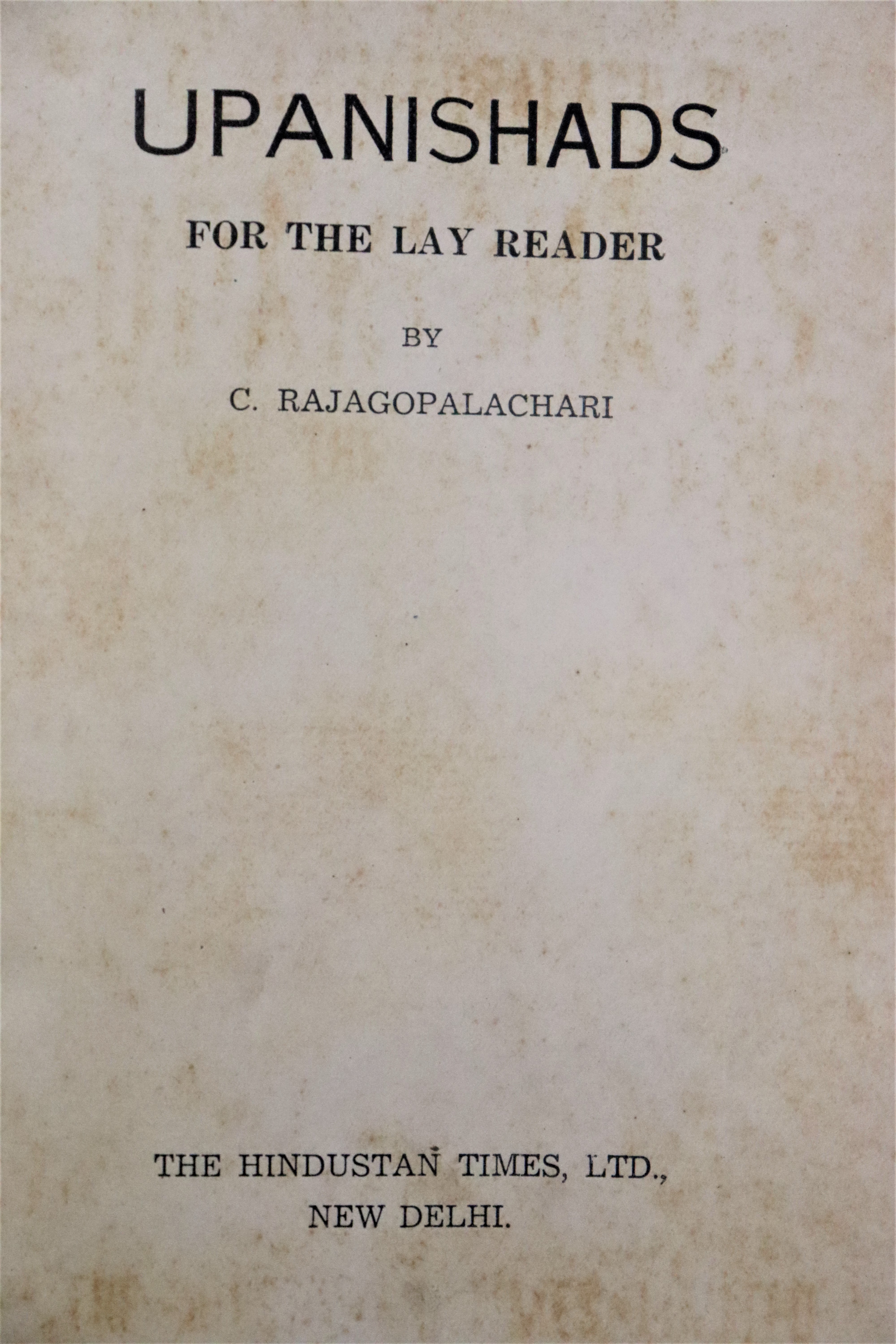
Upanishads : the Lay Reader
About
Summary
Exquisite
TOC
Details
URL
Images
Overview
The Upanishads, forming the concluding portions of the Vedas, are foundational scriptures of Hindu philosophy, focusing on metaphysical concepts such as the nature of reality, the self (Atman), and the ultimate cosmic principle (Brahman). Rajagopalachari’s work distills these teachings into simple language, making them comprehensible to laypersons without prior scholarly background. The book covers key Upanishadic ideas through narrative and explanation, emphasizing their relevance to everyday life and spiritual growth.
Importance of Book
Rajagopalachari’s Upanishads: The Lay Reader is significant for its role in democratizing access to the Upanishads. Unlike traditional commentaries that are often scholarly and dense, this book presents the essence of the texts in straightforward prose, making ancient wisdom accessible to the general public. It serves as a bridge between classical Indian philosophy and modern readers, fostering a deeper appreciation of India’s spiritual heritage.
Key Themes
Unity of Existence: The Upanishads teach that all existence is one and that the apparent diversity in the world is a manifestation of a single underlying reality, Brahman. Rajagopalachari highlights this unity by explaining how individual selves (Atman) are essentially identical with Brahman.Self-Realization and Knowledge: A central theme is the pursuit of self-knowledge as the path to liberation (moksha). The book explains that understanding the true nature of the self leads to freedom from ignorance and suffering.The Illusion of Individuality: The Upanishads challenge the notion of separateness, teaching that individuality is an illusion (maya), and realization of oneness dissolves this false perception.Ethical and Spiritual Living: Rajagopalachari emphasizes the practical implications of Upanishadic wisdom, advocating a life of virtue, meditation, and devotion as means to spiritual awakening.
Cultural Significance
The Upanishads are the philosophical core of Hinduism and have shaped Indian thought, culture, and spirituality for millennia. By interpreting these texts for the lay reader, Rajagopalachari helped revive interest in India’s ancient wisdom during a period when the country was navigating its post-independence identity. The book reinforced the cultural pride in India’s spiritual traditions and encouraged a return to indigenous sources of knowledge amidst Western influences.
Effects on Society
Published in 1965, a time when India was consolidating its democratic and cultural identity, the book contributed to a broader movement of cultural renaissance and spiritual introspection. It inspired readers to explore the philosophical foundations of Hinduism beyond ritualistic practices, promoting values of unity, tolerance, and self-awareness. The accessible presentation of the Upanishads supported educational efforts and spiritual discourse, influencing thinkers, students, and laypersons alike.
Conclusion
Upanishads: The Lay Reader by C. Rajagopalachari stands as a landmark work that brought the profound teachings of the Upanishads to the common man in clear, simple language. By elucidating themes of unity, self-realization, and ethical living, it not only preserved but also revitalized India’s spiritual legacy for contemporary society. Its cultural and educational impact helped deepen the understanding of Hindu philosophy and encouraged a spiritual awakening aligned with India’s rich heritage. The book remains a valuable resource for anyone seeking to grasp the timeless wisdom of the Upanishads without the barriers of scholarly jargon.
Title
Upanishads : the Lay Reader
Author
C. Rajgopalachari
Name of Publisher
The Hindustan Times
Publish Date
1965