
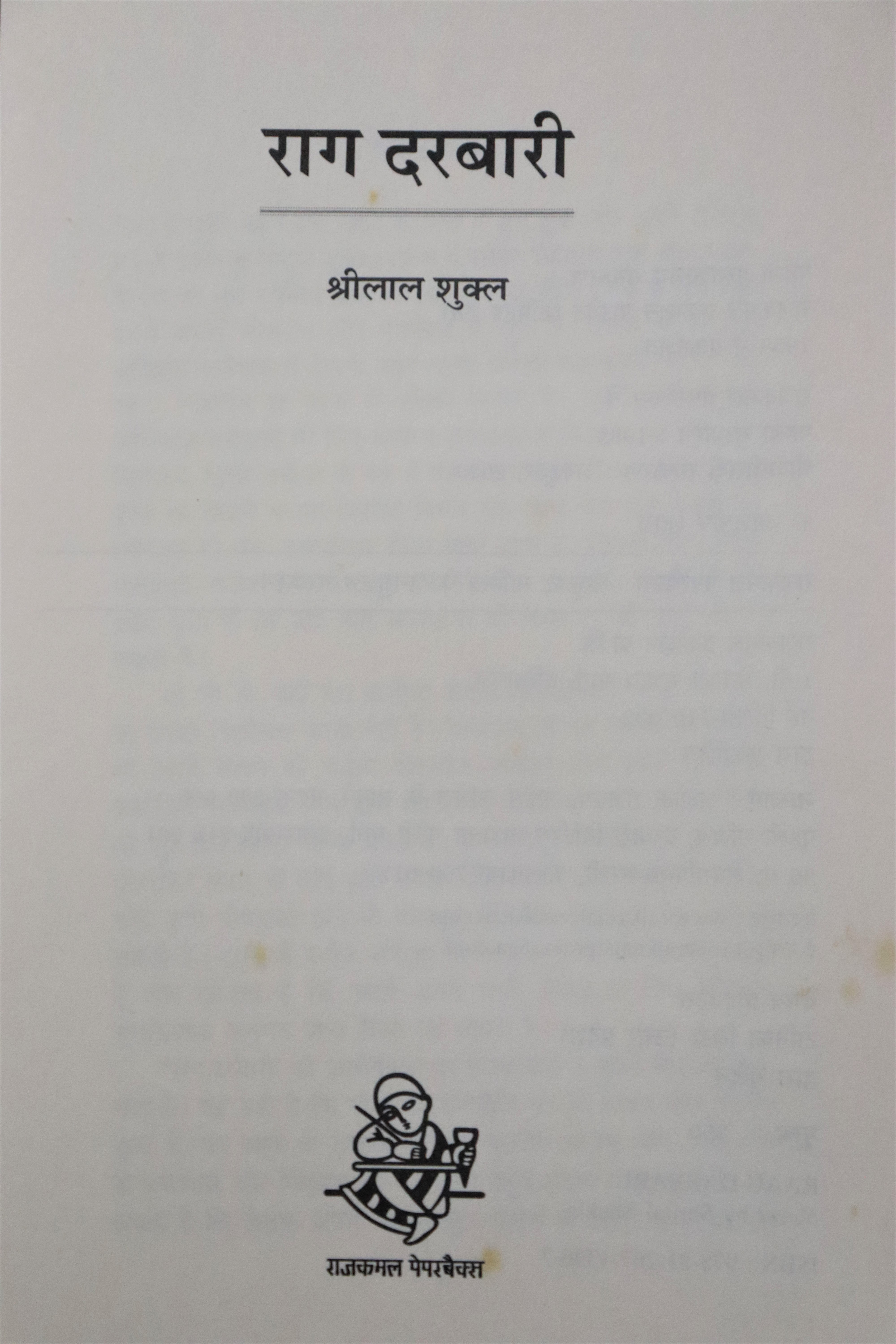
Rag Darwari
About
Summary
Exquisite
TOC
Details
URL
Images
Overview
"Raag Darbari" is a satirical novel that critiques the post-colonial Indian rural society. It exposes the gap between the lofty ideals of independence and the grim reality of village life, where corruption, nepotism, casteism, and power struggles dominate. The title itself is metaphorical: "Raag Darbari" refers to a complex classical Indian raga associated with royal courts, symbolizing the 'melody of the court' or the political machinations in the village’s ‘royal court’ of power brokers.The novel focuses on the political and bureaucratic systems at the village level, highlighting how these institutions are manipulated to maintain the status quo. Education, co-operatives, and panchayats, the pillars of rural development in the 1960s, are shown as tools of control rather than empowerment. The story is rich with humor, irony, and a nihilistic tone, making it a profound social commentary on the Indian condition.
Importance of Book
"Raag Darbari" is significant for its unflinching portrayal of rural Indian society, especially at a time when much of Indian literature idealized village life. Shrilal Shukla, drawing from his experience as an IAS officer, provides an insider’s view of the political and social realities that many preferred to ignore. The novel won the Sahitya Akademi Award in 1969, cementing its place as a classic in Hindi literature.Its importance also lies in its ability to blend humor with serious social critique, making the bitter truths about Indian society more accessible and impactful. The novel challenges readers to confront uncomfortable realities about governance, social justice, and human nature in India.
Key Themes
Corruption and Power: The novel vividly depicts the pervasive corruption in village politics and administration, showing how power is used to exploit and oppress the common people.Decay of Moral and Social Values: It highlights the decline of ethical standards and the erosion of traditional values in rural society.Caste and Social Hierarchies: The dominance of Brahmins and Thakurs in village politics reflects the entrenched caste system and its role in maintaining social inequality.Bureaucratic Inefficiency: The novel satirizes the bureaucracy’s irrelevance and complicity in corruption, portraying it as disconnected from the needs of ordinary citizens.Education and Its Limitations: Education is portrayed ambivalently—while it offers hope, it is also shown as inadequate to challenge the deep-rooted social and political problems.Women’s Marginalization: Though women have a limited presence in the novel, their plight reflects the patriarchal oppression and social constraints prevalent in rural India.
Cultural Significance
Raag Darbari" captures the essence of rural India’s socio-political milieu with authenticity and depth. It resonates culturally because it reflects the lived experiences of millions in India’s hinterlands, where traditional power structures continue to shape everyday life. The novel’s satire and storytelling style align with Indian folk traditions, making it both entertaining and thought-provoking.It has influenced Indian literature, theater, and television, with adaptations that bring its themes to wider audiences. The novel’s depiction of power dynamics and corruption remains relevant, reflecting ongoing challenges in Indian democracy and governance.
Effects on Society
The novel exposed the dark underbelly of Indian rural politics and bureaucracy at a time when the country was still grappling with the realities of independence and development. It sparked discussions about the failures of political leadership and the persistence of feudal attitudes in democratic India.By highlighting the nexus between politicians, criminals, and bureaucrats, "Raag Darbari" encouraged a more critical view of governance and inspired calls for reform. Its portrayal of social decay and corruption has remained pertinent, as many of the issues it addresses continue to affect Indian society today.
Conclusion
Raag Darbari" by Shrilal Shukla is a seminal work that uses satire to expose the complexities and contradictions of rural Indian life in the post-independence period. Through the eyes of Ranganath, readers witness the collapse of idealism and the harsh realities of power, corruption, and social injustice. The novel’s rich narrative, sharp humor, and profound social critique have ensured its enduring relevance and cultural importance.It remains a vital text for understanding the socio-political fabric of India, especially the interplay between tradition and modernity, power and morality. Its continued popularity and influence underscore its role as a mirror reflecting the challenges and realities of Indian society.
Title
Rag Darwari
Author
Shree Lal Shukla
Name of Publisher
Raj kamal
Publish Date
1968