
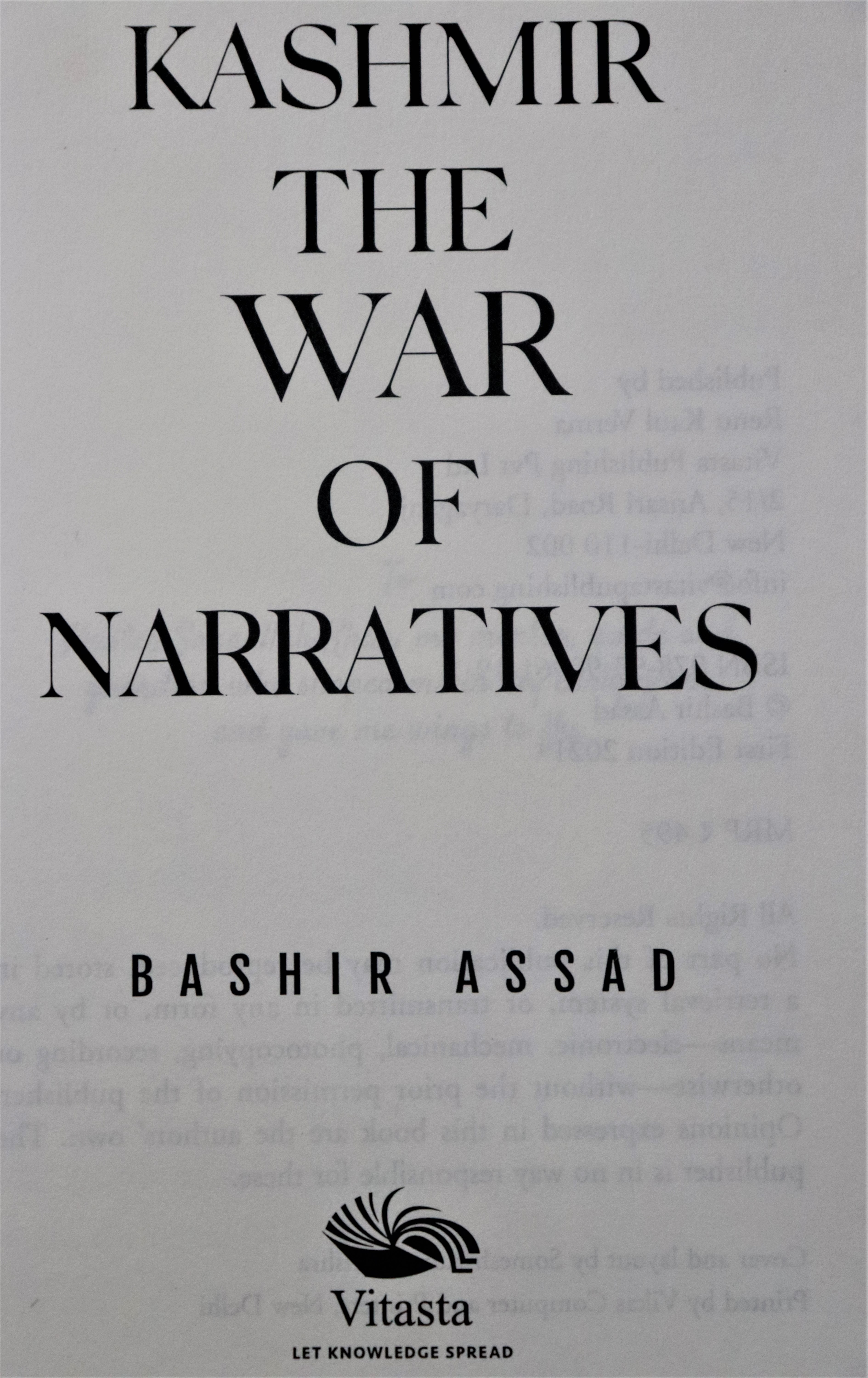
Kashmir The War of Narratives
About
Summary
Exquisite
TOC
Details
URL
Images
Overview
The book argues that the stereotypical narrative about Kashmir is largely driven by disinformation, half-truths, and fabricated accounts, primarily emanating from Pakistan. This narrative, according to Assad, obscures the truth and has contributed to the prolonged suffering of Kashmiris through terrorism, violence, and political manipulation over more than three decades. The author does not absolve the Indian state of its faults but emphasizes the need for fresh perspectives and honest dialogue to move beyond entrenched positions. The book aims to provide a factual, nuanced account of the Kashmir issue, highlighting the devastating impact of terrorism on Kashmiri society and the broader geopolitical contest that has shaped the region.
Importance of Book
This book is significant because it challenges deeply entrenched and often one-sided narratives about Kashmir that have dominated public discourse for decades. By exposing the mechanisms of disinformation and the real impact of terrorism on Kashmiris, it provides a counterbalance to prevailing myths and propaganda. It encourages intellectual honesty and a more balanced understanding of the conflict, which is essential for any meaningful dialogue or resolution. The book also contributes to the academic and policy debates on Kashmir by offering a perspective rooted in research and lived realities rather than ideology or political agendas.
Key Themes
Disinformation and Narratives: The book focuses on how conflicting narratives, especially those constructed by Pakistan, have distorted the Kashmir conflict. It explores how these narratives fuel violence and hinder peace.Terrorism and Atrocities: Assad details the brutal terrorist activities that have ravaged Kashmir, emphasizing the human cost and the destruction of social fabric caused by decades of militancy.Need for New Intellectual Discourse: The book advocates for breaking free from the binary and polarized narratives. It calls for new perspectives that acknowledge complexities and seek peaceful coexistence.Critique of State and Non-State Actors: While critical of Pakistan’s role in fomenting violence, Assad also acknowledges the Indian state’s shortcomings, suggesting that neither side has a monopoly on truth or justice.Hope for Peace and Prosperity: Ultimately, the book is a plea for Kashmiris and all stakeholders to envision a future marked by peace, abundance, and enriched social life.
Cultural Significance
Culturally, Kashmir: The War of Narratives serves as a critical intervention in the way Kashmir’s history and present are understood both within India and internationally. It highlights the voices and experiences of Kashmiris who have endured violence and disruption, thus humanizing a conflict often reduced to political rhetoric. The book’s call for new narratives resonates with a younger generation of Kashmiris and intellectuals seeking to reclaim their identity beyond conflict and victimhood. It also contributes to the broader cultural discourse on nationalism, identity, and conflict resolution in South Asia.
Effects on Society
The book has been recognized by political and intellectual circles, including being released by the Lieutenant Governor of Jammu and Kashmir, indicating its relevance to contemporary political discourse in the region. It has the potential to influence policymakers, scholars, and the general public by providing a grounded and factual narrative that challenges extremist and simplistic views. By fostering a more nuanced understanding, it can contribute to reducing polarization and encouraging dialogue aimed at peace and development in Kashmir. The book’s impact lies in its ability to inspire new ways of thinking about Kashmir’s future, emphasizing reconciliation and intellectual engagement over conflict.
Conclusion
Kashmir: The War of Narratives by Bashir Assad is a vital contribution to the literature on Kashmir, offering a well-researched, balanced, and courageous critique of the dominant narratives that have shaped the conflict. It exposes the role of disinformation and terrorism in perpetuating violence and suffering, while also calling for a new intellectual approach that embraces complexity and seeks peace. The book’s cultural and political significance lies in its potential to reshape discourse, influence policy, and inspire a more hopeful future for Kashmir and its people. It stands as a call to all stakeholders to move beyond entrenched positions and work towards an abundant, enriched, and peaceful Kashmir.
Title
Kashmir The War of Narratives
Author
Bashir Assad
Name of Publisher
Vitasta
Publish Date
2021