
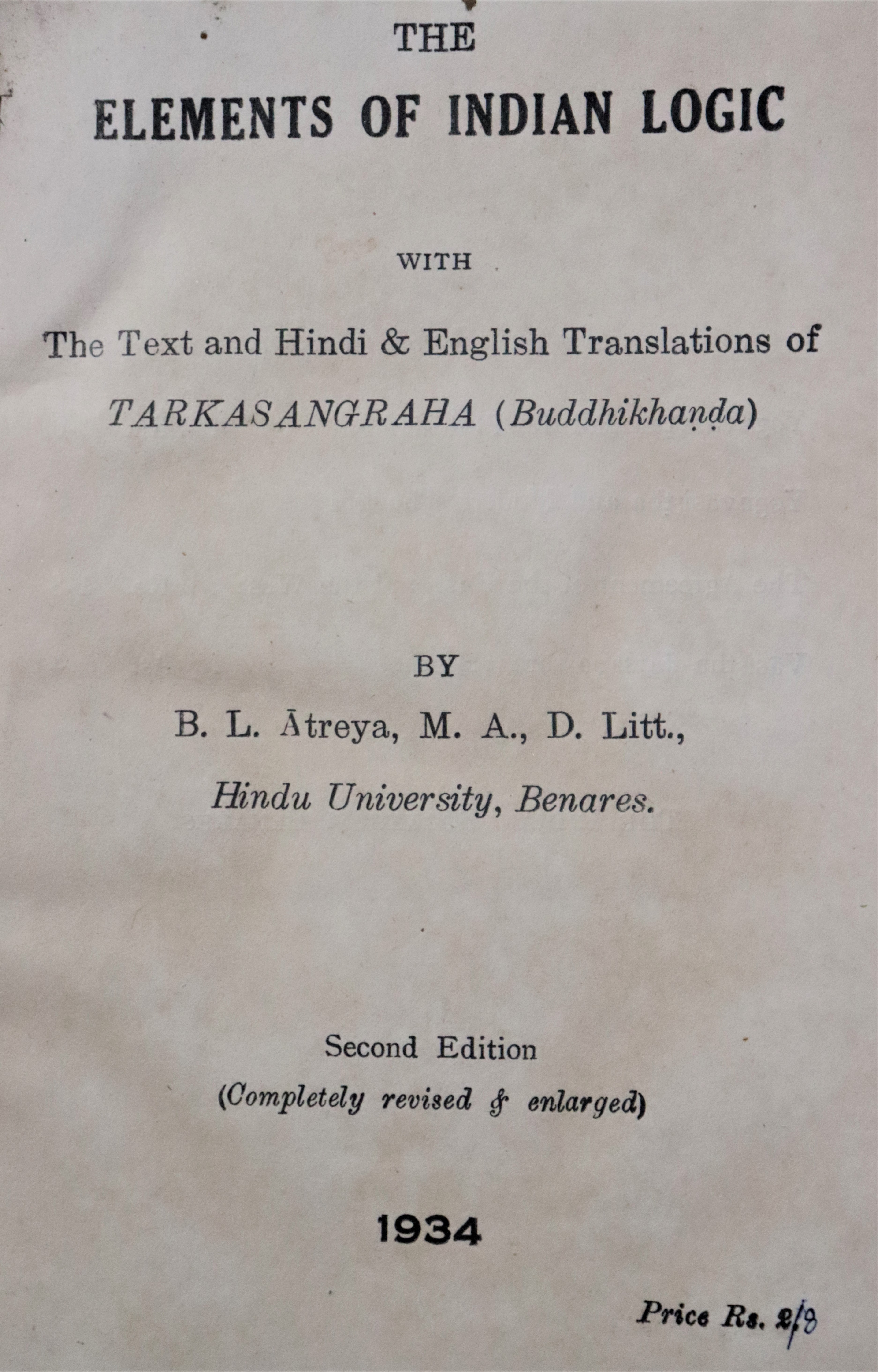
Elements of indian Logic
About
Summary
Exquisite
TOC
Details
URL
Images
Overview
The text is a concise compendium (sangraha) designed to introduce beginners to Indian logic. It systematically outlines the Nyāya-Vaiśeṣika system’s core categories, such as substance, quality, action, and inference, while integrating Sanskrit definitions with English explanations. Structured into three parts—historical introduction, Sanskrit text with transliteration, and critical exposition—it bridges traditional scholarship with modern pedagogical needs.
Importance of Book
Pedagogical Utility: Designed for university students, it simplifies complex Sanskrit technical terms into English, making Indian logic accessible to modern learners.Synthesis of Systems: Integrates Nyāya (logic) and Vaiśeṣika (atomism) philosophies, highlighting their complementary roles in Indian thought.Preservation of Tradition: By codifying classical concepts, it safeguards India’s intellectual heritage against the erosion of Western-centric education.
Key Themes
Categories of Reality (Padārthas):Identifies seven fundamental categories: substance (dravya), quality (guṇa), action (karma), generality (sāmānya), particularity (viśeṣa), inherence (samavāya), and non-existence (abhāva).Emphasizes their role in structuring logical and metaphysical inquiry.Epistemology (Pramāṇa):Valid knowledge (pramā) is derived through four means: perception (pratyakṣa), inference (anumāna), analogy (upamāna), and verbal testimony (śabda).Critically examines defective reasoning (hetvābhāsa) and fallacies in inference.Logical Instruments and Debate:Explores the five-membered syllogism (nyāya) for structured argumentation.Distinguishes productive debate (vāda) from sophistry (jalpa) and cavil (vitaṇḍā).Linguistic Analysis:Discusses śābdabodha (verbal comprehension), including concepts like mutual requirement (ākāṅkṣā) and congruity (yogyatā) in communication.
Cultural Significance
Bridge Between Eras: The text’s bilingual format (Sanskrit and English) reflects early 20th-century efforts to reconcile traditional knowledge with colonial-era academic demands.Influence on Scholarship: Cited in works like Siddhanta Sangraha and Sahitya-kaumudi, it remains a reference for studies in linguistics, epistemology, and comparative philosophy.Role in National Identity: By systematizing Indian logic, it reinforced cultural pride during India’s nationalist movement, countering narratives of civilizational inferiority.
Effects on Society
Educational Reforms: Standardized logic curricula in Indian universities, influencing generations of students in philosophy and Sanskrit.Interdisciplinary Reach: Concepts like inference and debate protocols permeated legal, literary, and religious discourses, fostering rigorous analytical traditions.Global Recognition: Translations (e.g., Swami Virupakshananda’s 1994 edition) expanded its reach, positioning Indian logic within global philosophical dialogues.
Conclusion
Elements of Indian Logic remains a cornerstone for understanding Nyāya-Vaiśeṣika thought. Its clarity, structural rigor, and bilingual approach have preserved India’s logical heritage while adapting it for contemporary relevance. By demystifying technical Sanskrit terms and fostering critical thinking, the text not only educated students but also fortified cultural identity during a transformative period in Indian history. Its legacy endures in academic curricula and philosophical discourse, underscoring the timeless value of India’s intellectual traditions.
Title
Elements of indian Logic
Author
Tarkasangraha
Name of Publisher
Hindu University
Publish Date
1934